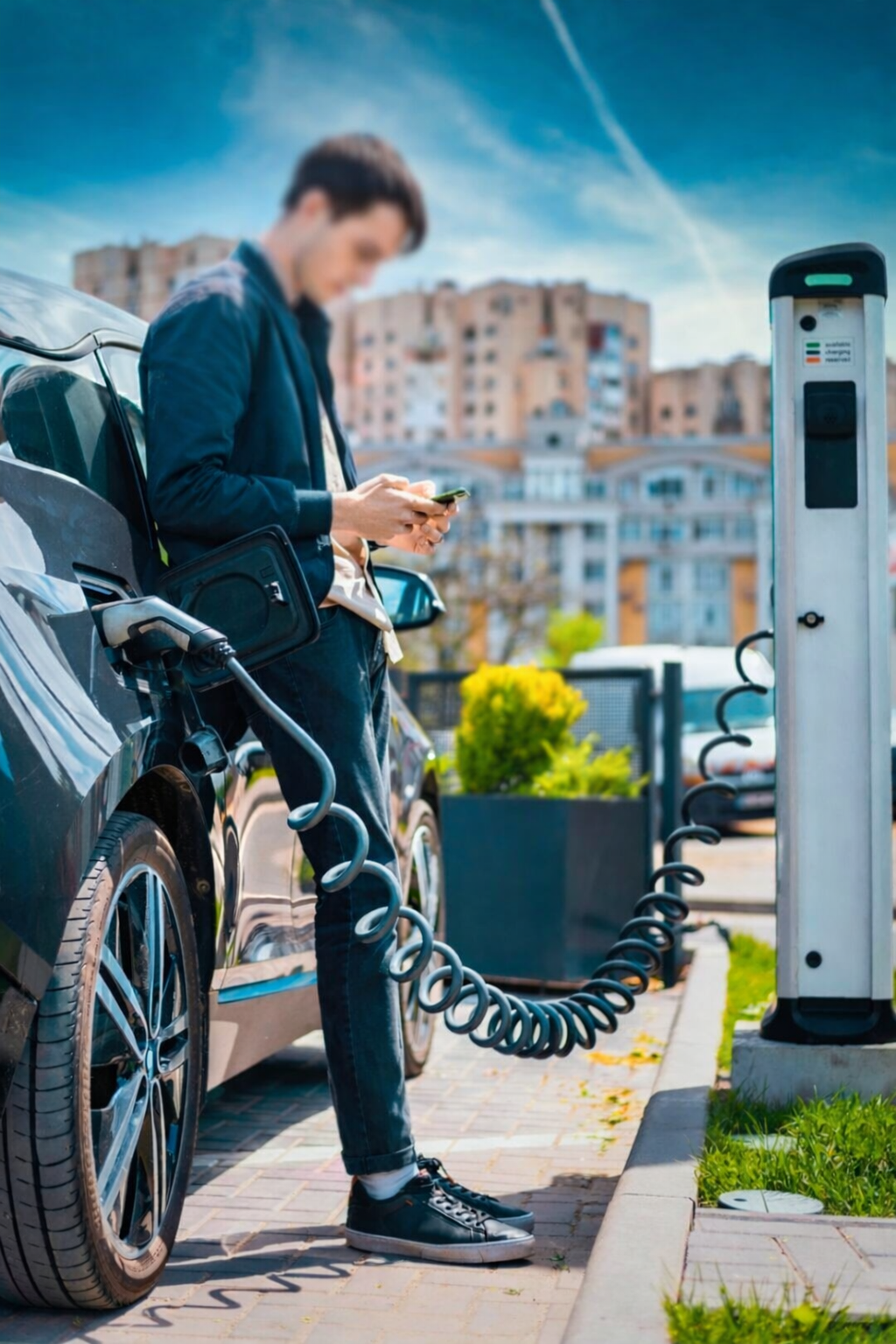
Thus, for now, electric mobility advances… but with the battery half-charged. The article 'Electric mobility advances without a network: an ambitious law, weak infrastructure, and a tariff that punishes the user who buys an electric car' was first published in La Verdad Panamá. A parallel reform of the energy system is needed: more renewables, differentiated tariffs, smart grids, and real user protection. 'If the tariff and infrastructure are not corrected, the electric car is not progress, it is economic pressure for the citizen,' he sentenced. In summary, Panama wants cars of the future with a network of the past. Most condominiums in Panama were not designed to support charging stations. 'Transformers, wiring, panels, internal systems must be changed, and complete electrical studies must be done,' Javier Collins Agnew / La Verdad Panamá. So much promise, little real plug-in. Panama wants to get on the electric mobility train, but it is still walking barefoot through the station. Although there is a law that promotes the use of electric vehicles, its implementation is still under construction. In the General Directorate of Standards of the Ministry of Commerce and Industry, a Special Committee that works on technical regulation still operates, a process that, according to experts, may take another three to four years to be truly operational. For engineer Gustavo Bernal, former president of the Panamanian Society of Engineers and Architects (SPIA), the country launched the idea before having its house in order. 'The message was sold that Panama would be a leader in electric mobility, but the network, tariff, or infrastructure was not adapted,' he stated. The real cost is not in the car. Buying an electric vehicle is not the main problem. The problem is feeding it. Bernal warns that charging an electric car at home can push the user's demand to levels that skyrocket the bill. 'A residential client who installs a charger could end up paying 300 or 400 dollars more per month just in electricity,' he explained. Unlike gasoline, which is paid per event, full tank and done, electricity is paid for constant demand. Each charge increases consumption, power, and in some cases, maximum demand, which is one of the most expensive items on the bill. Condominiums: the infrastructure cannot handle it. The blow is greater in buildings and residential complexes. If it is massified without planning, the system can become saturated. 'In other countries, chargers use their own batteries and renewable sources that do not strain the grid. Here we connect them directly to the traditional system, which is already strained,' said Bernal. The paradox is that Panama promotes electric vehicles with a matrix that still depends heavily on fossil fuels. Panama, which is barely at 3% or 4%, does not yet have the ground ready. Without an energy reform, there is no sustainable mobility. The engineer insists that electric mobility cannot walk alone. Each fast charger is a source of high demand. That is why he questions goals such as migrating state fleets without first resolving the technical base: network, tariff, stations, and financing. Incentive that ends up being a punishment. Although the law aims to encourage the purchase of electric cars, the former president of SPIA believes that the real message today is different. 'With the current tariff and without infrastructure, electric mobility becomes a luxury for a few, not a public policy for all,' he stated. He compared it to Costa Rica, which has a penetration of close to 15%-20% and still faces implementation problems. 'It is to rebuild the building's backbone,' he explained. More demand, more stress on the system. Electric mobility also pressures the national grid. 'If you charge with an expensive thermal plant, the environmental and economic benefit is diluted,' he warned. Public transport: without planning, it doesn't work. In public transport, the challenge is greater. 'That costs thousands of dollars and almost no PH is prepared for that,' he pointed out. He recounted cases where a 500 kVA transformer must be replaced by a larger one just to allow several chargers. It must be charged, short routes must be planned, and fast-charging points must be available. 'A bus goes around, it discharges and it has to plug in again. Every charge is demand. An electric bus cannot circulate indefinitely. 'It is not plug and go. Without infrastructure, it is more of a punishment than an incentive,' Bernal maintained.