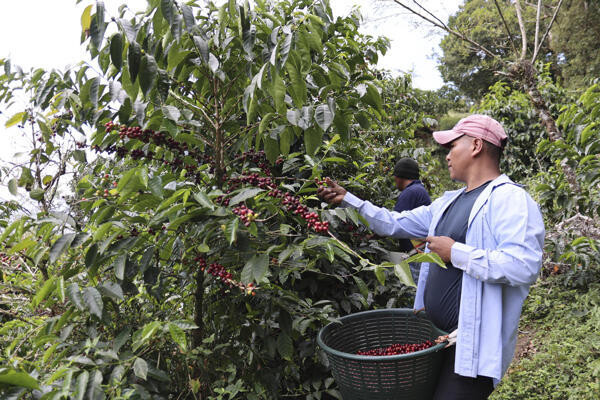
In the mountains of western Panama, where one of the world's most expensive coffees is born, the harvest depends mainly on the hands of the Ngäbe Buglé people, one of Panama's seven indigenous groups. For many, coffee is not only a source of livelihood but also a springboard for education. Leopoldo Pinto Rodríguez, one of the main figures behind the first batch that changed world coffee farming in 2004 when the Geisha variety was first presented at an international tasting, began his career as a picker in the 1970s. He recalls, "I was passionate about what I did, and one of those passions was learning to process coffee, and later to taste it. Little by little, I became a taster without realizing it." Today, with 50 years of experience, he can distinguish between coffee varieties just by tasting the honey of the grain. For Leopoldo, his greatest achievement is not being part of that agricultural milestone, but that his children are university graduates, a fact he attributes directly to his constant work in this sector. His story reflects the opportunities that the coffee industry offers. Yamileth Pinto, a 21-year-old physical education student, says, "Each harvest represents an opportunity for me to continue my studies." Lucas Hernández began picking coffee at 18 with his mother. He remembers, "I started picking coffee in 1975. With that harvest, I helped with the money I earned at the end; it helps me study." For him, this work is part of his people's culture, rooted in the heart of Panama. However, the work of the pickers takes place against a backdrop of growing concern in the sector about a labor shortage. Ricardo Koyner, president of the Specialty Coffee Association of Panama (SCAP), and Quintín Pitti, mayor of the Renacimiento district, agree that Panama is facing a shortage of labor for coffee picking. Pitti told EFE that about 10,000 people migrate to the Renacimiento district each year to harvest coffee, and many cross the border into Costa Rica, jeopardizing the harvest that begins in September in lower-altitude areas. While producers seek solutions to the lack of pickers, the work continues on the plantations for those like Yamileth, Lucas, Leopoldo, and Moisés, who keep alive a tradition that combines effort, knowledge, and hope, grain by grain.