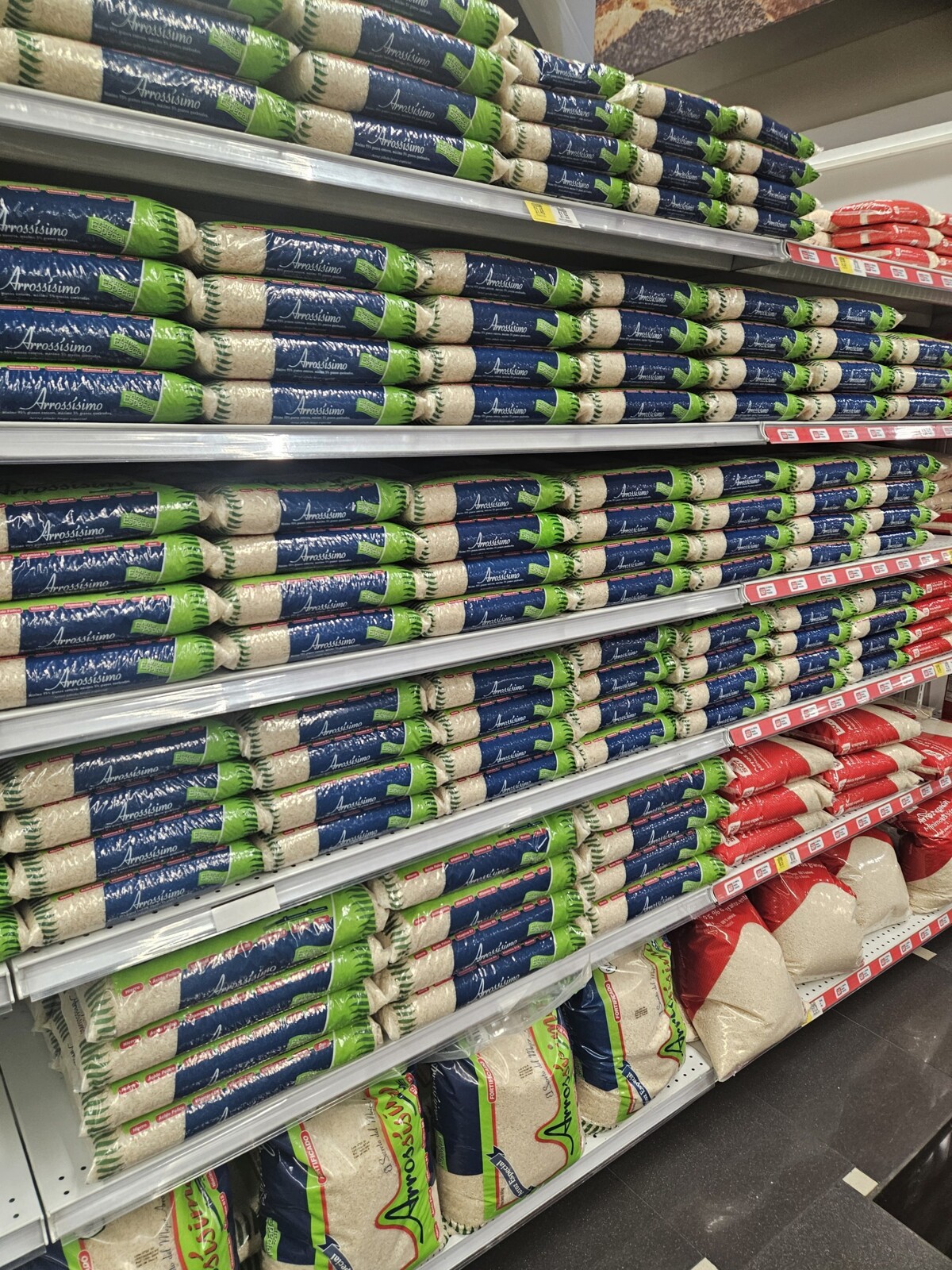
Panama is not facing a rice shortage today, but it is experiencing a 'silent crisis' in the agricultural sector that threatens the future stability of the country's staple food. This is confirmed by producers and official data from the Ministry of Agricultural Development (MIDA), which show sufficient supplies but an increasingly unprofitable business. According to the Rice Supply Analysis of the Agro-Food Chain, dated January 30, 2026, the country has an estimated total of 6,359,041 hundredweight of clean, dry rice, enough to cover 8.84 months of consumption, that is, until October 8, 2026. The report states that national inventories amount to 5,230,095 hundredweight, minus a 3% loss, leaving a base availability of 5,073,192 hundredweight. To this are added import quotas and rice yet to be harvested. The MIDA document details that quotas under trade agreements provide an additional 911,837 hundredweight after accounting for losses, while the rice from the 2025-2026 harvest cycle adds another 374,011 hundredweight. With this combination of inventories, WTO and TPS quotas, and local production, Panama achieves solid coverage against the average monthly consumption of 719,399 hundredweight. Simply put: there is rice. Panama has rice, but it needs someone to want to keep planting it.
'With inventories in mills, supermarkets, the rice to be harvested, and mandatory imports, there should be no shortage,' stated Omar Spiegel, also a producer. He added that national harvests begin in July, intensify in August and September, and strengthen in October, allowing the domestic market to be sustained. The calm in supply contrasts with the producer's anguish. 'There is enough to cover demand without importing a single grain,' confirmed Gabriel Arauz. However, he clarified that the real concern is marketing and price. 'How are you going to plant if you lose money?', he asked bluntly. Spiegel stated: 'The agricultural sector has major challenges.' According to Arauz, although the price was lowered for the producer, the consumer ended up paying more for rice. 'Regulation and compensation were lifted, the producer received less, but the consumer paid more,' he explained. The equation ceased to benefit both ends: the farmer loses margin and the buyer feels the blow to their wallet.
Arauz warns that the real risk lies in the next planting. 'If it's not planted, there will be more imports. If producers cannot cover costs, they will simply stop planting,' he stated. In an unstable international market, relying on external sources is playing Russian roulette. Spiegel agrees that there are no supply problems. 'The last decade has been oversupplied with national rice. This gives hope to the producer and stability to the country,' he noted. Supplies today, uncertainty tomorrow. The MIDA figures are clear: Panama has enough rice until October. But the business has ceased to be a business. For the producer, 2026 brings two big questions: will the pests return and at what price will the rice be sold now that there is no regulation. 'There is pressure throughout the chain. Costs versus production lead to losses,' he warned. This year, costs exceed 2,500 balboas per hectare, while yields dropped from 90 hundredweight, and the price fell from over 30 balboas to an average near 25 balboas per hundredweight.
One of the most sensitive points is the distortion in the chain. But producers are also clear: without profitability, there is no planting. Today the country eats peacefully, but the system that guarantees that daily plate is sustained on a tired, indebted field with fewer incentives. In short, the shortage is not in the silos, but in the producer's spirit. Spiegel points out that national varieties are not withstanding climate change. 'Everything is imported, except high-yield rice seeds. It makes no sense,' he questioned. The goal is not just to plant more, but to produce better. 'A farmer who gets more per hectare has margin even when the price drops,' he explained.