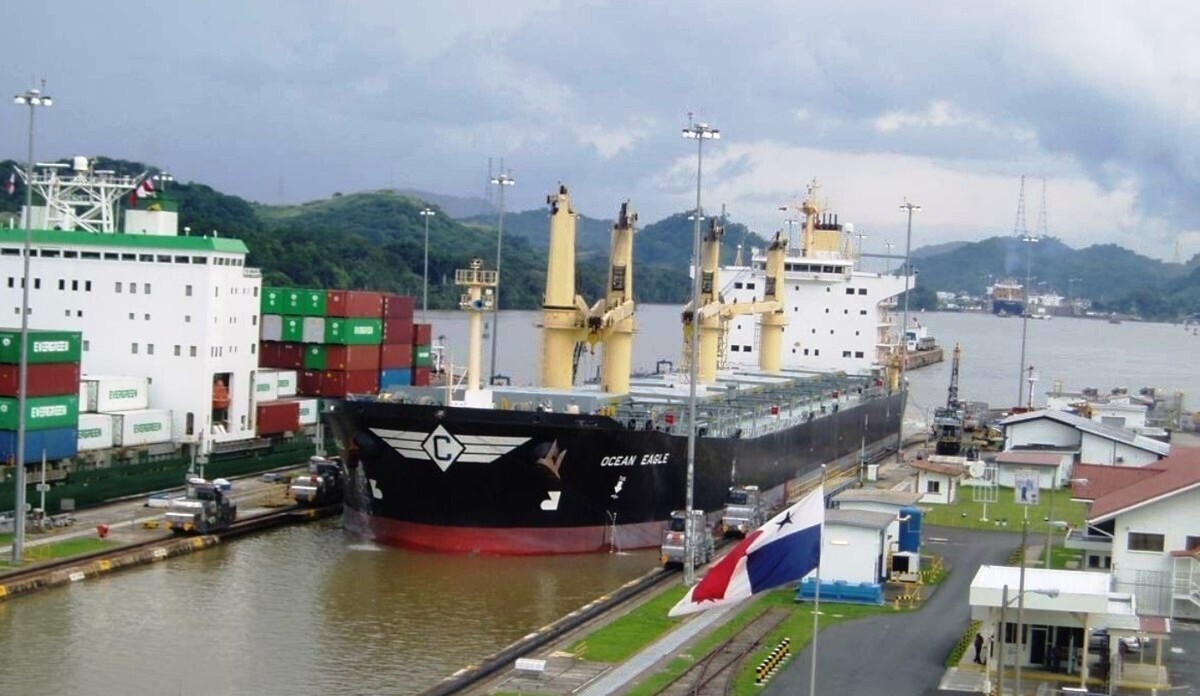
The Panama Canal Authority (ACP) is further setting its $8.5 billion, 10-year modernization plan in motion, publishing pre-qualification documents for parties interested in the development of two new port terminals and a countrywide energy pipeline. As part of the decade-long plan, the ACP is set to build out the Corozal terminal on the Pacific Ocean, and the Telfers gateway on the Atlantic Ocean. The $8.5 billion plan extends beyond both projects. The ACP is also spearheading the $1.6 billion construction of the Indio Rio reservoir, which will be built to help guarantee more freshwater supply for 50 percent of Panama’s population in the wake of another drought like the one that slowed down shipping at the Panama Canal throughout late 2023 and early 2024. Panama Canal administrator Ricaurte Vásquez Morales told reporters Monday that the ACP accepted the Supreme Court’s ruling. “This has not interrupted the process we are undertaking to launch a tender for the concession of two port terminals, one here in Telfers and the other in Corozal,” Vásquez said. On October 27, the canal operator held its first market outreach meetings with maritime industry representatives to identify potential participants for the port terminal projects. It is expected to cost $2.6 billion and be completed by 2029. The documents indicate to interested parties how to provide the necessary documentation to participate in the bidding processes, according to a statement from the waterway administration last Friday. Applicants for the terminals will need to name at least six terminals it operated in the past year with a combined annual throughput of 6 million TEUs. Lines, PSA International, SSA Marine-Grupo Carrix, Mediterranean Shipping Company’s Terminal Investment Limited, Ocean Network Express (ONE) and Evergreen all met with the ACP. “Once people formalize their interest in participating in the bidding process, we will have a series of conversations with the pre-qualified parties to determine the final specifications, which should be released around the middle of the year,” said Vásquez. That project is expected to be completed by 2031. The pipeline will be built to transport propane, butane and ethane, with an estimated capacity of up to 2.5 million barrels per day. It will not require transit through the canal’s locks and does not involve additional water consumption, making it an infrastructure parallel to traditional maritime traffic. That project aims to increase Panama’s national transshipment capacity by between 5 million and 6 million 20-foot equivalent units (TEUs) per year and strengthen Panama’s position as a globally competitive intermodal hub. Upon its construction, the 76-kilometer (47-mile) pipeline will have access to terminals on both the Atlantic and Pacific coasts. Additionally, they will have to name a terminal project they have developed of at least 1 million TEUs of capacity in the past 10 years. The ACP published the documents on Friday, hours after Panama’s Supreme Court ruled Hong Kong-based port operator CK Hutchison’s contract to operate the Balboa and Cristóbal ports was unconstitutional. That ruling derailed a geopolitically controversial $23 billion transaction that would have seen Hutchison sell off the two ports to a consortium operated by Mediterranean Shipping Company (MSC) and U.S. hedge fund BlackRock. APM Terminals, Cosco Shipping Ports, CMA Terminals, DP World, Hapag-Lloyd’s Hanseatic Global Terminals, Mitsui O.S.K. When the ruling officially goes into effect, Maersk’s APM Terminals will temporarily oversee those ports until a new concession can be bid on and awarded. “And that should take about five or six months for the final bidding process at the beginning of 2027.” According to Vásquez, the pre-qualification phase is aimed at identifying the port operators that will meet the technical, financial and legal requirements to advance to the bidding. For both the terminals and the pipeline, the authority hosted a series of follow-up meetings with prospective participants to collect technical feedback, validate market assumptions and refine the documentation supporting the selection process. Vásquez has asserted that the new reservoir would provide capacity for an additional 11 to 13 daily transits, providing more schedule reliability for vessels passing through the trade artery. Those talks included energy giants like ExxonMobil, Chevron and Japan’s Eneos, who were among more than 20 companies that interacted with the operator. The ACP held initial outreach meetings related to the energy pipeline initiative on Sept. 18.