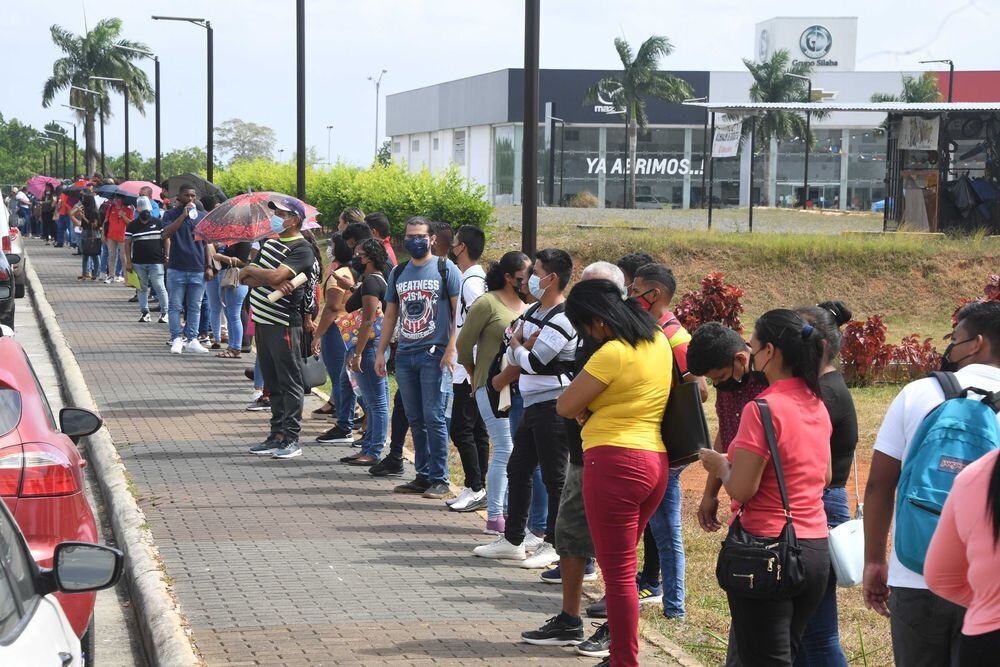
Panama's President, José Raúl Mulino, stated that in the last four months of 2025, 111,000 jobs were created nationwide, which has significant implications for the national economy. He noted that while unemployment remains at 10.4% according to figures from the National Institute of Statistics and Census (INEC), this data only covers up to September, the end of conflicts that alone cost over 7,000 jobs in Bocas. Mulino also warns that informality remains high, with 47.7% of workers outside the formal sector, and the main challenge is to generate more stable job opportunities, especially for young people and in the interior of the country. Economist Carlos Araúz believes that the double-digit unemployment rate reflects structural problems plaguing the Panamanian economy. In his view, the challenge now is to orient economic growth towards the generation of formal employment, especially in sectors with high hiring potential such as commerce, construction, and logistics. According to the INEC report, the employed population in Panama increased from 1,941,201 people in October 2024 to 1,968,748 in September 2025. The unemployment rate reached 10.4% at the end of September 2025, representing 227,302 people without work, while more than 784,000 work in the informal sector. "Unemployment in Panama has a woman’s face and also a young person’s face," reiterated the economist, who believes that the country must strengthen productive sectors capable of generating greater added value and formal employment. Economist Eric Molino Ferrer points out that the unemployment rate of 10.4% confirmed by the INEC is within what several analysts anticipated. In contrast, sectors such as financial activities and education show lower levels of informality within their labor structure. Business consultant and labor market specialist René Quevedo explains that part of the difference between the official figures and the Executive’s statements is due to the fact that employment data can be measured in different ways and in the case of INEC it covers up to September of last year. According to Quevedo, the President is mainly referring to labor contracts processed before the Ministry of Labor and Workforce Development (Mitradel). Quevedo adds that, despite the deterioration caused by job losses in sectors such as mining and agriculture, the economy showed signs of recovery during the second half of last year, with increased consumption, bank financing to the productive sector, and an increase in private investment. "In other words, contracts don’t always translate into permanent jobs," he explained.