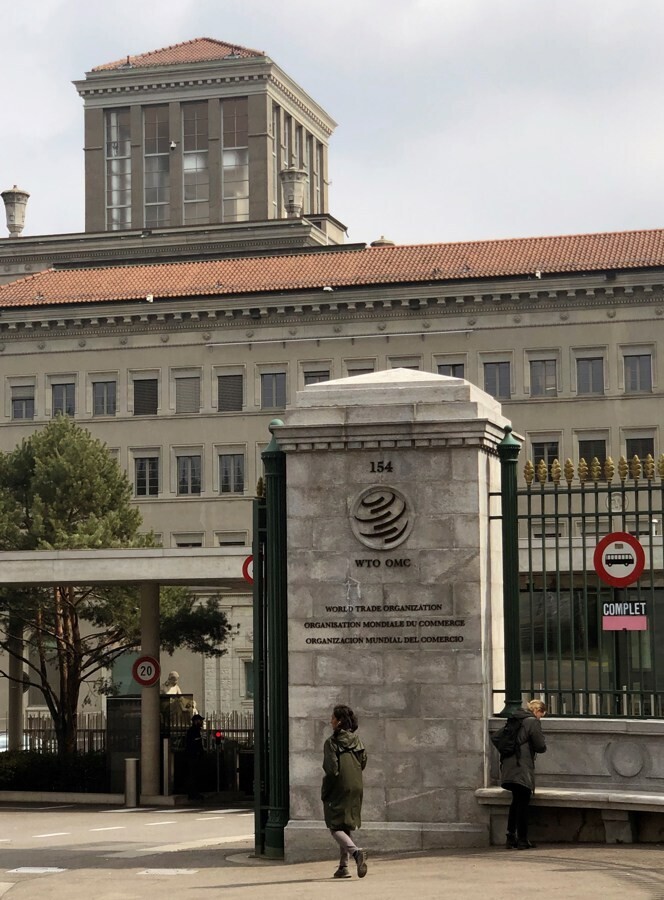
The World Trade Organization (WTO) warned on Thursday that the war in the Middle East could reduce global economic growth by 0.3% and merchandise trade by 0.5% in 2026 if the conflict drags on and oil and gas prices remain high. In that scenario, global GDP growth would be 2.5%, compared to the still-forecasted 2.8%; while merchandise trade would grow only 1.4%, compared to the 1.9% that would still be possible if hostilities ceased soon. However, for countries dependent on energy imports, the war could mean 1% less in their annual growth, double that of other countries. «Sustained increases in energy prices could increase risks to world trade, with possible repercussions for food security and pressures on costs for consumers and businesses», explained WTO Director-General Ngozi Okonjo-Iweala when presenting the new forecasts for world trade. The organization confirms that world merchandise trade grew by 4.6% in 2025, driven by the expansion of trade in products related to artificial intelligence (AI) and the rush to import goods to avoid the sharp tariff hikes announced by the United States last April. Most of those increases were nullified, first, because their implementation was postponed until August 2025, a period during which Washington reached numerous bilateral agreements with most of its partners. More recently, those tariff hikes were nullified by a ruling from the US judiciary, reasons that collectively led to the overall impact of the trade war being less than expected. Therefore, the 1.9% commercial growth forecast for this year (without considering the effects of a prolonged war) is considered part of a «normalization» of the situation. In terms of commercial services, the WTO forecasts a progression of 4.8% this year, compared to 5.3% last year. «The prospects reflect the resilience of world trade, driven by trade in high-tech products and services provided digitally», commented Okonjo-Iweala. She added to these strength factors the adaptability of supply chains to circumstances and the fact that the dramatic tariff hikes decreed by President Donald Trump did not lead to reciprocal retaliatory tariffs. By sector, the most notable is the technology sector, with a 21.9% increase in the value of trade in AI-related products in 2025, which reached $4.18 trillion, compared to $3.43 trillion the previous year. Those products alone accounted for 42% of the total growth in world trade, despite representing one-sixth of it, which was partly due to chips, semiconductors, and data transmission equipment being left out of the tariff hikes.