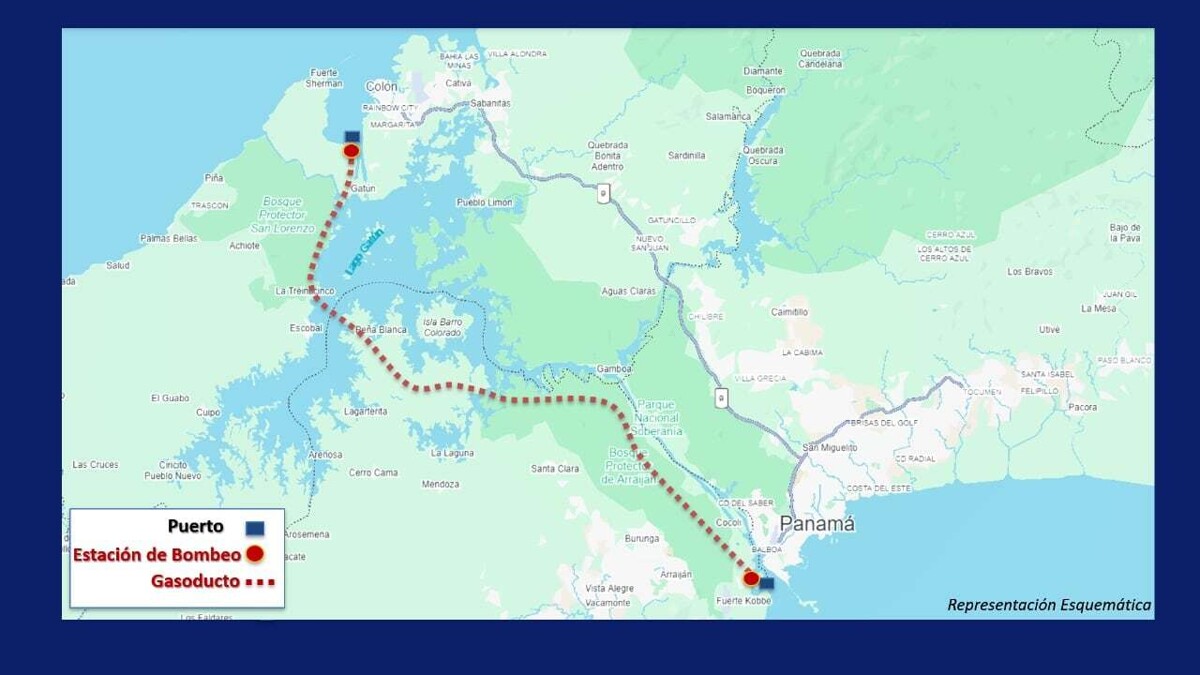
Panama can rewrite the rules of the game in the energy sector by offering not just a project, but a comprehensive solution. This not only strengthens the project's viability but also integrates the hemisphere into a more secure, efficient energy chain aligned with the interests of producers and consumers. Panama contributes what no one else can offer: location, connectivity, and stability. It is the natural evolution of how large-scale energy projects are financed worldwide: demand ensures the flow, and the flow pays for the infrastructure. Moreover, the development of this corridor does not replace the Panama Canal; it strengthens it. In today's world, energy certainty has a high and fully justifiable value. Instead of taking on debt or committing public resources, the country can structure the project under a different model: full financing by end-users. Through international consortia and long-term contracts, these countries can finance the corridor, use it, and at the same time, recover their investment through continuous use of the system. In this scheme, the United States is positioned as the natural supplier of that gas, thanks to its vast production and export capacity. In return, Panama would receive income from transportation, storage, logistics services, and the entire economic ecosystem generated around an energy node of this magnitude. This model is not theoretical. The transit of LNG carriers would continue, now complemented by additional capacity that reduces pressure, increases flexibility, and positions the country as a global energy hub, not just a commercial one. Of course, the technical challenge is significant. However, this challenge is manageable with the participation of specialized companies and under strict international regulations. What cannot be ignored is the opportunity. The world is seeking secure routes. It is willing to pay for them and to finance solutions that reduce its exposure to risk. While progress has already been made in the right direction, the task now is to make the decision to turn that effort into the hemisphere's most important energy corridor. In a global system where energy defines stability, the country that guarantees its flow does not just participate in the market; it becomes indispensable. The project does not need to convince the world; it needs to demonstrate that it is in the world's interest. The author is a mechanical engineer. Energy—and more so, its distribution—is at a decisive moment. Japan, South Korea, India, Indonesia, and Vietnam—large consumers of natural gas—have both the need and the capacity to invest in infrastructure that guarantees their own supply. A large-scale pipeline requires top-tier engineering standards, suitable materials, robust design, and impeccable execution. However, the magnitude of the moment raises an inevitable question: why not go further? The current proposal, focused on hydrocarbons like propane or butane, is a good starting point. The lesson is clear: it is not enough for a route to be open; it must be reliable at all times.