Panama, a country of just four million people, hardly needs China, which has the world's second-largest economy with a GDP close to $20 trillion. Over time, Panama has built one of the world's largest shipping registries, with over 9,000 registered vessels, representing about 23% of the world's merchant fleet.
Recently, China has been holding Panamanian-flagged ships in its ports without apparent justification. It seems President Donald Trump remains fixated on the Panama Canal, but more concerning is that he showcased our president, José Raúl Mulino, before his right-wing colleagues at a meeting of the so-called "Shield of the Americas" with other leaders last week.
This last move forced CK Hutchison to hand over the administration of these ports. Ultimately, the court's decision and the takeover of the ports along the canal could bring new opportunities and economic benefits to Panama, provided they are well-managed and kept away from political games and corruption.
In the end, one must ask: what will be the benefit of a potential decoupling of the Chinese economy in Panama due to external pressure? Do you think carriers will absorb these costs without passing them on to the consumer? The same could happen in our relations with Beijing if China decides to retaliate against actions against its companies in Panama.
However, facing an adverse international scenario that directly affects Panama—a country highly dependent on the import of oil, gas, and fertilizers—significant pressure on the cost of living is foreseeable, particularly for the most vulnerable sectors. Therefore, we cannot ignore that tensions between Washington and Beijing on the isthmus will have repercussions on the local economy.
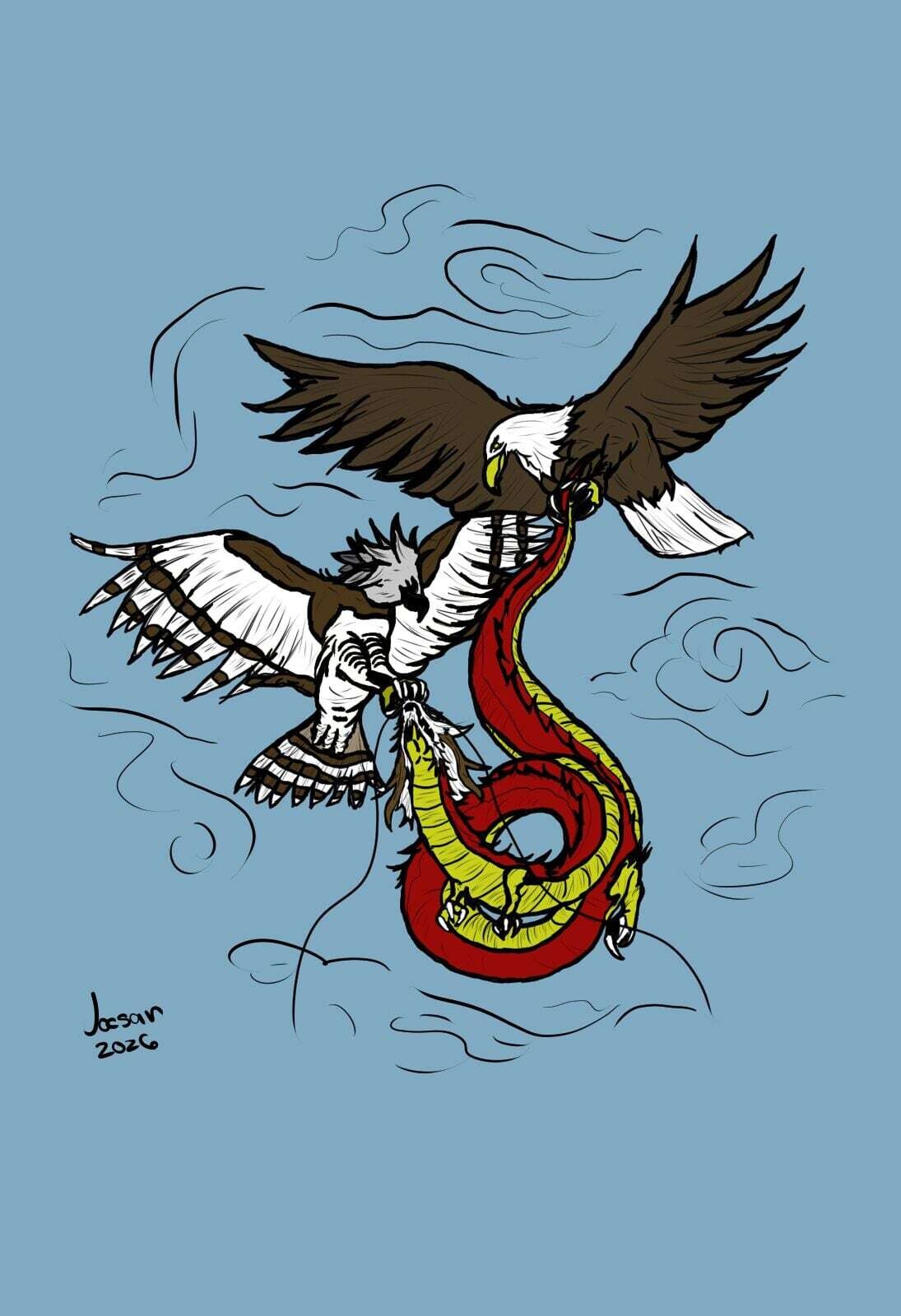
It would have been more diplomatic for President Trump to have congratulated our leader for successfully concluding the removal of Chinese companies from the canal's shores. Beijing does not make decisions with the same speed as the Washington government, despite being governed by a seven-member Standing Committee of the Political Bureau, directly appointed by President Xi Jinping.
At that same press conference, President Mulino also made a questionable statement from a political and diplomatic standpoint, claiming that China needs us more than we need them. Before this meeting, at the president's weekly press conference, it was announced that the ports of Cristóbal on the Atlantic and Balboa on the Pacific had been taken over by the Panama Maritime Authority (AMP).
What do we gain by distancing ourselves from a growing economy while countries in the European Union, Canada, and even Brazil are strengthening their ties with China? That single decision alone could affect state revenues by approximately $50 million.
Measures are needed to help stabilize the situation, and temporary subsidies on certain commodities could be considered in contexts of market disruption, such as the one currently observed in the Middle East. For example, Mr. President, how do you explain to citizens traveling to David—or to the interior of the country—that transportation costs could increase by up to 34%?
By calling him by his first name, José, he reminded him that we obtained the Panama Canal for a dollar, and that this was the consequence of a poor decision by a former U.S. president, Jimmy Carter: "ohh, I loved that Canal," he said. This could be the beginning of a series of actions by Beijing to harm Panama's economy.
It seems we forgot that the first ship to cross the expanded canal was a COSCO vessel with a Panamanian flag. I have always thought that President Carter deserves a statue on Panamanian territory in recognition of his push for the Torrijos-Carter Treaties. It doesn't seem to have been the best decision for President Mulino to participate in that meeting, which looked more like a gathering of subordinates than a meeting of the heads of state of Latin America, many of whom identify with Trump's right-wing policies.
But, as everything has its price—and as Americans say, "there is no free lunch"—the pressure exerted by the U.S. State Department and Department of Defense on the Mulino government bore fruit, albeit without geo-economic consequences that will take shape over time. We hope that no retaliatory measures are adopted that affect Chinese imports to the Colón Free Zone.
To this are added recent geopolitical events, such as the start of the war in the Middle East, which is already impacting fuel prices. We, on the other hand, seem to be closing ourselves off. The author is a former banker. The possibility has also been mentioned that the Chinese government might decide to withdraw its vessels from the Panamanian registry. This week, diesel could rise by more than a dollar and gasoline by nearly 74 cents per gallon, which would trigger an inflationary spiral, especially on essential goods.
President Mulino announced in his last press conference that subsidies, like those in previous administrations, will not be granted, calling them disorderly. This is totally false.