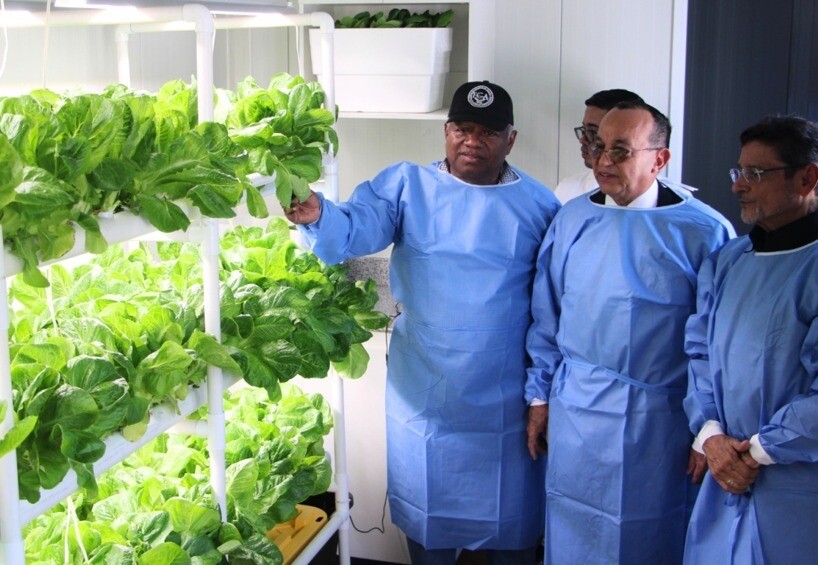
The University of Panama, through the Faculty of Agricultural Sciences (FCA), in alliance with the Center for Research and Production in Controlled Environment (CIPAC-AIP), has inaugurated a modern agricultural production laboratory in a controlled environment, aimed at strengthening the practical training of students and promoting the development of innovative technologies in the country.
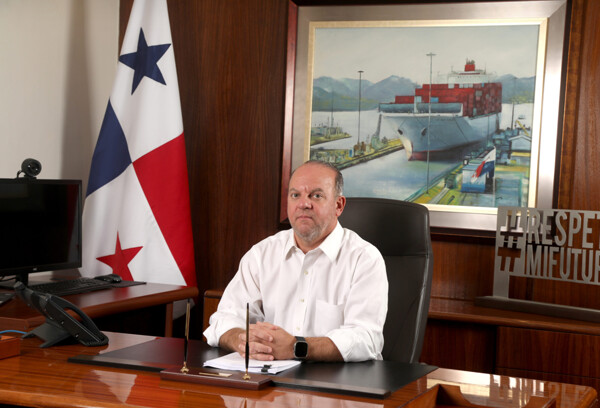
In this regard, the rector of the University of Panama, Dr. Eduardo Flores Castro, highlighted that this pilot laboratory will allow students to acquire early on skills in technologies that represent the future of food production, especially in the face of climate change challenges.
Flores also noted that the project is part of an agreement with the National Secretariat of Science, Technology, and Innovation (SENACYT) and CIPAC-AIP, aimed at developing controlled environment production centers nationwide, with funding from international organizations.
For his part, the dean of the FCA, Eldis Barnes Molinar, during the inaugural event, emphasized that this initiative represents a significant step in the incorporation of advanced technology into agricultural teaching.
These spaces will be dedicated to both research and the training of students and producers.
Currently, more than 25 products can be developed under this model in the country, opening new opportunities for agricultural innovation.
Dr. Gerardo Escudero, director of CIPAC-AIP, indicated that the initiative is part of a comprehensive effort to reduce technological dependence and strengthen Panama's food security.
He explained that the project is the result of a strategic alliance built over several years, which has allowed the university to provide land in Tocumen, Chiriquí, and Guararé for the installation of controlled environment research infrastructure.
Barnes stressed that with this system, various crops can be grown sustainably, with the possibility of weekly harvests.
He added that a lettuce grown in a controlled environment can develop in approximately 28 days, compared to the 60 to 70 days it requires under traditional conditions.
The director of CIPAC-AIP also announced that, as part of this alliance, three controlled environment production centers will be built with an approximate investment of 20 million dollars, on land of the University of Panama located in Tocumen, Chiriquí, and Guararé.
“This system allows producing food in less time, without chemicals and with greater durability for the consumer,” explained Escudero.
He pointed out that the country faces significant challenges, such as its condition of a net importer of food and agricultural technologies.
“What we are presenting today is technology made in Panama, designed for our conditions.”