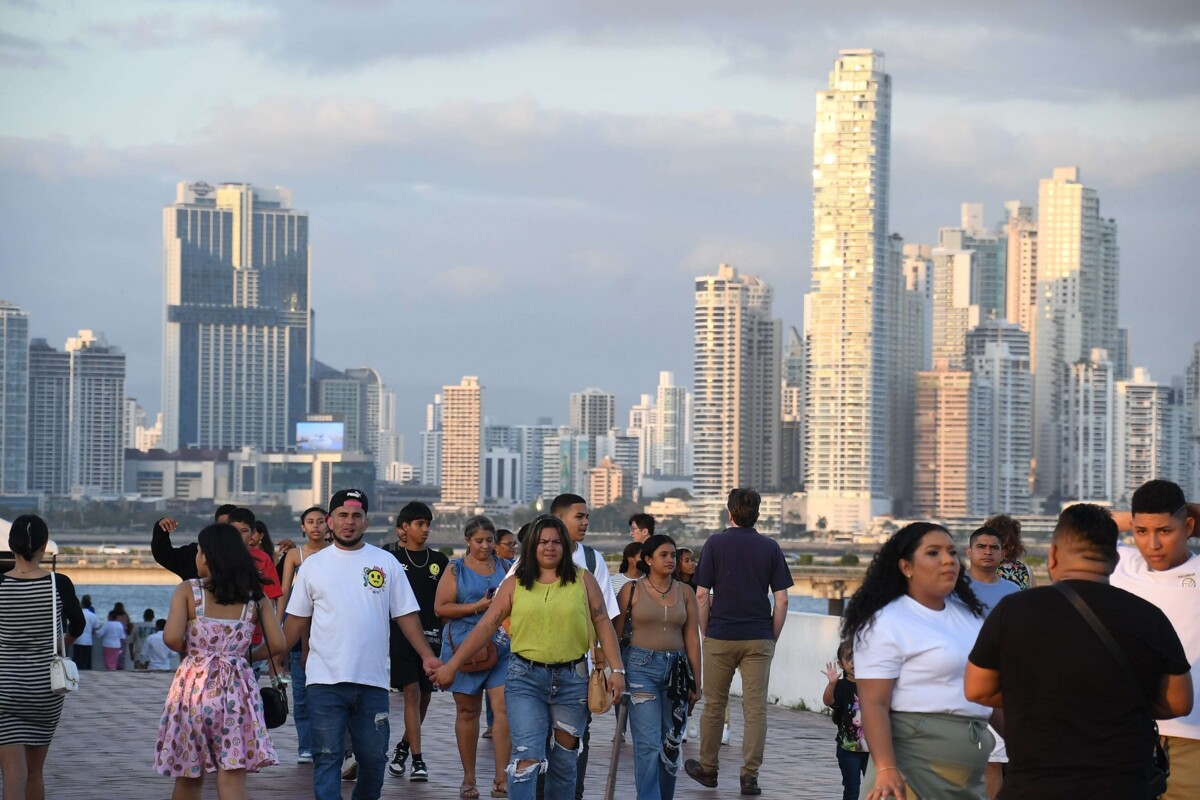
Of the 63,078 new formal jobs generated by the Panamanian private sector in 2025, only 6% came from tourism. Today, the tourism sector (Hotels and Restaurants) employs 120,430 workers, 68% of whom are salaried employees of the private sector, with an average education of 10.9 years completed. In 2017, the INEC published the “Advance of the Satellite Account of Tourism in the Republic of Panama, 2007-2013,” which sheds light on the real dimension of tourist activity in Panama. For example, in 2012, Hotels and Restaurants employed a little over 66 thousand workers. However, when accounting for the jobs generated by the rest of the activities in the tourism value chain in Panama, they totaled 144.8 thousand jobs, of which 43% were salaried and 57% were self-managed. 78% of the sector's workforce has 12 or fewer years of formal schooling, and 21% have a university degree.
Sector Behavior In 2025, foreign exchange income from tourism reached $6,583 million (excluding international transport), 9.7% higher than the previous year. That year, about 2 million tourists entered the country. This has three consequences. In fact, between October 2024 and September 2025, 44,586 new jobs were created, but 5,082 young people lost their jobs and another 8,622 started looking for work and did not find it.
We need to inspire confidence and coherence Panamanian tourism will continue to be a “Cinderella” until investing in it becomes a good business. In other words, the microenterprise, both formal and informal, is the backbone of employment in the country's tourism sector. One in four tourism workers is under 30, making it a critical area in efforts to face the rise in youth unemployment, which today affects one in five young people between 15 and 29 years old, reaching up to 27% in provinces like West Panama. Young people represent 23% of the workforce and half of the unemployed in an increasingly “hostile” economy towards them.
The second is that the Panamanian tourism value chain is served mainly by micro-entrepreneurs. Meanwhile, cruise ports registered 344,408 cruise passengers, with an 11.5% growth, while the Paso Canoas border showed a 2.9% increase, reaching 106,006 visitors. In total, 2,330,677 tourists who stayed overnight in the country were counted, 11% above the 2024 figure.
Panamanian Tourism is Undersized In Panama, the labor and socio-economic impact of tourism is understated, as the INEC only measures activity related to Hotels and Restaurants. The first is that Hotels and Restaurants represent less than half of the jobs in the tourism sector. But the growth in the number of visitors has not directly translated into new quality jobs compared to other sectors, in an activity highly sensitive to internal consumption levels and liquidity in the economy. According to the Labor Market Reports of the National Institute of Statistics and Census (INEC), in 2024, after the cessation of mining and the consequent loss of the Investment Grade from Fitch Ratings, tourism generated only 2,269 new formal jobs, with an average salary of $662.30 per month, $71.70 less than the average in the economy. Between October 2024 and September 2025, the tourism sector generated 3,849 new formal jobs, with an average salary of $663.80, $92 less than the national average. Panama received 3,004,266 international visitors in 2025, 8.2% more than in 2024, according to official figures. Today, 4 out of every 5 workers in the sector are informal or work in companies with fewer than 10 employees. The third is that tourism and its ecosystem constitute the third largest generator of employment in the country, after Commerce and Agriculture.
Socio-labor Impact of Panamanian Tourism Panamanian tourism employment has important socio-economic implications. Our economy needs to generate more income, not more taxes. Tocumen International Airport reported 2,244,078 visitors, reflecting a 10% increase. It is urgent to inspire confidence and demonstrate coherence, especially in public policy matters. In this context, the Bill 131 draft, which seeks to raise to $10 the fee charged for the transit service to passengers at Panamanian airports such as Tocumen International Airport, makes no sense. Only investment will bring good jobs and salaries. The challenge is not how to “divide the cake,” but how to make it bigger. The author is a business advisor.