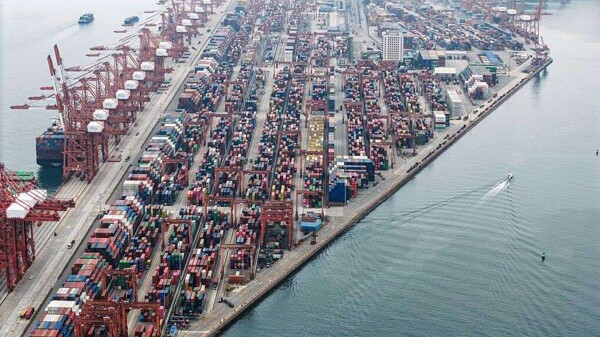
In an increasingly complex international context, states are paying greater attention to the protection, administration, and effective control of these assets. The goal is to prevent actors linked to harmful external interests from influencing or taking control of them to limit or condition the state's ability to make sovereign decisions. In a globalized world, ownership and control of these assets transcend economics and become a matter of essential national security. This category includes mineral reserves, ports, technological platforms that support state management, and certain components of the national financial system. Regarding private assets serving the public, these are properties not owned by the state but intended to provide essential services or services of public interest. The challenge is not only legal but also strategic. The state's ability to identify, protect, and control these assets will be key to preserving its sovereignty and ensuring stability in an increasingly demanding international environment. The possibility that critical infrastructure or strategic assets could fall under the influence of foreign actors poses risks that cannot be ignored. This is not a distant hypothetical scenario but a real risk in the absence of adequate oversight mechanisms. It is necessary for the state to develop a legally viable model that allows it not only to supervise but also to authorize or condition transactions between private parties involving these assets, including digital assets. This implies establishing differentiated criteria in public tender processes and reserving rights such as preferential acquisition or repurchase when the nature of the asset justifies it, and/or the orderly transfer of both physical assets and their information if necessary. This model must be compatible with legal certainty and competitiveness, avoiding unnecessary barriers to investment while guaranteeing the protection of the national interest. Critical infrastructure refers to physical or digital assets whose protection and operational continuity are indispensable for the basic functioning of the state, such as bridges, hydroelectric plants, and public databases linked to sensitive areas like health, taxation, or civil registration. Strategic assets are tangible or intangible resources that are essential for national interests, regardless of whether they are state-owned. These categories are not mutually exclusive; in many cases, they overlap depending on the nature of the asset, its function, and its ownership regime.