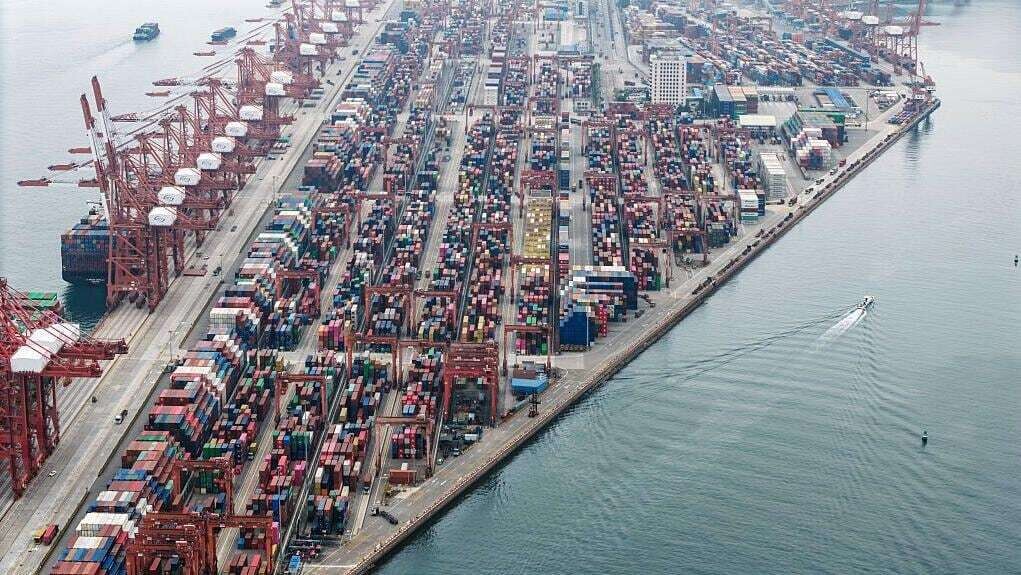
In March 2026, 185 detentions were recorded in the region's ports, 124 of which correspond to China. The increasing detentions of ships flagged in Panama can be interpreted as a retaliation from China, which on January 30th—one day after the unconstitutionality ruling against PPC was published in the Official Gazette—assured that it would take “all necessary measures” to protect the rights and interests of Chinese companies. “The Chinese government will take all necessary measures to firmly safeguard the legitimate and legal rights and interests of Chinese companies,” stated a spokesperson for China's Ministry of Foreign Affairs. The first to alert about restrictions on ships flagged in Panama was U.S. Secretary of State Marco Rubio, who warned that these measures threaten the fluidity of supply chains and increase logistics costs on key routes. Last Friday, April 3rd, Chinese Foreign Ministry spokesperson Mao Ning denied these allegations and blamed the United States for trying to create confusion to gain control of Panama's ports. Panama thanks the support of the U.S. Meanwhile, Panama has garnered support: Israel, Ukraine, Costa Rica, Paraguay, Peru, and Honduras have joined the list of countries that have publicly repudiated China's measures against ships flying the Panamanian flag. “The Government of the Republic of Panama thanks and highlights the support expressed by various Governments and international organizations in defense of the Panamanian merchant fleet, following the recent detentions and inspections of ships flagged in Panama in the ports of the People's Republic of China,” expressed the Ministry of Foreign Affairs in a statement, released last Saturday, one day after the Chinese spokesperson's announcement. Panama has not yet communicated if it will take any retaliatory measures. The ports of Balboa and Cristóbal, which for nearly 30 years were operated by PPC, are now under the temporary administration of subsidiary companies of the Danish Maersk and the Italian Mediterranean Shipping Company (MSC), respectively. This means that in one month (between February and March 2026), the detention of flagged vessels in Panama registered an increase of 384.21%. In January 2026, the figure was 23 immobilized vessels. So far in April, 11 vessels flagged in Panama have already been detained. It was not always like this. A year ago, in March 2025, the figure was only 32 Panamanian-flagged vessels retained, 34.04% of the 94 vessels that were immobilized that month. Taking the same month (March) as a reference, in 2024 Chinese port authorities detained 13 Panama-flagged ships; in 2023, it was 34; in 2022, only 3; in 2021, 5, and in 2020, 2. Although Apcis includes data from 18 countries in the Asia-Pacific region, it is China that concentrates the largest number of detentions. The U.S., Israel, Ukraine, Costa Rica, Honduras, Paraguay, and Peru, and international organizations, have condemned actions in Chinese ports against ships flagged in Panama. Although China maintains that the accusations regarding the alleged detention of Panama-flagged ships are “unfounded,” the figures indicate the opposite and show that they intensified after the ruling that declared the concession contract of Panama Ports Company (PPC), a subsidiary of the Hong Kong conglomerate CK Hutchison, unconstitutional. La Prensa examined the database of the Asia Pacific Computerized Information System (Apcis), which, among other things, processes information related to transportation and port movements in that region. The database shows that last month, 124 vessels were detained in Chinese ports, of which 92 (74.19%) flew the Panamanian flag. The detentions supposedly obey administrative or security inspections. They last an average of one to four days, although there are exceptions, such as the refrigerated cargo ship Eita Maru, owned by the Taiwanese shipping company Koo's Shipping Co., S.A., which was detained in the port of Weihai on March 10th and released 10 days later. This figure contrasts with what happened last February, when 19 Panama-flagged ships were detained.