Why, then, must our neighbors raise our prices at the same rate set by the nefarious OPEC cartel? Where has the cooperation from the recent 'Shield of the Americas' gone, or the protection of those governments for their own consumers, or the supposed defense of 'free trade'?
In 1980, due to a crude oil supply shortage, nine Central American and Caribbean countries signed the 'San José Agreement' with Mexico and Venezuela, which guaranteed our supply and allowed for long-term credit facilities.
Eleven years later, in 1991, as Minister of Commerce, responsible for the National Hydrocarbons Directorate, I undertook the difficult renegotiation of a new contract-law with the Refinería Panamá to replace Law 44 of May 10, 1956, which obligated the nation for 35 years to guarantee the company 'the full recovery of its costs, plus a reasonable profit and a 70% ad valorem tariff' to eliminate competition.
Negotiating a new contract with the Texaco transnational on the rubble of the invasion and with the danger of a fuel shortage seemed impossible. Furthermore, why has China, despite being the most commercially favored nation by using our Canal, always refused to sign the Treaty of Neutrality, even when it guarantees it perpetual free transit?
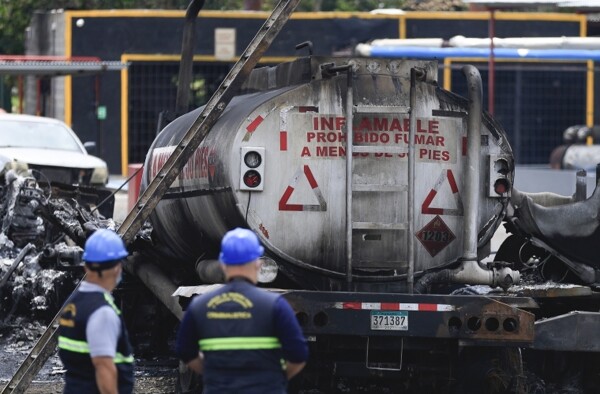
Now it turns out that we are also affected by the war initiated by Israel, Iran, and the United States, impacting our flag fleet and increasing the costs of petroleum derivatives.
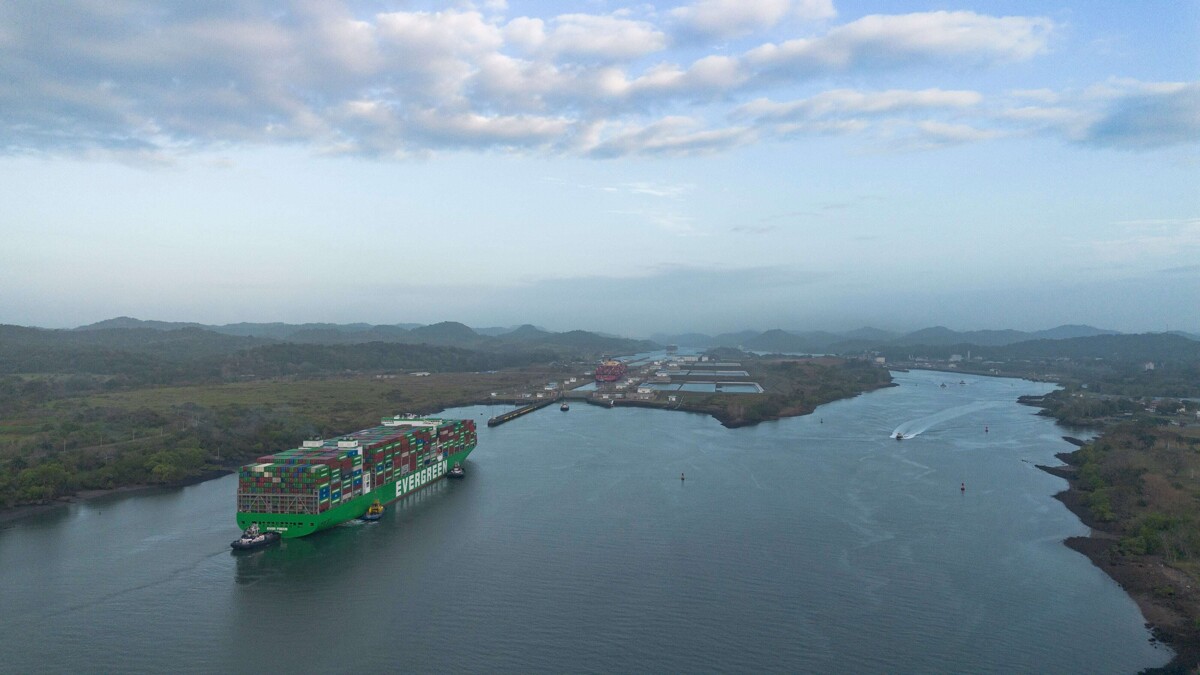
We offer the world trade billions in savings and shipping companies a new, secure interoceanic route with first-class, uninterrupted service.
So, if the Canal's Neutrality Treaty makes us hostages to 'free transit,' why, when conflicts erupt that affect the sovereignty of our flag of convenience or directly hit our economy, can we not temporarily compensate them and, as an independent republic, establish a fair compensation for the transit of oil and gas vessels through our sovereign territory?
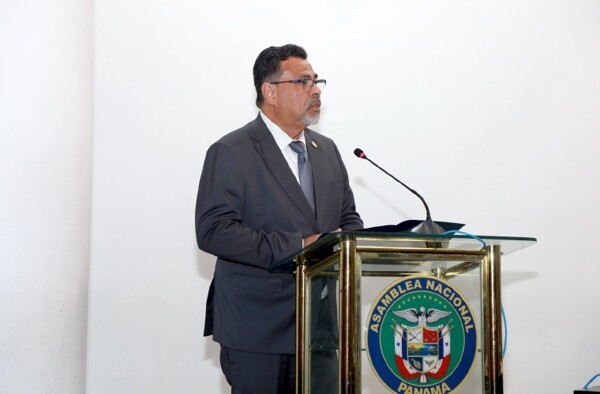
The author was Minister of Commerce and Industry and Ambassador of Panama to both Washington and Italy.
There is no doubt that when there is the will and patriotism, solutions are found. I don't understand why Panamanians have to suffer and pay for the constant global jumps and jolts when we are fully complying with our 'ProMundi Beneficio' vocation.
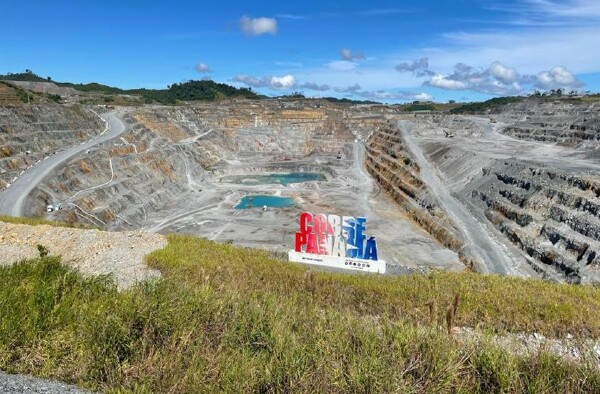
We haven't even gotten out of the arbitration with the Canadian mining company to fall into the United States-China conflict over two private port concessions that, clearly, were acting in violation of our Constitution and the terms agreed upon in said contract-law.
Now it happens that with the closure of the 'Strait of Hormuz,' the Eastern Dragon, which depends more than ever on our interoceanic route to satisfy its enormous energy appetite, threatens our sovereignty by detaining ships under our flag and initiating million-dollar arbitrations against us.
However, several national experts on the matter, along with the director of the hydrocarbons department and this undersigned, created the 'Petroleum Market Liberation Commission' and dedicated hundreds of hours to intense sessions until we achieved a new contract-law that allowed the Endara government, through four cabinet decrees, to fully liberalize the market for petroleum derivatives, thus immediately reducing the 70% tariff protection to 20%, eliminating the 15% guaranteed profit for the refinery, renouncing the 'San José Agreement,' authorizing new fuel storage zones, eliminating all gasoline subsidies for the transport and fishing sectors, and maintaining only the subsidy for the 25-pound gas tank.
The result was immediate, as in October 1992, after the new contract-law was approved, the price of a gallon of premium, which was at B/.1.98, dropped to B/.1.67 in just ten months, also saving the treasury costly subsidies.
There is no justification whatsoever for the cost of oil or its derivatives in the American continent to rise in parallel with crude oil in the Persian Gulf, since Canada, the United States, Mexico, Venezuela, Colombia, and Ecuador have more than enough to supply the entire continent's consumption.
If each country, at its discretion, can defend its supposed rights, why can't Panama similarly restrict the use of its geographical position to safeguard its sovereignty and its Constitution?