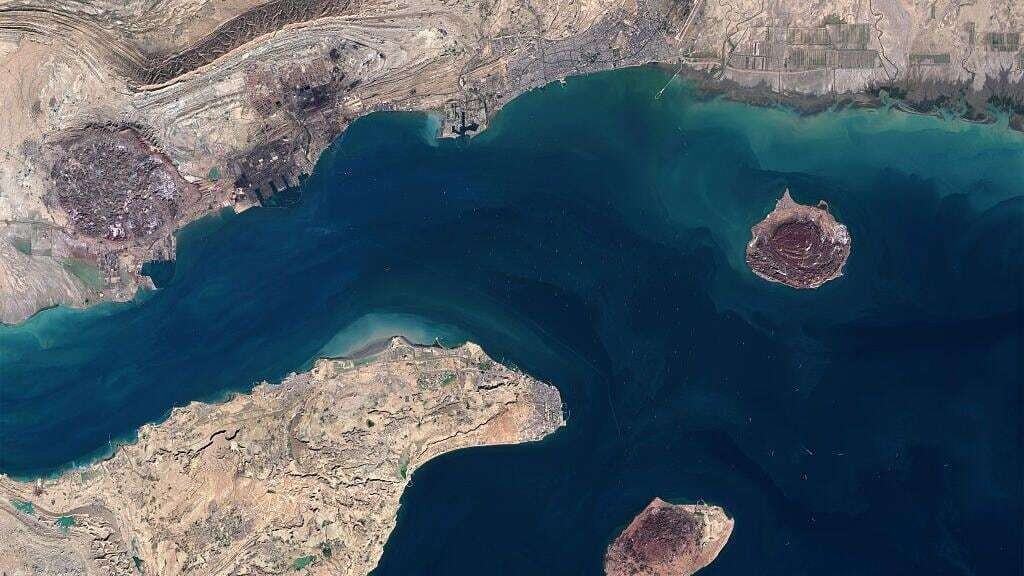
The crisis in the Strait of Hormuz, beyond its immediate impact on crude oil prices, throws a direct mirror on our own reality in the Panama Canal. Strategic geography has ceased to be a simple backdrop and has become the most effective weapon of coercion of the 21st century. If Hormuz is the knot that can paralyze energy, Panama is the valve that prevents the collapse of supply chains for goods, grains, and chemicals between Asia and the east coast of the United States. On this global chessboard, Panama must strengthen its role as a resilient logistics hub. If we allow our interoceanic route to lose reliability—whether due to political instability or the water crisis—we will lose our main bargaining chip on the international stage. Only in this way can we prevent the Panama Canal from becoming, for climate reasons, a critical and volatile choke point as narrow as those in the Middle East. The crisis in the Strait of Hormuz reminds us that in international trade, efficiency is nothing without security. Hormuz's security depends on diplomacy and military force; Panama's depends on the sustainability of its hydrographic basin and bold political decisions on land and water use. Sovereignty is not only exercised with a flag but by guaranteeing and preserving the viability of the interoceanic transit route. While Hormuz carries about 25% of the world's energy, the Panama Canal facilitates the passage of up to 6% of global maritime trade. Panama, despite showing remarkable resilience with a historical contribution to the treasury of $2,965 million by the end of 2025, is not immune to catastrophic interruptions. The true 'closure' of Panama would not come from a military order but from the lack of a basic resource: fresh water, the 'vital blood' of the Canal. State-level decisions are needed! The author is an analyst of international relations and security affairs. For Panama, this reality is a warning mirror. The neutrality of our route is a diplomatic treasure, but that external peace must be accompanied by internal water security. This is our variant of the blockade: a 'hydrological strangulation' that, if not managed with critical infrastructure and new storage sources, could shift the world's trade confidence toward less efficient but more predictable routes. This comparison is mandatory for our national planning, particularly in critical infrastructures such as the interoceanic route. With recent restrictions and tensions in the Strait of Hormuz, the global logistics system is tense again, reminding us that the flow of the modern economy depends on a few narrow passages worldwide. In the Strait of Hormuz, we see the 'geopolitics of strangulation' in its purest state: the ability of a regional actor to turn a geographical accident into a global panic button that triggers inflation and uncertainty with just a naval deployment. In 2026, facing the risk in Hormuz, shipping companies desperately seek alternative routes that are often insufficient. The start of April 2026 has returned the world to one of its most recurring nightmares: the use of strategic geography as a weapon of political pressure. For us, that security lies in protecting the water that feeds our locks and ensures human consumption. The lesson we must draw from the instability in the Persian Gulf is that of the vulnerability of exclusivity. Prolonged droughts, exacerbated by phenomena like El Niño, have forced drastic reductions in draft and daily transits in recent years. Climate change has ceased to be a prediction and has become an operational constraint.