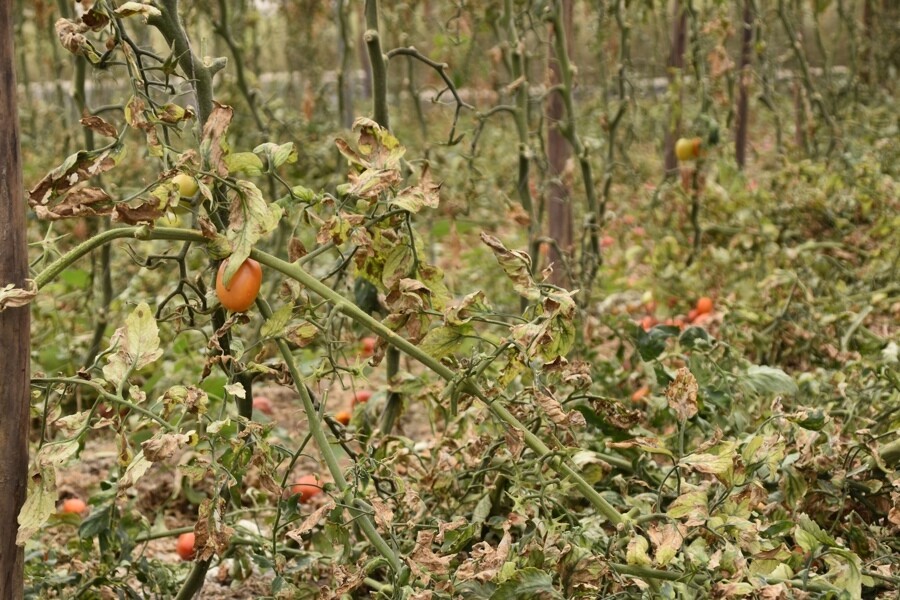
Extreme weather events linked to climate change are one of the main causes of hunger suffered by millions of people worldwide, affected by crop losses and rising food prices. In just five years, the number of people with severe food insecurity due to extreme phenomena has multiplied by six, highlighted Efe the Director of Climate Change of the United Nations Organization for Food and Agriculture (FAO), Kaveh Zahedi. Climate change 'alters weather patterns, depletes water sources, increases food losses from pests and diseases, and exerts unprecedented pressure on farmers,' he stated. He recalled that in the last decade, a quarter of all natural disasters have impacted agriculture, citing as an example the drought last year that reduced the grain harvest by 50% in Southern Africa. The effects of El Niño on food production were noticeable both there and in regions of Latin America and the Caribbean, including the Central American Dry Corridor and Bolivia. Belgian Ghent University researcher Eduardo de la Peña has also closely followed the incidence of climate change in Africa. The combination of droughts, high temperatures, and diseases has reduced cocoa production in Ghana and Côte d'Ivoire (its main producers), which explains its price increase. No need to go far either: the latest droughts in the Mediterranean have undermined olive oil production and driven its prices to historic highs, recalled De la Peña, who is part of the European Food Safety Authority (EFSA) plant health experts group. The World Meteorological Organization's 2024 report also cites other cases such as torrential rains that caused significant agricultural damage in as diverse regions as East Africa, the Sahel, southern Brazil, and eastern Spain (especially the Valencian Community due to the damage). Improving adaptation Almost all basic crops and farm animals have been affected by the 'perfect storm' represented by these climate change-related factors, pointed out the Executive Director of the Consultative Group on International Agricultural Research (CGIAR), Ismahane Elouafi. Each year, these threats cause losses of 10 to 40% in the main crops, with a global cost of about 220,000 million dollars (about 189,000 million euros). Many countries, especially from the Global South, are 'highly vulnerable' and have 'very limited' capacity to adapt, added Elouafi, urging governments to change their policies to allow the entry of improved varieties, facilitate access to affordable technologies and markets, and promote equality of rights for women and youth. Greater collaboration, knowledge exchange, and investment in research are key to responding to these challenges, according to the expert. When food prices skyrocket, families eat less and worse. Parents replace fresh and nutritious foods with cheaper ones, with devastating consequences: more malnourished children, less food for women, and more communities trapped in a cycle of vulnerability and inequality,' stated Zahedi. In 2024, 96 million people suffered from severe food insecurity in 18 countries particularly affected by extreme events, according to the global report on food crises. 'In all regions, climate change is disrupting the foundations of food production.'