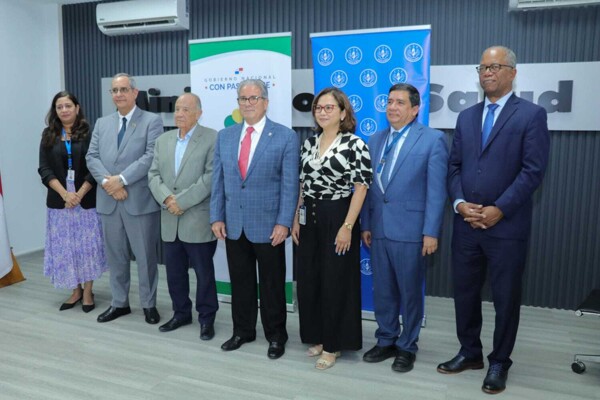
The Second National Disability Survey (ENDIS-2) reveals that 781,478 people in Panama live with some form of disability, meaning 18% of the population or 1 in 6 Panamanians.
According to data broken down by province and region, the highest percentage of people with disabilities is found in the Ngäbe Buglé region, at 24%; followed by Herrera (21.5%), Guna Yala (19.8%), Panamá Oeste (19.4%), Coclé (19.3%), Panamá (18.0%), Colón (17.5%), Los Santos (16.3%), Veraguas (16.2%), Darién (15.9%), Bocas del Toro (15.8%), Chiriquí (14.1%); and Emberá Wounaan, with the lowest rate at 11.4%.
In terms of absolute numbers, Panamá province has the highest number, with over 278,000 people with disabilities, while the Emberá Wounaan region has the lowest, with 1,464 people. The data shows that women represent 58.4% of the population with disabilities.
ENDIS is a specialized study that measures disability and functional difficulties in Panama's population using international standards. It highlights that only 1.9% received care at a specialized institute and 0.03% at the 'Reintegra' centers. The main reason for not receiving medical care was lack of money.
These results allow for a precise understanding of how many people face functional limitations and to what extent, as well as estimate the prevalence and other indicators of the population with disabilities to guide policies based on the principles of solidarity, dignity, and human rights.
These data strengthen public policies, mainly in health, education, work, accessibility, and transport. They are integrated into the National Strategic Plan for Disability 2024-2029 for implementation over this five-year period, seeking legislative collaboration to work with civil society on amending Law 42 and Law 15, and focusing actions by directing plans, programs, and projects towards the social inclusion of people with disabilities.
Additionally, by type of condition, impairments in organs and systems, as well as hearing impairments, are most prevalent.