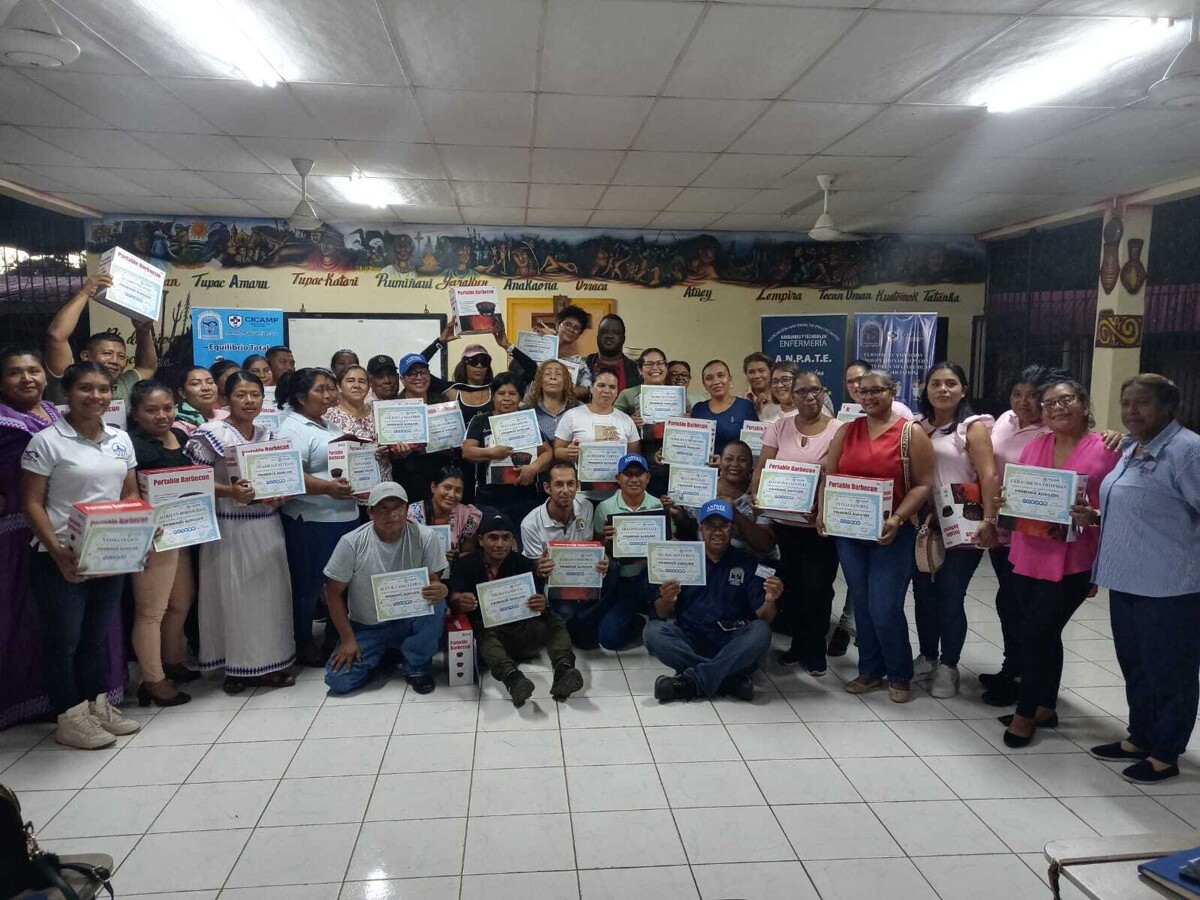
The National Association of Practitioners, Assistants, and Nursing Technicians (ANPATE) provided training in first aid, cardiopulmonary resuscitation (CPR), and overall balance to nursing technicians working in the country's most remote areas, known as 'Comarcas' (regions of difficult access). The event, held over three days in San Félix, Chiriquí, brought together more than 50 nursing technicians from the most remote regions. This was the second educational session led by ANPATE's president, Vielka Rosero, who aims to keep her team at the forefront of new developments. The technicians praised the professionalism of the lectors and the hands-on workshops.
«You don't see this every day, and we need to be alert because in our communities, we are seen as saviors,» several technicians agreed. They mentioned that in some places, there are no doctors, and they must be prepared to help, especially with scorpion bites, snakebites, and insect stings. Chiriquí-based technician Rosa Gutiérrez, who works in Las Lomas, and 43-year veteran José Salinas, now based in Llano Ñopo, share this view. Instructors from CICAMP explained that advancements in the healthcare system must go hand-in-hand with technicians. Even the steps for performing CPR and applying a tourniquet have changed, and more sophisticated devices like Automated External Defibrillators (AEDs) are now available, a fact many were unaware of despite being installed in several hospitals.
«We just hope this equipment arrives in our areas so we can do a better job. Now that we're familiar with it through this training, it's much more practical,» they said. Nursing technicians face these challenges daily in the Comarcas, from Narganá, Guna Yala, to Ngäbe-Buglé, Chiriquí, and distant regions like Kankintú, Chiriquí Grande in Bocas del Toro, and Llano Ñopo. Assistants and technicians from these regions came to gain knowledge that will improve their work and ensure patient safety, as Rosero stated.
«Identifying cardiac arrests, resuscitation for respiratory problems, treating child drowning cases, using a manual resuscitator, and managing snake and scorpion bites» are essential points for our members, Rosero expressed, adding that they learned firsthand about «new hemostatic gauzes, an innovation that will soon arrive in the country's hospitals, and the nursing technicians are already prepared for its correct use.» Another point covered was the «tourniquet,» whose application has evolved, with new fundamental elements for stopping bleeding.
In these remote areas, assistants and technicians are the first line of response in any emergency, so their training can be the difference between life and death, Vielka Rosero emphasized. ANPATE is enhancing the value of its qualified staff by providing a two-year certification from the International Center of the American Heart Association (AHA), which conducted the workshops. The event was led by experienced Javier Steel, with the participation of National Head of Nurses Carol Castro and Image Advisor Daryelis Torres, a motivator who strengthens the role of technicians in their daily work.