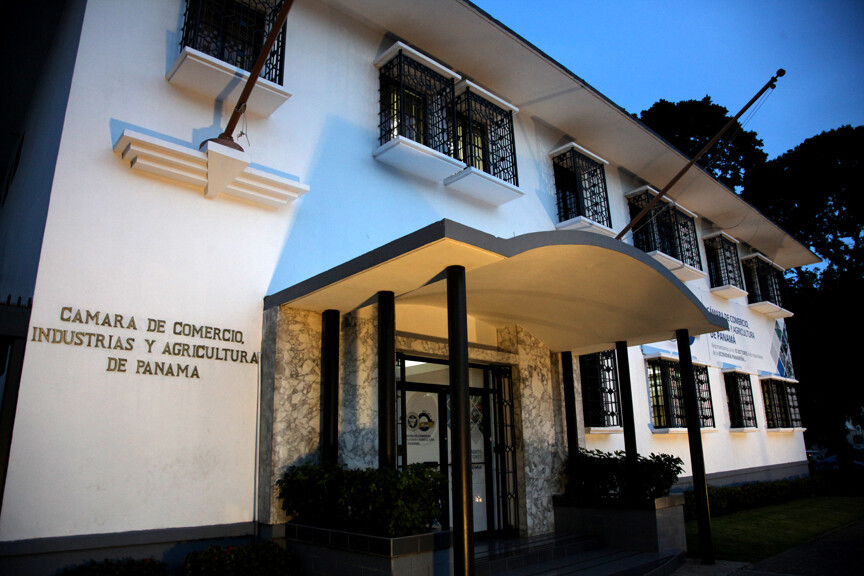
Fewer options on the shelves, less competition, fewer alternatives, and more price pressure. It may seem practical, but it can also be limiting, because health is not summarized in a single symbol. And when a policy falls short in information, someone ends up paying for that simplification, and that someone is usually the consumer. First, the price. It doesn't exist in Europe, nor in the United States, nor in Latin America, points out the president of the Chamber of Commerce, Industries, and Agriculture of Panama, Juan Arias. Each country has taken different paths, and many are still adjusting their models because the issue is not as simple as placing a symbol on a package. Because in the end, the consumer doesn't need to be told what to think, they need tools to understand. The international experience is clear: there is no single solution, and hasty decisions, without measuring their real effects, tend to have unwanted consequences. Panama has the opportunity to do it better, because when it comes to what we eat, the responsible thing is not to simplify the conversation, but to elevate it to make informed decisions. The article 'Chamber of Commerce questions front-of-pack food labeling' was first published in La Verdad Panamá. That is why, before imposing a single system in Panama, it is worth pausing. When talking about front-of-pack labeling, we are talking about simplifying, reducing information to a visible warning. If the requirements become more complex than in other countries, many brands will simply decide not to be in our market. Not out of bad intentions, but out of business logic. The result? There is no consensus in the world on how the front-of-pack warning label on food should be. It does not require expensive changes to packaging or processes that end up being passed on to the final price. The consumer ends up paying more and choosing less. On the contrary, it allows for more information without increasing the product's price. But beyond the type of label, there is something even more important. Panama is a small market. We have to bet on education, because no labeling system, on its own, will solve the problem if people do not understand what they are consuming. We need consumers who can make conscious decisions. And in a market like ours, those costs are not absorbed by the system, and in the end, the one who pays is the Panamanian in the store or supermarket. Second, variety. Electronic labeling does not eliminate information: it expands it, it doesn't replace, it complements and doesn't impose, it allows for a choice. Furthermore, something fundamental: it does not represent an additional cost for the consumer. Not as an easy way out, but as a more complete solution. Changing packaging, reformulating products, adjusting production lines: all of that costs. People who understand what they eat and what effects it has on their body. That is the real underlying change, and that is where electronic labeling adds value: it not only informs, but also educates. That is why the debate should not be about whether to warn or not to warn, it should be about simplifying or informing better. In that context, we propose electronic labeling.