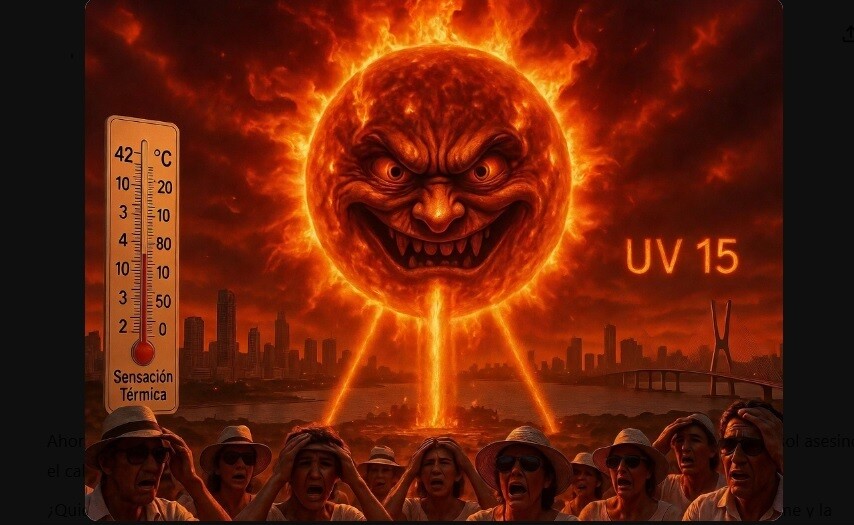
Panama kicks off the week under an extreme solar radiation and high temperatures alert, posing a health risk across much of the country. Temperatures will range from 31°C to 37°C, but the heat index could climb to 42°C due to humidity. The heat and radiation will be felt on both the Caribbean and Pacific coasts, including provinces like Chiriquí, Veraguas, Los Santos, Herrera, Coclé, Panamá, and Colón, as well as indigenous comarcas. This is compounded by a thinner ozone layer, warm and humid winds, and above-normal sea surface temperatures. Given this scenario, it is advisable to avoid sun exposure from 10:00 a.m. to 4:00 p.m., use sunscreen, wear appropriate clothing, and stay constantly hydrated. The situation will be more intense in Panama's Pacific region, where there is little cloud cover and no rain. Authorities warn that this combination can cause heat strokes, dehydration, skin burns, and cramps, especially among people who remain exposed for long periods or engage in outdoor physical activities. The alerts are in effect from April 6 to 9, 2026, with conditions combining intense sun and high heat for several hours a day. During this period, UV-B radiation will reach high to extreme levels, with values potentially reaching 15, considered dangerous. The most vulnerable are children, the elderly, and individuals with chronic illnesses. The phenomenon is due to typical April conditions, the hottest month of the year in Panama, when solar rays hit the country almost directly.