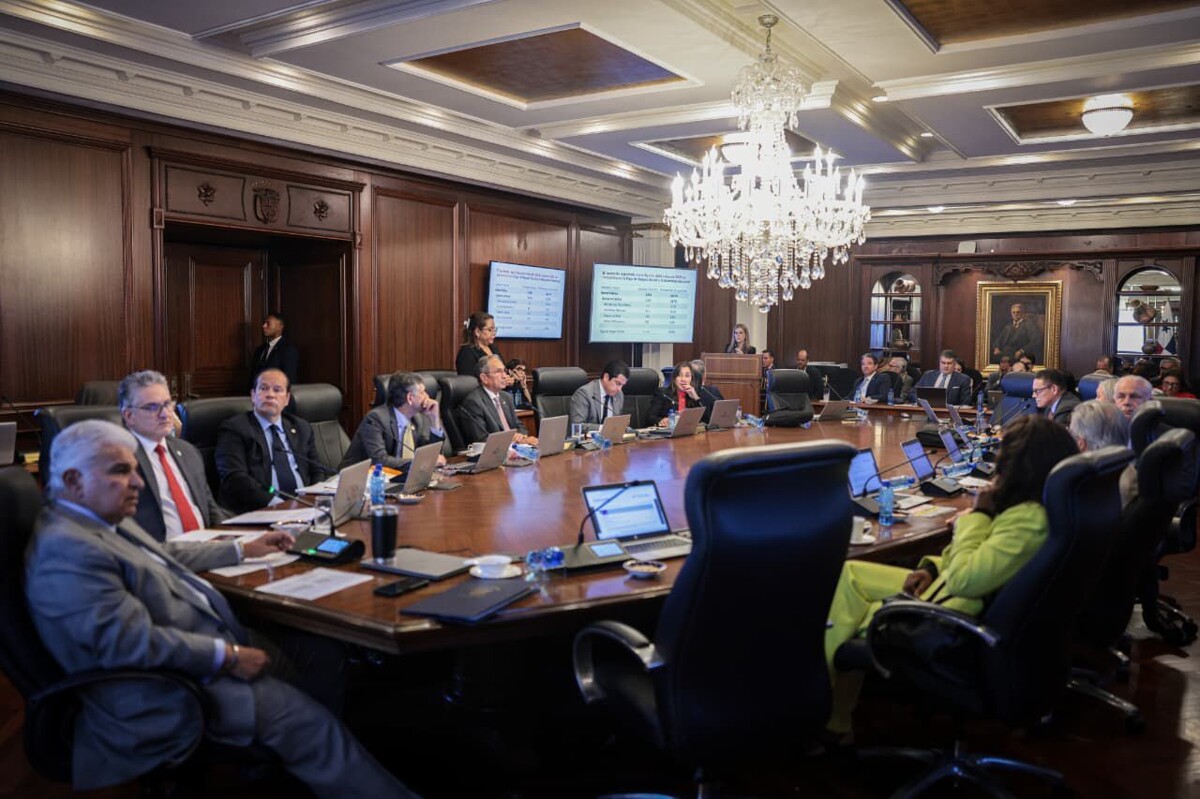
The Council of Ministers approved on Tuesday Decree 3725, which launches an ambitious inter-institutional cargo verification program designed to secure the country's ports, airports, and borders against smuggling and transnational organized crime.
The director of the National Customs Authority, Soraya Valdivieso, highlighted that with this initiative, "the transformation of Customs is a fact."
"Today Panama makes a historic leap: a more modern, technological Customs with qualified personnel. Panama will no longer be a blind spot for international crime," stated the Customs director.
She emphasized that the strategy combines human talent, technological innovation, and inter-institutional cooperation to strengthen the country's defense and logistics competitiveness.
"We are building a technological wall against transnational crime," affirmed Valdivieso.
The decree updates the 2006 regulations and governs cargo inspection through X-ray scanners and other advanced technologies, integrating all country's equipment into a Unified Control and Monitoring Center.
According to Valdivieso, the new scanners will allow for the detection of any irregularity in containers, vehicles, or documentation within minutes, strengthening Panama's reputation as a safe and reliable logistics hub.
Before December 31, new scanners will be operational in the ports of Colón, Manzanillo, Cristóbal, and Balboa, as well as at strategic land points and in the Colón Free Trade Zone, where this technology has not been available for over a decade.
The annual maintenance of the equipment, which can reach $700,000, will be covered by the State, while highly qualified personnel will be responsible for operating the systems and ensuring the efficient and secure inspection of all cargo.
"This is not just technology, it is sovereignty and security."