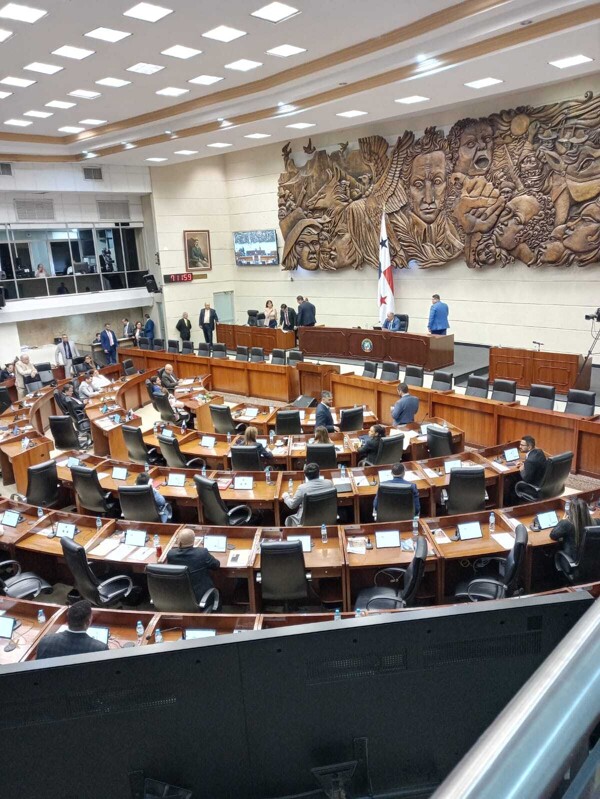
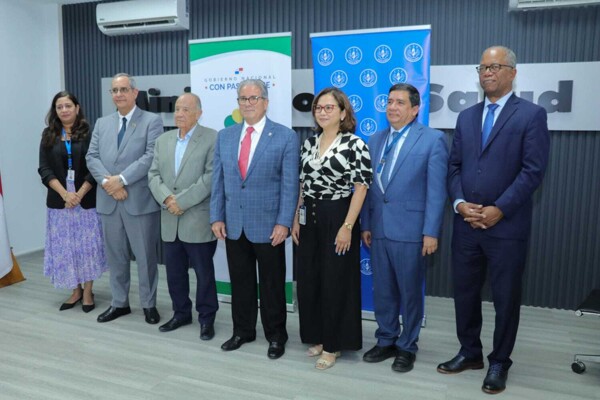
In the opinion of Commissioner Luis Carlos Trejos, the anti-mafia law promoted by President José Raúl Mulino represents a step forward for Panama, which now sees the 'beards of its regional neighbors burning' and is taking preventative measures. The law also seeks to shield the country's institutions to prevent corruption from continuing to penetrate them. Trejos recalled that transnational organized crime 'evolves with surprising dynamism' and has ceased to be a local threat to become a 'global phenomenon.' 'Panama also offers some advantages for organized crime: the Panama Canal, the Colón Free Trade Zone, ports, and our financial structures,' he noted on Nex Noticias. For Trejos, corruption is a very important ally for organized crime, as it penetrates political structures and seeks to capture public decision-making to facilitate its criminal activities. Therefore, the law prevents 'impunity by shielding institutions so that corruption does not continue to penetrate them.' According to the former deputy director of Senafront, these institutions will have both operational and technological tools, allowing them to strengthen themselves. Moreover, with this parliamentary initiative, 'Panama considers organized crime an existential threat to the state's interests,' he emphasized. 'Panama sees that those countries with high levels of violence due to organized crime have their 'beards on fire,' so it is 'soaking its own beard' through this law to combat the persistence of organized crime in penetrating the country's political, economic, and social structures,' he stated. 'In this way, the economic development of organized crime is interrupted, as these groups feed on the progressive weakening of states and the grave collapse of their institutions,' he highlighted. Another virtue Trejos sees in this type of law is the confiscation of assets obtained by criminals in the course of their activities. However, according to the expert, 'globally and mainly in Latin America, we are in the phase of systematic capture and domination of the state by transnational organized crime.' Therefore, the law will strengthen the structures of institutions such as prosecutor's offices, courts, and mainly public security institutions like the National Borders Service (Senafront), the National Aeronaval Service (Senan), and the National Police. He highlighted on Nex Noticias that 'unfortunately, these groups have a preference for the Latin American area due to the advantages the region offers for the development of their criminal activities, such as illegal mining, arms trafficking, drug trafficking, migrant trafficking, assassination, and others.' 'The path will not be easy, we will find some stones, but we must have the ability to get up and keep walking because Panama needs a tool that shields and protects it,' he concluded. 'The anti-mafia law represents a step forward for Panama, which is always attentive to its regional periphery with countries like Mexico, Colombia, Honduras, and Ecuador. Trejos recalled that the application of the RICO law in the United States and Europe was not easy at first, mainly because the cancer of organized crime was already practically in a state of metastasis. Trejos considers that this law could reinforce Law 121 of 2013, which regulates and sanctions the activity of organized crime in a group form, regardless of 'what position or role the individual occupies in the vertical and hierarchical structure of the network. That is, everyone is treated equally.' The measure comes amid growing concern over the rise in cyberbullying incidents following the death of a girl who was a victim of bullying at her school.

Panama Adopts Anti-Mafia Law to Combat Organized Crime
Commissioner Luis Carlos Trejos stated that the new anti-mafia law, initiated by President Mulino, is a significant step for Panama. The law aims to strengthen state institutions and combat corruption, as well as transnational organized crime, which poses an existential threat to the country. The measure is also aimed at combating cyberbullying.