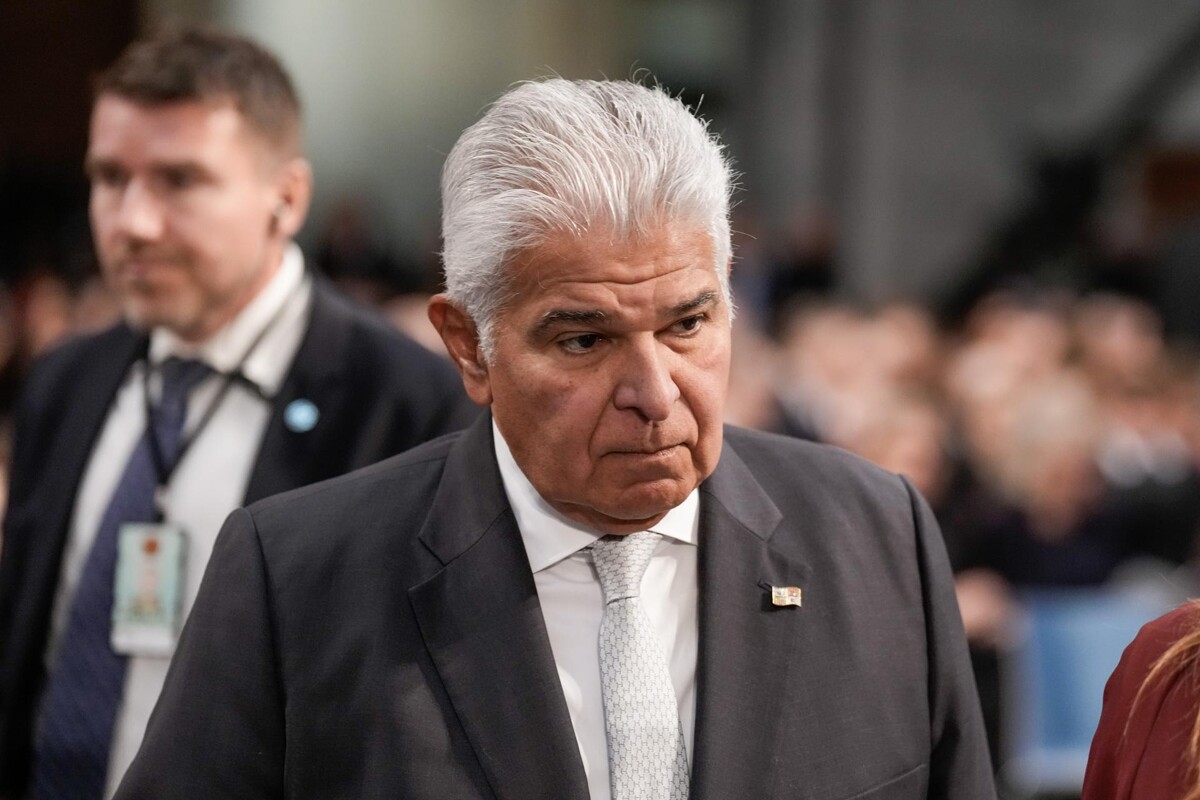
With firm words and no beating around the bush, President José Raúl Mulino made it clear this Saturday that not a single dollar of the nearly $30 million obtained from the sale of mining material stored in the disabled mine will go to any destination other than the well-being of the Panamanian people.
The head of state was direct with the media: that money will not be touched for politics or administrative expenses, but will go exclusively to social works, such as hospitals, drinking water, health, and basic infrastructure, needs that daily affect thousands of families in the country. “Not a dollar of that money will go anywhere else,” Mulino assured, marking a distance from any doubt or speculation about the use of these funds.
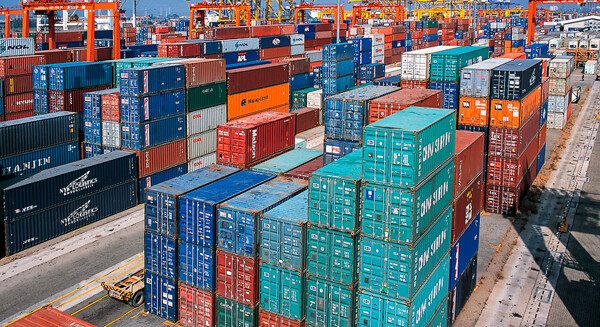
The resources come from royalties on the export of copper concentrate that was left stored after the closure of the Cobre Panamá mine, following the Supreme Court of Justice's November 2023 ruling that the concession contract was unconstitutional, amidst a historic wave of citizen protests.
The Minister of Commerce and Industry, Julio Moltó, explained that these royalties will not only cover the high cost of the mine's preservation plan, estimated at $15 million per month, but will also be used to invest in public infrastructure, prioritizing communities near the deposit, which for years coexisted with the mining operation.
Currently, some 120,000 tons of copper concentrate are being exported from this July, generating the funds that the Executive now promises to turn into tangible social benefits, not just speeches.
Mulino also announced that he expects to define the mine's future in early 2026, while preparing the ground for possible negotiations with the Canadian company First Quantum, the operator of the project through Cobre Panamá. For that dialogue to be possible, the company and Franco Nevada Corp. have suspended international arbitrations, a condition demanded by the president himself.
The mine, before its closure, contributed 2% of the world's copper, generated 7,000 direct jobs and nearly 30,000 indirect jobs, figures that today weigh in the national debate between economic development, legality, and social justice.
For now, the Executive's message seeks to be clear and reassuring: the money from copper will not be lost, and according to the president, it will return to the people in the form of projects that are felt in daily life.