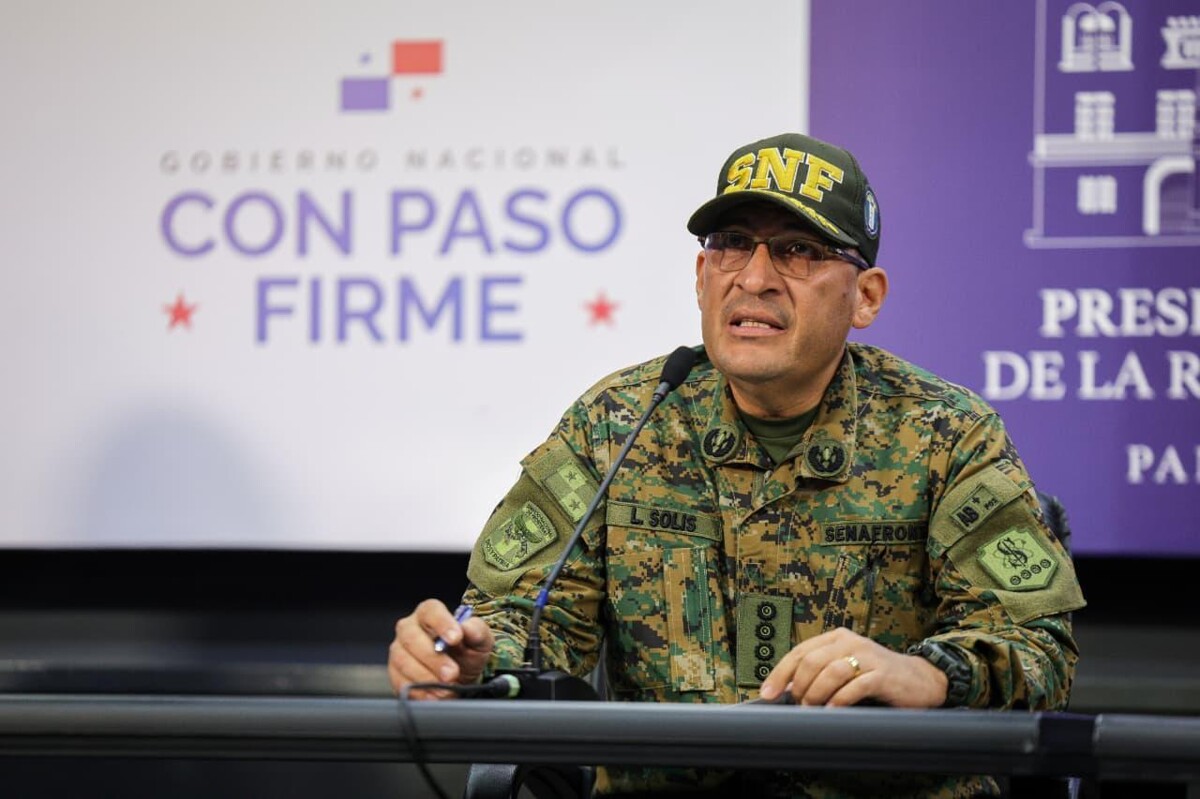
The director of the National Border Service (Senafront), Larry Solís Velásquez, reported that through Operation Centinela in the Darién border area, the deactivation of improvised explosive devices (anti-personnel mines) and the capture of Colombian 'coyotes' transporting migrants were achieved. Following the clash, three Panamanians were captured in pixelated uniforms, a shotgun, AK-47 caliber ammunition, military gear, and a bracelet from the Colombian Gaitanista de Colombia, Efraín Guardia Front, a criminal organization dedicated to drug trafficking. Territorial control is one of Senafront's most impactful operational processes, so operations are carried out with specialized units to control and repress crime with absolute firmness. These events are related to the Tren de Aragua and the Clan del Golfo groups. The director explained that after an alert from the Colombian Army, Senafront's special forces began this territorial control operation. Among those detained are 2 Colombian 'coyotes', eight people with biometric alerts, and two individuals linked to Tren de Aragua, confirming the infiltration of transnational networks in illegal corridors. Additionally, during the extensive operation, which reached by sea, the Special Boats Battalion intercepted vessels in La Palma and Jaqué, as well as a cargo in the Caribbean, where five Panamanians were captured and 110 packages of presumed drugs, along with cell phones and communication radios, were seized. The offensive escalated on the Membrillo River, where a patrol faced armed men who responded with gunfire. These positive actions on the eastern border also have a positive impact on public and national security, due to the risk that convergent crimes represent for the country and its citizens.