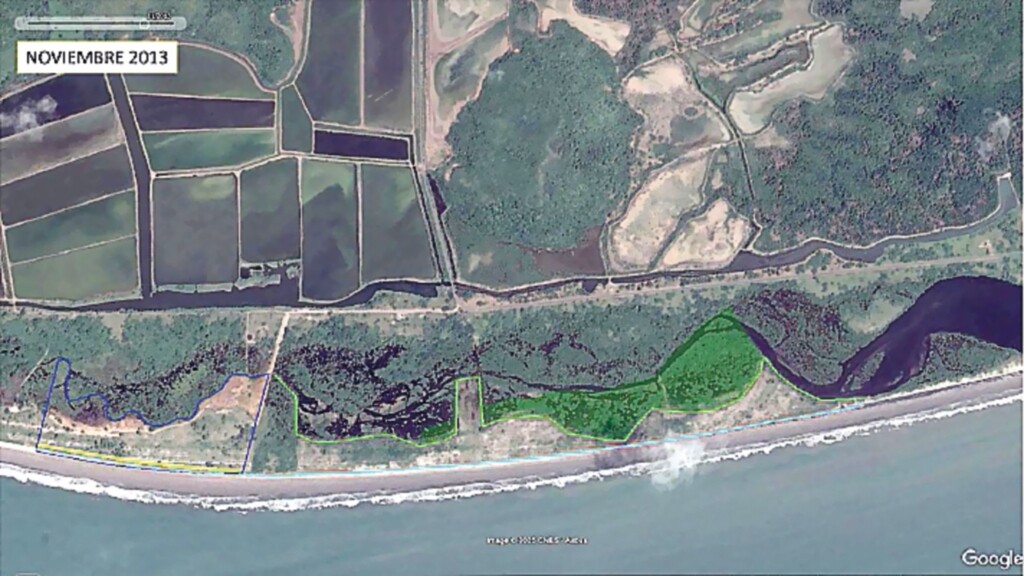
The largest documented case of illegal sand extraction in Panama is recorded in Punta Chame, district of Chame, province of Panama Oeste, where it is estimated that around 500,000 cubic meters of sand have been removed from the seabed for the construction of a 2.5-kilometer-long beach fill. The activity is attributed to the company Megamar Corp., which would have used the material to expand the coastal strip in front of a seaside tourist project, without a concession from the Ministry of Commerce and Industries (MICI), a legal requirement for marine sand extraction in the country. According to information gathered in the area, the extraction would have been carried out continuously since approximately 2016, without official authorization, which has caused concern among residents and community organizations in Punta Chame. Neighbors in the area have stated that they filed complaints for environmental damage several years ago, alerting to the impact these activities were having on the coastal ecosystem. According to testimonies, Megamar Corp. hires heavy machinery, mainly tractors, that wait for low tide to enter the intertidal zone and transport the sand directly from the seabed to the fill area, located in front of the tourist project polygon. The extraction has caused a significant change in the morphology of the beach, visible when comparing Google Earth satellite images from 2013 and 2024. Until 2016, Punta Chame was recognized as a sea turtle nesting area, a condition that has been seriously affected. In economic terms, the market price of seabed sand, when extracted legally by companies with an MICI concession, is around 10 dollars per cubic meter. Under that parameter, the 500,000 cubic meters extracted illegally would have an estimated value of 5 million dollars, not including possible administrative, civil, or criminal sanctions.