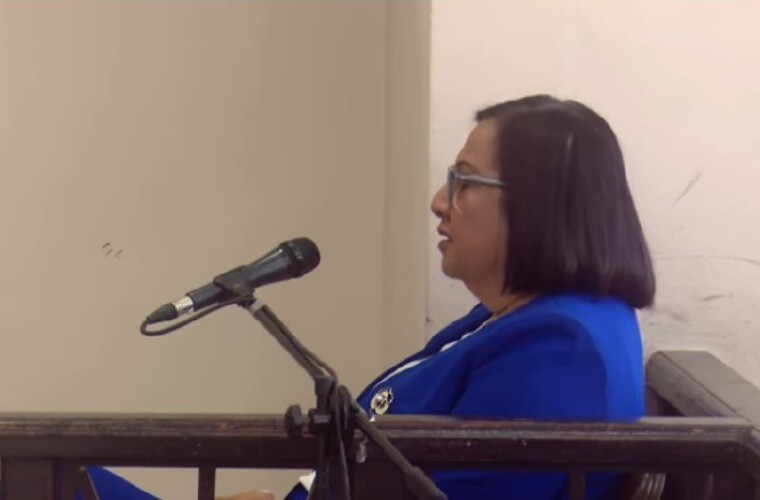
On Tuesday, the prosecution's witness, Yara Campos, executive director of the Electoral Tribunal, affirmed before the court that private donations received by political parties and candidates during the 2009-2014 electoral period were not illegal, in accordance with the electoral legislation in force at that time. Lawyer Alma Cortés, a member of the team defending former President Ricardo Martinelli, was in charge of cross-examining the witness on the eighth day of the ordinary hearing of the Odebrecht case. During the cross-examination, Cortés asked if in 2009 there was any complaint regarding political donations related to the Democratic Change (CD) party or its then legal representative, Ricardo Martinelli. Campos responded that for that period, Panamanian electoral legislation allowed receiving donations at any time, both for electoral campaigns and for the regular operation of political parties, as long as the contributions were duly registered with the Electoral Tribunal. She added that she does not remember any complaints or proceedings within the electoral jurisdiction regarding donations received during the 2009 campaign, nor formal requests for reports from competent authorities. The witness also explained that before the electoral reforms of 2017, there were no caps on donations, so campaigns could receive large amounts legally. She indicated that it was from the reforms applied for the 2019 elections that the confidentiality of contributions was eliminated, the mandatory publication of political financing was established, and limits on private donations were set. During the session, the prosecution also presented businessman Gabriel Alvarado as a second witness, who requested to hide his face during his appearance. His testimony had no major impact and was not confronted by the defense of former President Martinelli.