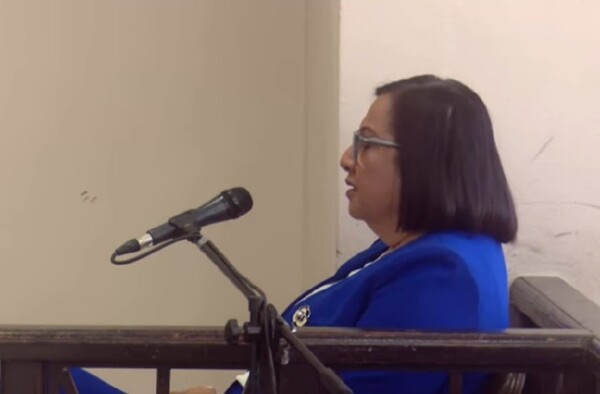
The resolution allowing deputies to practice law in parallel has been endorsed by the president of the National College of Lawyers (CNA), Maritza Cedeño Vásquez, who stated to Panamá América that she sees no “problem” with parliamentarians being able to practice the profession they studied in schedules that do not hinder their legislative work. The proposal is based, according to the Legislative Branch, on numeral 4 of article 158 of the Constitution of the Republic of Panama, which establishes that a deputy who is a legal professional can practice the profession of lawyer before the Judicial Branch, outside the session period or within it, through a license. However, some deputies do not share Cedeño's opinion; they consider that this license will not only position their colleagues above the rest of the professionals, but also represents a clear “conflict of interest” that will put legislative work at risk. “Just as each public official is required to fulfill their job during working hours, the deputy must also do so; after that, they can practice their profession; they just have to know where and what type of matter they are going to practice, that is the only thing I would question, but I will always defend that the lawyer can practice their profession,” affirmed one deputy. Furthermore, deputies do not necessarily have to handle cases related to the Supreme Court of Justice (CSJ), as there are legal procedures that are not related to their political action; therefore, the only thing that should be paid attention to is that it is outside their working hours. The independent Augusto Palacios indicated that one is a deputy 24 hours a day; therefore, there would be no time to practice law without harming the workday, besides that it is not the message that citizenship expects from the Assembly. He mentioned that the measure is completely legal although for some it may be immoral or unethical because, unlike other entities such as the Administrative Prosecution Office, the Electoral Tribunal, the Judicial Branch, and the Public Ministry, the organic law of the National Assembly does not prohibit the practice of the profession outside the institution. He added that the magnitude of the position they hold has “weight” when signing any legal document that will have to be analyzed and ruled on by those who administer justice in the country, people whom they precisely judge and ratify. “I voted against due to an evident conflict of interest; we are deputies and also lawyers, but not in practice, I think it is not a good message,” he stressed. Among the deputies authorized to practice law are: Isaac Mosquera, Jamis Acosta, Dana Castañeda, Ernesto Cedeño, Shirley Castañeda, Nelson Jackson, Didiano Pinilla, Jairo Salazar, and some suppléants. Regarding the proposal to handle cases away from the CSJ, he pointed out that even if deputies dedicate themselves to managing procedures, these must be expedited, so it is not ruled out that there may be “influence peddling”.

Panama: Deputies Allowed to Combine Mandate with Legal Practice
The president of Panama's National College of Lawyers supports a resolution allowing deputies to practice law. However, some lawmakers see a conflict of interest, threatening legislative work. They believe this measure creates a privileged position for them.