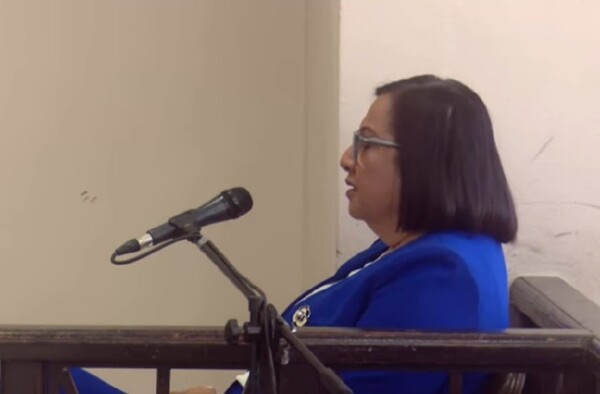
The Prosecutor's Office witness, Yara Campo, affirmed that private donations received by political parties and candidates during the 2009 and 2014 electoral periods were not illegal. Campo explained that for those years, Panamanian electoral legislation allowed for donations to be received at any time, both for campaigns and for the regular operation of political parties, with the obligation to register them with the Electoral Tribunal. As for complaints or processes involving former President Martinelli, Campo indicated that she does not recall any complaints or internal processes within the electoral jurisdiction regarding donations received in the 2009 campaign, nor formal requests for reports from electoral authorities during that period. The witness clarified that after the 2006 reforms, specific prohibitions on private financing were incorporated, including: donations from foreign governments, anonymous donations (except for regulated collections), contributions from companies without economic activity in Panama, and donations from state-participating societies. Campo also recalled that before the 2017 electoral reforms, there were no donation limits, so campaigns could receive multimillion-dollar amounts legally. It was only with the reforms applied for the 2019 elections that the veils of confidentiality were eliminated, mandatory publication of donations was established, and limits on campaign financing were set. Cortes directly questioned the witness regarding the Democratic Change (CD) party and its then legal representative, former President Ricardo Martinelli, asking if there was any complaint in 2009 about donations received. Lawyer Alma Cortés, a member of former President Ricardo Martinelli's defense team, cross-examined the Prosecutor's Office witness. Yesterday, the Prosecutor's Office also presented the second witness, businessman Gabriel Alvarado, who requested to conceal his face during his testimony. Campo explained that during the 2009 and 2014 electoral processes, the so-called 'veil of confidentiality' over donation reports was in effect, established in Article 176-A of the Electoral Code, introduced by Law 60 of 2002. This mechanism prevented the publication of the information on the institutional website and limited its access only to parties, candidates, and certain authorities, such as the Public Ministry, the Judicial Branch, the Electoral Prosecutor's Office, and high-ranking officials of the Electoral Tribunal, only in cases of indications of violation of criminal law. These norms were regulated by decrees that established requirements such as sworn statements, bank accounts, accounting records, and the obligation to keep the documents for at least three years for possible audits. Her testimony had no major impact, nor did she mention Martinelli; even the former president's defense did not confront her.

Witness Affirmed Legality of Donations to Panamanian Parties in 2009-2014
Panama's Prosecutor's Office witness, Yara Campo, stated that private donations received by parties and candidates during the 2009 and 2014 electoral campaigns were legal, as current legislation permitted it at the time. She also explained the evolution of the country's electoral laws.