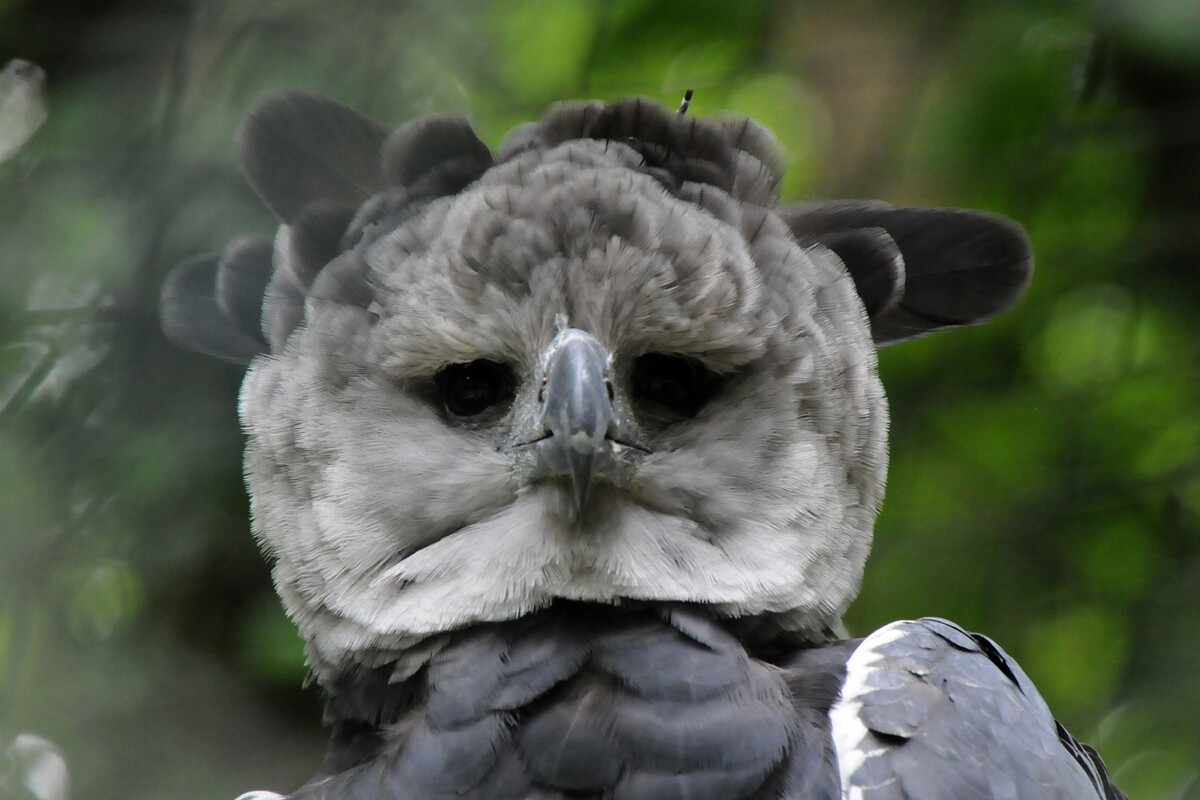
The Barro Colorado case is a key reference point when discussing the reintroduction of predators to the wild. The scientific study describing the behavior of these two captive-bred harpy eagles has been published in the journal Neotropical Ornithology. The authors of the study conclude that captive-bred harpy eagles can quickly adapt to life in the wild when they find a habitat that offers sufficient food. In just fourteen months, these two birds transformed a tranquil forest into a place where being alert again was a matter of life or death. The experiment, now a classic in conservation biology, sought to answer two questions. Does a top predator raised by humans retain its hunting instinct when its cage is opened? And on the other hand, what happens to the prey when they haven’t seen that enemy for decades? In 1999, things took a turn. Scientists released a male and female harpy eagle, bred in captivity and equipped with radio transmitters. The small Panamanian island offered a perfect natural laboratory to test this. For decades, harpy eagles had not been recorded in the area, and the primates lived without any real threat from the air. There were no large birds of prey to swoop down on them. Monkeys and sloths moved slowly through the treetops and slept in plain sight. Approximately half of the prey captured by both individuals were sloths, and the rest were social primates. Between June 1999 and August 2000, the male captured 25 prey animals and the female 46, for a total of 71 animals. The eagles were successful in between one-third and one-half of their hunting attempts, achieving a kill every three or four days. It indicates that breeding in specialized centers does not eliminate, at least in this species, the ability to hunt independently. But the other half of the story lies with the prey. A subsequent study with howler monkeys on Barro Colorado Island found that in less than a year these primates went from ignoring the eagle’s calls to responding with increased vigilance, less time spent eating, and specific alarm vocalizations in the face of aerial danger. This reaction persisted even months after the raptors were removed from the island. Taken together, these studies show that reintroducing a large predator not only affects the number of animals that die, but also modifies behaviors and restores lost ecosystem interactions. This finding is crucial for reintroduction programs in Latin America. Harpy eagles are considered a Vulnerable species by the International Union for Conservation of Nature (IUCN), and in countries like Panama, efforts are underway to recover their populations through forest protection and the release of captive-bred birds.