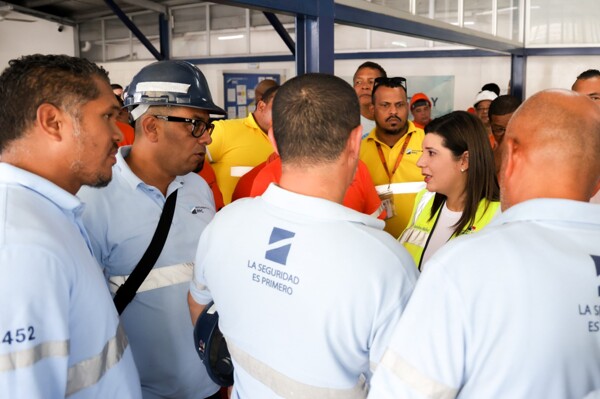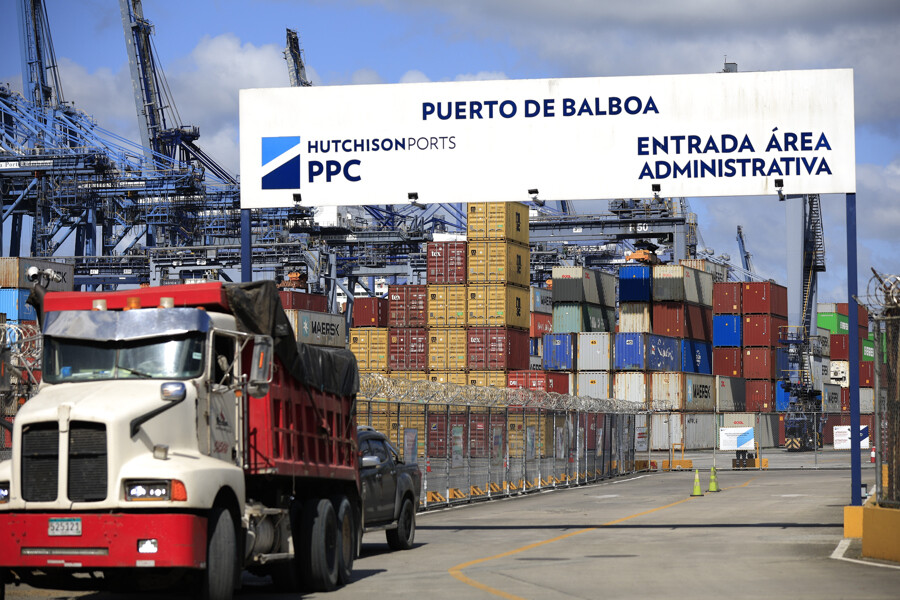
The Panamanian government reaffirmed its commitment to guaranteeing labor stability for all workers linked to port activity in the country. This measure aligns with the announcements made by President José Raúl Mulino, who has insisted that the restructuring of the system cannot result in job losses, especially in a sector key to the national economy. Institutional support falls to the Ministry of Labor and Labor Development, headed by Minister Jackeline Muñoz, where it has been reiterated that protecting the workforce will be a priority in each phase of the process. Authorities emphasized that stability covers not only direct port workers but also indirect jobs generated by suppliers, contractors, and companies that are part of the logistics chain. In this sense, the Executive Branch seeks to avoid any negative social impact while the new port administration model is implemented, ensuring operational continuity and the peace of mind of hundreds of families that depend on this sector.
The publication in Official Gazette No. 30468 of the ruling by the Supreme Court of Justice's Plenary formalized the decision that declares the contract between the Panamanian State and Panama Ports Company unconstitutional. According to the document, the sentence was issued on January 29, 2026, and resolves two accumulated unconstitutionality claims in a single decision. The first action was presented by lawyers Norman Castro and Julio Fidel Macías Hernández against Article 1 of Law 5 of January 16, 1997. The second claim was filed by lawyer Antonio E. Moreno Correa, on behalf of the Comptroller General of the Republic, against the contract, its addenda, and the automatic extension. The Supreme Court's Plenary determined that both actions had an “identical cause of action, object, and claim,” so it proceeded to consolidate them. The ruling analyzes the contract approved by Law 5 of 1997, as well as its subsequent amendments. Among these are Law 55 of 2005, Law 25 of 2010, and Law 79 of 2012, corresponding to the contract's addenda. The plaintiffs pointed out the violation of several articles of the Constitution, including Articles 1, 2, 19, 32, 50, 159, 163, 259, 266, and 298. One of the contested points is the “Concession by the State” clause contained in the contract. According to the complaint, this clause obligated the State to consult and obtain the company's approval to grant future concessions in specific areas. These areas include land and facilities identified as Diablo and Isla Telfers, denominated in the contract as “The Future Extension.” The plaintiffs argued that this provision affects the State's sovereignty over its territory. They also argued that it limits the State's capacity to make decisions without the intervention of a private company. Another point is that the clause transfers decisions inherent to public power to the company. In terms of equality, it was alleged that the contract creates privileges in favor of the company, especially regarding future concessions. Likewise, the tax exemption regime granted to the company, its affiliates, and subcontractors was questioned. The plaintiffs indicated that these exemptions affect the State's revenue collection. It was also argued that the contract prioritizes private interests over the public interest. Regarding the award process, it was noted that the concession was not subject to public bidding. This, according to the complaint, contravenes norms that require transparency and competition in state contracting. Furthermore, it was argued that the contract restricts free competition in the port sector. The document also includes the opinion of the Attorney General of the Nation, who requested the declaration of unconstitutionality of Law 5 of 1997. The Public Ministry identified issues such as “The Future Extension,” the automatic extension, and tax exemptions. With the publication in the Official Gazette, the ruling formally takes effect within the Panamanian legal system. The decision directly impacts the concession contract for the ports of Balboa and Cristóbal.
Port Occupation This morning, following the publication in the Official Gazette, a Decree of Occupation of both port terminals was issued.