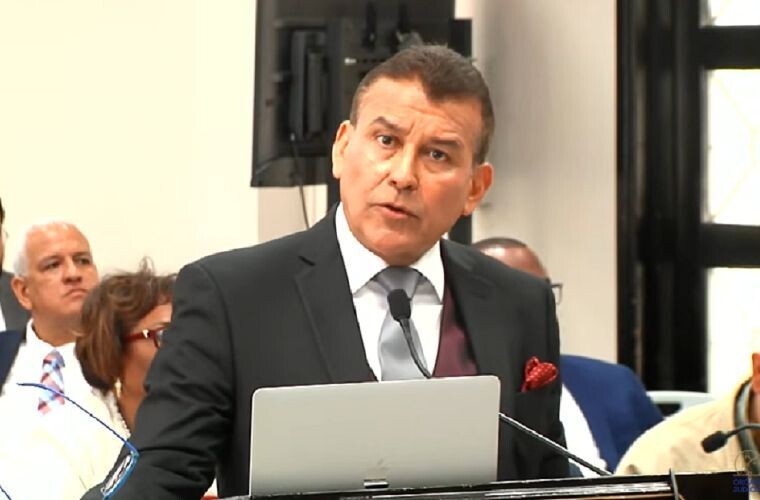
In the Odebrecht case, the defense argued that key investigations were omitted that could have strengthened or dismissed the accusatory theory. In line with this, lawyer Alejandro Pérez questioned the Prosecutor's Office's attempt to incorporate information that the United States received from Brazil and which was later annulled. Additionally, he maintained that there is a political background aimed at tarnishing the image of former President Ricardo Martinelli, reiterating that in 2008 and 2009 he was not holding a public office, and therefore could not have received bribes. The defense reiterated that the funds received were properly declared political donations, mainly intended for electoral advertising payments. 'So, how do you sustain an accusation before a court?' the jurist asked. Expertise under fire. The lawyer criticized the financial analysis, conducted by Antonio Lim and Eliseo Ábrego, whom he claimed lack the training and experience to carry out a technical expertise. According to him, there was no independent collection of evidence or scientific evaluation of the data. On the contrary, he pointed out that the conclusions were based on information provided by the accusing party and on verifications made through social networks and the media. Software ghost and technical doubts. Another key point was the alleged use of software through which bribes would have been managed. Lawyer Sidney Sittón attacked the Public Ministry and questioned the solidity of the investigation for alleged money laundering during the plea phase of the Odebrecht case trial. During his intervention before the Tribunal, Sittón cast doubt on the absence of a formal forensic audit, an element he said is essential in any process seeking to prove financial crimes. 'When a forensic audit is done, it has to have a method, but here the Public Ministry never spoke to us about it because they didn't do it,' he stated. The lawyer questioned that, to date, the said system has not been formally identified nor has support been requested from the Institute of Legal Medicine to examine the supposedly used servers. Neither, he said, were passwords or technical accesses requested to verify the authenticity of that platform or the virtual private network where, supposedly, conversations were encrypted. 'I doubt whether they were actually interested in the investigation revealing what it had to reveal,' he stated before Judge Baloisa Marquínez. 'The power is in what was not done.' Sittón went further and affirmed that the 'real power' of the Public Ministry is not in what it does, but in what it fails to do.