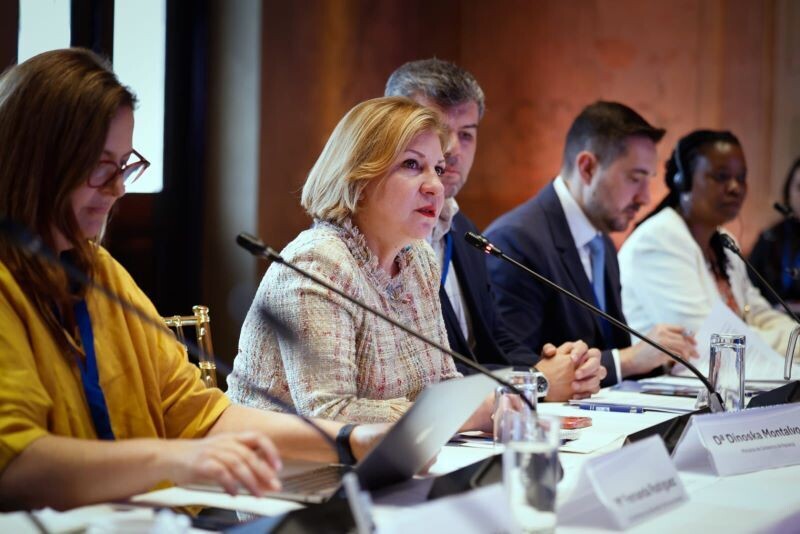
Within the framework of the XXIV Assembly of the Conference of Ministers of Justice of Ibero-American Countries (COMJIB), Panama's Ministry of Government and UNDP organized a technical meeting to generate strategic inputs to promote the Ibero-American Convention on Access to Justice in the region.
The event, organized by the United Nations Development Programme (UNDP), brought together civil society delegates and had as its primary objective the creation of strategic inputs for the Framework Document for the promotion and positioning of said convention (CIAJ).
The Minister of Government, Dinoska Montalvo, led the opening of the meeting, highlighting the historical value of the Government Palace as a venue for crucial decisions for the Panamanian people. She emphasized that this space for exchange seeks to establish effective bridges to access to justice, especially for vulnerable groups that have historically faced barriers to the realization of their rights.
In turn, Jairo Acuña, head of the governance team for Latin America and the Caribbean of UNDP, directly linked access to justice with social progress, under the premise that greater legal security leads to greater regional development.
Acuña emphasized that the conversation aims to provide tools and foundations for implementing the Ibero-American Convention on Access to Justice from the perspective of civil society. The UNDP representative also described Panama's experience as pioneering in access to justice for deprived of liberty individuals, noting that this people-centered approach addresses the core of situations of vulnerability.
The event also featured Luciana Bercovich, Senior Manager of Grassroots Justice Network, who argued that the effectiveness of the judicial system depends on citizens knowing and using the law.
Bercovich pointed out the importance of people's participation in decision-making processes and in transforming unjust norms.
Finally, the working groups analyzed the scope and challenges of the Ibero-American Convention on Access to Justice, reaffirming that civil society is an indispensable strategic ally for the promotion and evaluation of public policies in the judicial area throughout the entire Ibero-American region.