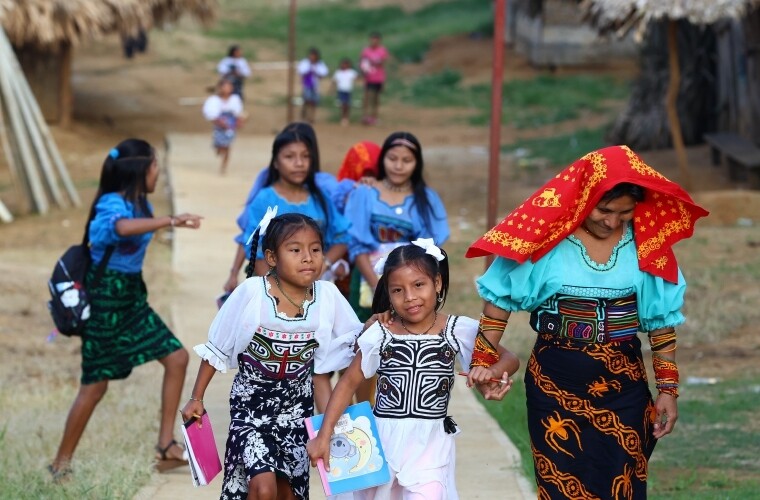
Panama is opening new schools in remote indigenous communities to prevent children from being exposed to dangers during long journeys. This was stated by government representatives. In the Madugandí region, home to seven ethnic groups including Emberá, Wounaan, Guna, Ngäbe, Buglé, Naso, and Bri-Bri, poverty rates are the highest in the country, reaching up to 90%. Access to some communities, such as Icanti, requires a three-hour journey along rural roads and a boat ride across Lake Bayano. Teachers, many of whom belong to indigenous groups, face challenges: they must leave their families, travel long distances, and risk their health due to diseases like malaria and leishmaniasis. This year, the government is opening schools in two previously unserved communities for the first time. At the new Icanti Bilingual Education Center, which has 300 students, instruction is given in the Dulegaya language, Spanish, and English to preserve the children's native language and make them trilingual in the future.