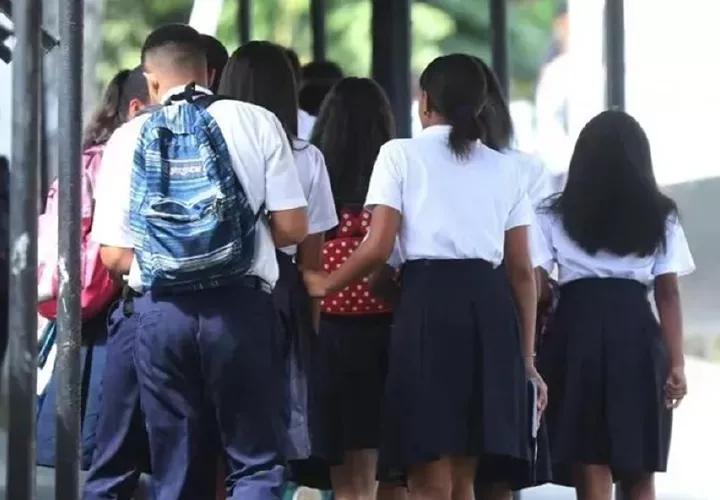
Panama's Minister of Education, Lucy Molinar, held a press conference to review the first week of the 2026 school year, focusing on the high rate of school dropouts. She stated that the government's strategy is to encourage student retention within the education system. "We want to fight against...", but the key is to change the focus," said Molinar. She also mentioned that the goal is to make schools more attractive to students. According to the ministry, 10,288 children and adolescents have been left out of the education system. The minister highlighted that the key factors behind school dropout are that students do not find in school a space that motivates them or responds to their realities: "Why does a young person drop out? Because the school didn't say anything to make him want to be there," she said. She emphasized that the circumstances young people face often lead them to other alternatives, and the school fails to bring them back. In response to this situation, the Ministry of Education (Meduca) is working through the Directorate of Youth and Adults on strategies to recover those who have abandoned their studies. "Our strategy is to encourage their permanence," she stated. Among these plans are offering more attractive and dynamic programs that encourage a return to the classroom and expanding the educational offer in nighttime programs and flexible modalities. Regarding Afro-certification, the head of the ministry stated that no additional documentation is required, as all identity factors that enrich the country's culture are respected. She also emphasized that there must be a disciplinary framework that guarantees order within the system. On the other hand, she detailed the inauguration of five new educational centers: Piedra de Amolar, in Veraguas; Colegio Moisés Castillo Ocaña, in West Panama; the La Arena Secondary Education Center, in Herrera; as well as the IPT Agua Fría and Boca de Lara, in Darién. She said that six more educational centers will soon be inaugurated, which will allow reaching a total of 50 schools with new infrastructure for the benefit of the educational community. To date, Meduca has reduced 580 makeshift classrooms and 212 makeshift schools by replacing them with cement structures, ensuring adequate spaces for learning. These new schools include theoretical classrooms, support classrooms for pedagogical attention to students, computer labs, preschool areas with play zones that favor the comprehensive development of childhood, and other adaptations that strengthen the educational environment. A total of 11 educational centers in the country, which are currently undergoing infrastructure improvements, will be holding classes in rented facilities to ensure the continuity of the educational process. The total rental cost amounts to B/. 2,611,285. These centers are located in the educational regions of Panama Centro (7), San Miguelito (1), Panama Norte (1), Chiriquí (1), and Los Santos (1).