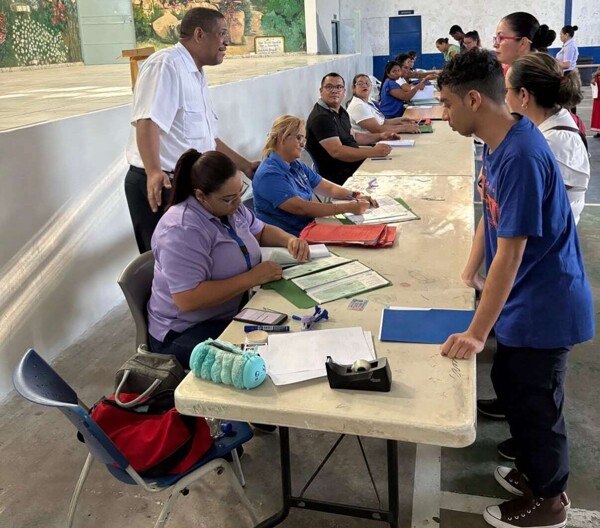
For over a year, the Panama Canal has strengthened the mechanisms that ensure a broad representation of the knowledge involved. One of the challenges has been to facilitate, without excluding, the coexistence of the knowledge and discernment of the majority with the views of minorities, whose proposals are also heard. The reality is that Panama is experiencing a decisive moment at the national and geopolitical levels, and today the country has chosen the path that seeks to generate the greatest possible well-being. Therefore, the question could be reframed: rather than asking what the Panama Canal has done well in the Río Indio, one should ask what the population of the basin has done right. The Panama Canal has understood that there is an innate wisdom among its inhabitants, who prefer to analyze facts rather than be led by rumors, protecting themselves from false narratives and radicalisms that benefit no one. Likewise, the residents have actively participated in formal dialogue spaces, increasing their participation from 30% to nearly 70% in calls for working tables to develop resettlement plans. On this path we are building together, there is no legitimate progress that is built on the denial of the other, because, to paraphrase Fyodor Dostoevsky, each of us is responsible for all and before all. The author is the coordinator of the Canal's Historical Memory. There are many stories that revolve around a basin as key to the country and its inhabitants as the Río Indio. And if there is an international standard such as IFC PS5, which in terms of compensation guarantees justice and cultural preservation, for the Panama Canal it is only a starting point, upon which value is progressively added, recognizing communities as rights-bearers and knowledge-bearers. They are not mere guests; they are protagonists in the construction of decisions that will mark their future. The result of this collective design has strengthened the communities, concentrating their social energy on ensuring access to services, dignified housing, legal security over their property, and the full restitution of their livelihoods. In this process, it is clear that the communities are owners of their own destiny. Here, resilience is not a subjective capacity to resist change, but the possibility of transforming it into opportunities for just development for all, and mainly for their families. This process invites us to rethink ourselves as Panamanians, because, contrary to the old paradigm of the 20th century, it is about our people, not about 'those over there' and 'those here,' a division that fades before reality. It is more than that: it is a collective construction under an idea of progress that has ceased to name the new with old paradigms, as when we call an automobile a 'car,' derived from a carriage or a cart pulled by horses, and the power of its modern engine 'horsepower': new realities read from old concepts. In the development of a strategic project of this nature, all things become new and better. The human being always operates from knowledge, and based on this, makes informed decisions and identifies reasons to value what is convenient when deciding about their future. We are not talking about cold numbers or indicators that adorn aesthetically crafted speeches, like 605 and 825 million gallons per day, which will ensure water for more than 50% of the population and the operations of the Panama Canal. They have taken advantage of these spaces to defend their rights, co-design content, discuss data, and propose alternatives. By avoiding internal division, the majority has known how to coexist with disagreement, respect those who think differently, and maintain social cohesion. With all this human capital, in a small country where nothing is foreign, there are no 'those over there' and 'those here.' Thus, through a sustained participatory dialogue in more than 200 community meetings, these valuable voices assume a leading role in decision-making. Their inhabitants have chosen to inform themselves rather than react: they have attended meetings, reviewed information, formulated questions, and demanded clarity in the answers, which evidences a high civic maturity. It is not about academic degrees or operating under the so-called 'Poincaré effect,' which warns about the arrogance of experts.