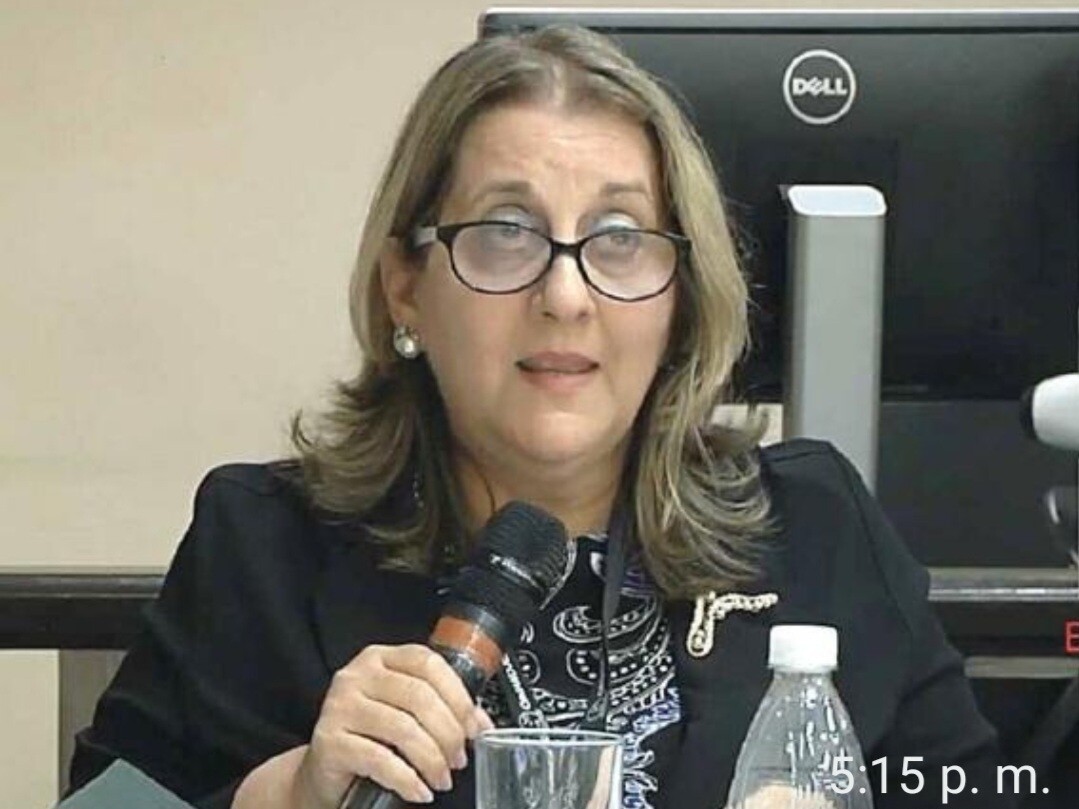
In Panama, the candidacy of former Supreme Court Justice Ángela Russo Mainieri for the position of Ombudsperson for the 2026-2031 period has faced its first formal setback: a citizen objection that questions her suitability and warns of a 'structural risk' to the independence of the office. The action was filed with the Commission on Government, Justice, and Constitutional Affairs of the National Assembly by citizen Yamilet O. Martínez De la Rosa, who requested that the candidate be declared 'unsuitable,' citing conflicts of interest, lack of impartiality, and a possible 'institutional paralysis.' 'Judge and party': the core of the objection. The document argues that Russo Mainieri's recent departure from the Supreme Court, where she served as a magistrate of the Civil Chamber until December 2025, places her in a position incompatible with the role of Ombudsperson. According to the objection, the former magistrate could be forced to investigate: rulings issued during her own tenure; complaints about judicial delay in offices under her supervision; complaints related to the functioning of the Judicial Branch. This, the complainant argues, would turn her into a 'judge and party,' violating basic principles of due process and public ethics. A blow to public trust. Beyond the direct conflict, the objection points to an even more delicate issue: public perception. 'The problem is not only about being impartial, but also appearing to be so,' the document emphasizes, questioning the immediate move from a high-ranking figure in the judiciary to an entity that must oversee it. It is warned that this proximity could generate an 'esprit de corps' among judicial officials and weaken the credibility of the Ombudsman's Office as an independent body. The 'revolving door' in the State. One of the most forceful arguments points to the so-called theory of the 'revolving door,' where high-ranking officials move from positions of power to oversight roles over the same structures they once belonged to. The objection argues that this phenomenon: breaks the system of checks and balances; weakens the autonomy of the Ombudsman's Office; creates reasonable doubts about the real capacity for oversight. It even warns that the lack of a 'cooling-off' period between the two positions exacerbates the problem. Possible 'functional paralysis' of the Ombudsman's Office. Another critical point is the risk that Russo Mainieri will have to recuse herself from multiple cases due to conflicts of interest, which could cause a 'constant functional vacancy.' This would imply: repeated delegation to deputy officials; weakening of the leadership of the head; direct impact on the handling of citizen complaints. International warning. The objection also raises the tone by warning that the appointment could put Panama in an uncomfortable position regarding international standards. The Paris Principles of the United Nations and rulings from the Inter-American Court of Human Rights are cited, which establish that independence must not only exist but also be perceived. The document emphasizes that the recent closeness to the judiciary could constitute 'indirect institutional pressure,' incompatible with the role of human rights defender. The request: halt the appointment. The citizen requests the legislative commission to: rigorously evaluate the candidate's suitability; consider the risk of conflicts of interest; ensure compliance with international standards. And concludes with a direct warning: 'The legitimacy of the Ombudsman's Office depends on its head having unquestionable independence, free from prior institutional loyalties.' A process under scrutiny. The objection opens a new front in the selection process for the next Ombudsperson, a key figure in the protection of human rights in the country. Now the Commission must decide whether this citizen complaint becomes a real obstacle for Russo Mainieri's candidacy or, on the contrary, the aspirant manages to overcome the questioning.