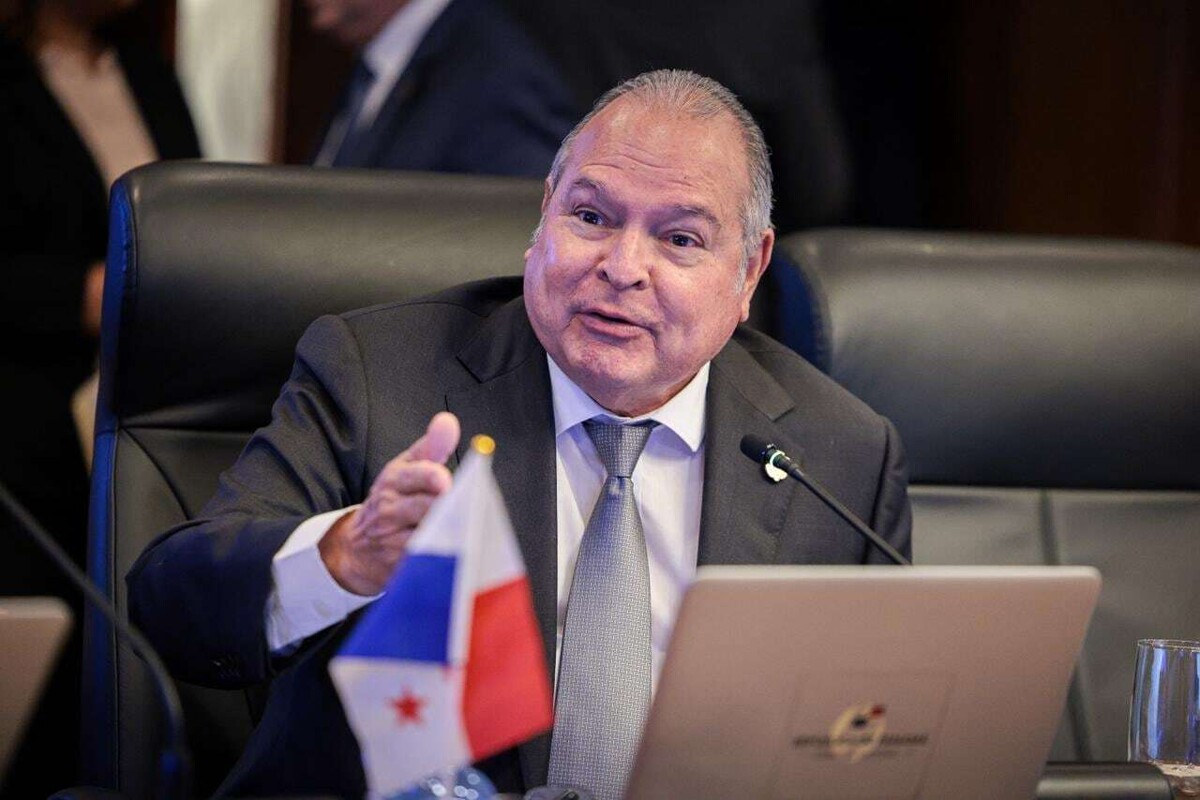
The Minister of Public Works, José Luis Andrade, appeared this Monday, April 6, before the Commerce Committee of the National Assembly of Panama to answer a questionnaire of 29 questions about the Spain Avenue expansion project.
"I will allow myself to read the answers," he said before delving into a file that, he stated, can be consulted in its entirety on the official public procurement portal, PanamáCompra.
From the outset, the minister defended the traceability of the expansion project. "The principle of transparency has been met," he stated, projecting a positive impact on employment—150 direct and 300 indirect jobs—although he admitted that the immediate economic impact "cannot be measured".
During the session, an exchange between deputies Jairo Salazar, of the Democratic Revolutionary Party, and Ernesto Cedeño, of the Another Way movement, strained the hearing before the Commerce Committee, momentarily diverting the technical debate into a crossfire of personal reproaches.
While Salazar attempted to present the minister with the road disruptions—"all our cars get damaged, traffic jams form, gasoline is expensive"—the committee president, Cedeño, interrupted him to remind him of the time.
Despite this, he ruled out direct compensation. "Does the State plan to indemnify?" Salazar asked. Instead, the minister mentioned working tables and possible relocations, without concrete commitments for economic compensation.
The lack of prior public consultation was another sensitive point. The minister acknowledged that "a formal public consultation has not been carried out before approving the project," though he indicated that these processes would be incorporated into the ongoing environmental impact study.
Nevertheless, Andrade defended the transparency of the management. The multiplicity of decisions reflected a troubled process, marked by challenges and technical reviews. In line with this, he confirmed that the contract still does not have a notice to proceed.
The response was not long in coming: "That is the problem with you," the deputy from Colón shot back, questioning the conduct of the debate.
The discussion escalated when Salazar accused Cedeño of restricting participation. One of the points that drew the most attention was the administrative complexity of the project. Andrade detailed that "15 resolutions were issued," including those that nullify previous reports, accept claims, and order new analyses during the bidding process.
"Since they made him president... he has become more exquisite," he said, amidst interruptions and calls to order. Cedeño attempted to regain control of the session: "We are not going to enter into a discussion, each deputy can question as they wish... calm down, please," he replied.
The minister himself acknowledged that "to date, the environmental impact study has not been approved," although he assured that it is a Category 2 assessment in development and that there is coordination with the Ministry of the Environment for its eventual validation.
The responses also evidenced tensions with the commercial sector. "The contract is with the Comptroller's Office for the due process of endorsement," he explained, which leaves the formal start of the work in suspense, despite there already being a defined award.
The minister defended the mechanism used to contract the work by emphasizing that it was a tender for best value. "No," he responded bluntly, reiterating that the affected parties are within the public right-of-way.
Andrade admitted that "we have found around 60 micro-entrepreneurs and about 300 formal businesses affected," all within the project's area of influence. The contract was awarded to the C&T Vía España Consortium, after a process that included challenges resolved in favor of that group by administrative bodies.
However, the environmental component of the project remains incomplete. "It does not depend exclusively on the lowest price," he affirmed, but on a weighting between cost, quality, and technical conditions, seeking—according to him—the greatest benefit for the State.
In financial terms, Andrade broke down a figure exceeding 107 million dollars, including the work, associated costs, financing, and taxes.