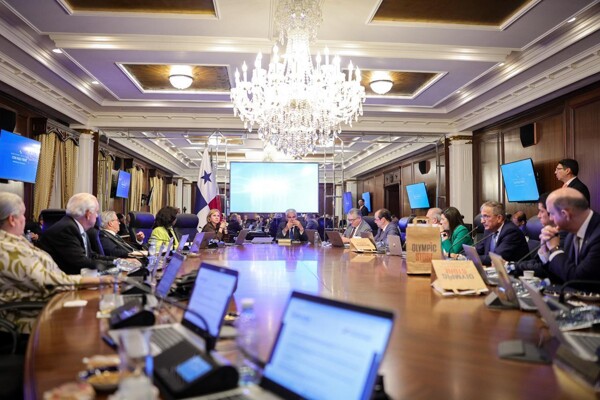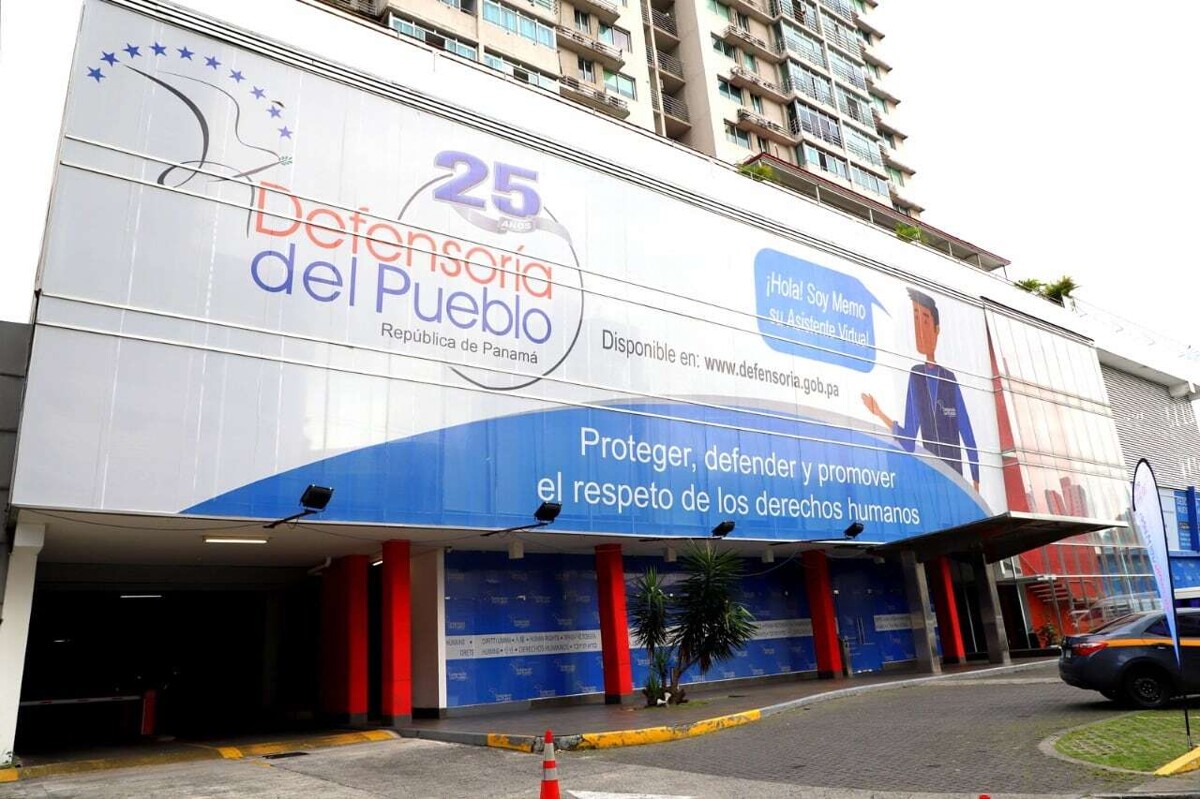
Recently, several deputies warned that the selection process contains irregularities that compromise its legitimacy. This came after during the plenary session on Tuesday, April 7, Deputy Luis Eduardo Camacho presented a minority report to reject the list of seven candidates and instead present the list of 33 applicants. The proposal did not pass and forced the discussion to be suspended for Wednesday at 3 p.m. Previously, five deputies from the Government Committee managed to get a proposal approved to refine the list of candidates for the position that will go to the legislative plenum. In this list, the current Defender Eduardo Leblanc, who is running for re-election, and the former Supreme Court Justice, Angela Russo, were excluded. The ruling party Realizando Metas (RM) instructed its deputies to vote for her. The former Supreme Court justice entered the country's political history by being the author of the ruling that annulled the process followed by the Public Ministry for alleged irregularities in the purchase of 19 radars from Selex Sistemi Integrati s.p.A., a Finmeccanica subsidiary, for $125 million during the Ricardo Martinelli government (2009-2014). According to Deputy Janine Prado, taking all names to the plenum is not equity, it is a "veil that protects those who arrive with surnames and contacts, and buries those who only bring merits." On the other hand, Deputy José Luis Popi Varela recalled that the Constitution requires six requirements for the position and that if they insisted on filtering the list in the committee, a seventh requirement not contemplated would be added. The Human Rights Network warned that not all 34 candidates for the position of People's Defender meet the required profile, within the framework of the ongoing selection process. The collective emphasizes that the selection should not be limited to an administrative review of documents, but must evaluate the legitimacy, independence, and counterbalancing capacity of the candidates, as established by Law 504 of 2025. In the statement, the organization identifies at least five profiles that, in its opinion, are not suitable to lead the institution. Among them, it mentions the "academic-theoretical" profile without technical capacity, considering that titles do not guarantee the practical knowledge necessary for the defense of human rights. It also warns about the "privatist" profile, indicating that those who lack a track record in defending vulnerable populations do not have the social legitimacy to represent citizenship. The Network also questions candidates with what it calls "complicit silence," that is, those who would have been witnesses to human rights violations without denouncing them, which, in its opinion, compromises their moral solvency. Another of the profiles pointed out is that of candidates with a "judicial shadow," referring to questioned backgrounds or rulings that could affect the credibility of the Ombudsman's Office. Finally, it warns about the appointment of figures linked to political parties, considering that a "party quota" would annul the institution's counterbalancing role and deepen the crisis of legitimacy. The organization insists that the person who holds the position must guarantee independence and ethical leadership. The election of the new defender has been marred by tensions in the National Assembly. "Approving this is a danger to democracy," they assured. Although for now, the filtered list should reach the plenum, this scenario could change in a matter of hours.