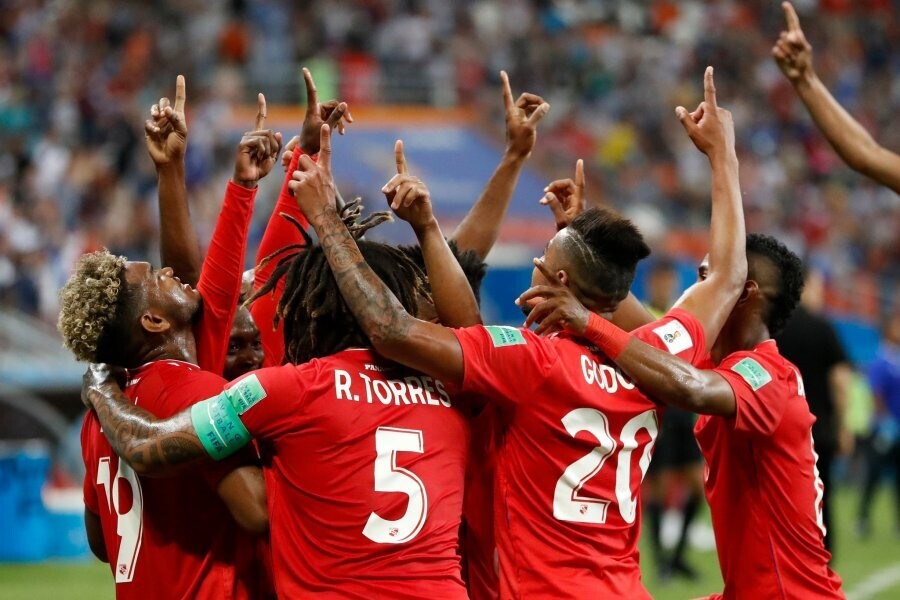
For the first time in their history, Panama was set to play against some of the world’s best teams. Sadly, Panama was knocked out in the first round, but nobody expected more; they were simply happy to be among the top 32 nations in the world. Transition, stagnation—it was worth it. However, it wasn’t all smooth sailing for Panama after reaching the 2018 World Cup. A country once considered one of the weakest in Central America has turned things around with an exciting football project that has seen them qualify for two of the last three World Cups and reach the finals of the CONCACAF Nations League. Despite Panama's growing presence in top-tier competitions like the World Cup or the CONCACAF Gold Cup, their rise is a perfect example of how hard work and a great project can allow a nation to compete with the best in the world. From a humble footballing nation that once dreamed of competing with the elite to a reality where the country continues to produce elite talent, Panama’s story is one for the books.
A Humble Project with Big Aspirations For much of the twentieth century and a large part of the twenty-first, Panama struggled to establish itself internationally. Thanks to these efforts, Panama has managed to evolve drastically, earning two World Cup qualifications. Although this year’s qualification has pleased fans, the 2018 World Cup will forever be part of Panama’s history—not just as a footballing nation, but as a country. Not to mention one of the biggest milestones in the country’s history: knocking out the USA in the semifinals of the CONCACAF Nations League. While Panama continues to progress with the aim of making an impact at the 2026 World Cup, it’s fair to say that Panama is slowly becoming one of CONCACAF’s most elite nations.
What happened after the 2018 World Cup marked an unexpected crisis. The post-2018 cycle exposed Panama; the improvements were clear, but there was a lot that needed to be fixed before they could solidify themselves as one of CONCACAF’s biggest threats. Of course, this was mainly due to the stagnation of their youth development: the stars who secured the 2018 World Cup spot were starting to decline, and no new players were emerging to replace them. This caused Panama to miss the 2022 World Cup entirely, with many fans questioning the true strength of Panama’s new project. Now, Panama has become a regular in youth competitions, facing teams like the Republic of Ireland in the U-17 World Cup, although, as Irish bookmakers predicted, they were beaten 4-1.
The 2018 Dream Panama has never had a top-tier star who played at the highest level or was considered one of the best players in the world. Instead of trying to find luck, Panama decided to build from the bottom, investing in their league structure and helping teams across the nation improve their youth facilities to ensure their prospects could develop properly. Instead, Panama has always been known as a country with a good team structure but no standout individuals. Its main strengths have always come from team play: compact defensive blocks, physical conditioning, and set-piece efficiency. However, things turned around very quickly. In the blink of an eye, Panama managed to do the unthinkable by reaching the knockout stages of the 2025 Gold Cup. After an amazing qualifying campaign, Panama secured their spot at the 2018 Russia World Cup with a last-minute winner that set the whole country on fire. A very poor domestic league with low standards and no competition exposed Panama’s football environment. In the tournament, they were the worst team, suffering a 6-1 loss to England. The national team didn’t help either, with qualification campaigns ending very early. However, the twenty-first century changed it all.