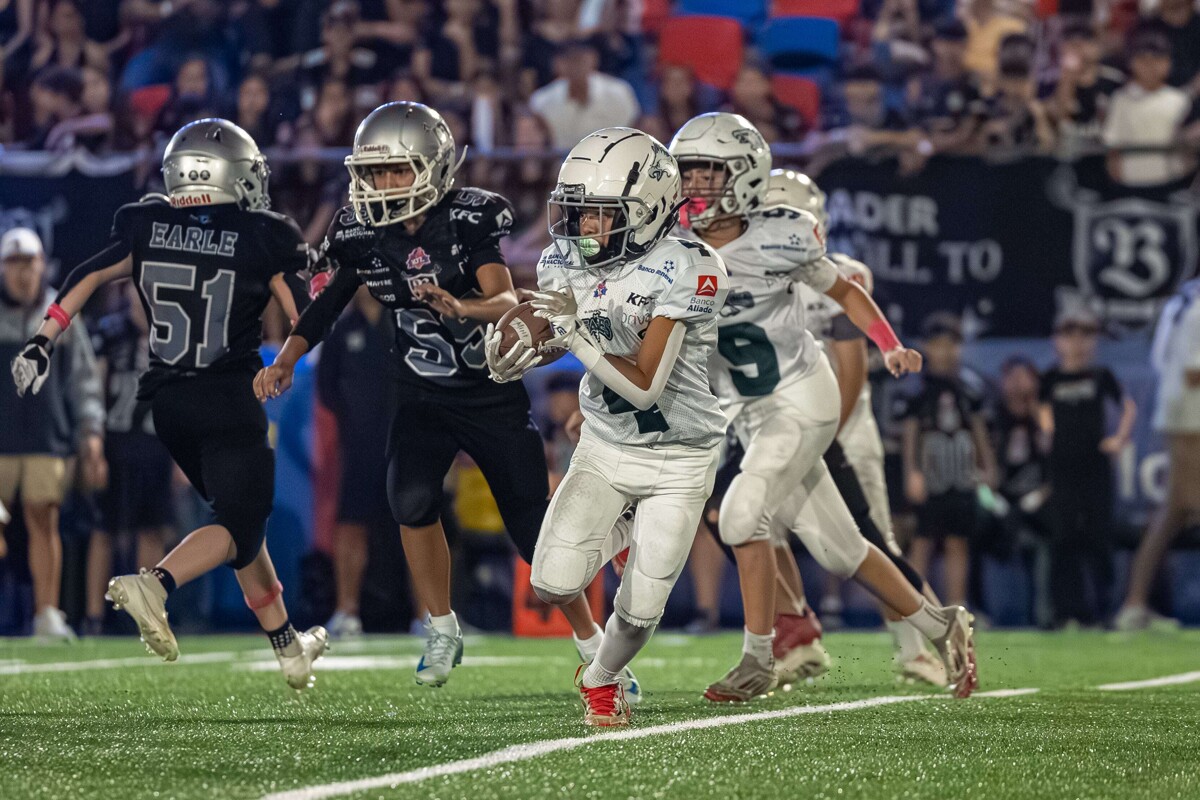
Players trained in the KFL are part of the women's flag football national team, while athletes from the LBK form part of the 3x3 basketball national team. Both teams will compete in the IV South American Youth Games, which will take place in Panama starting this Sunday, April 12. "In recent days, I learned that 95% of the national under-17 team are KFL players," revealed Méndez de Obarrio. Meanwhile, the organization also highlighted the continuity in sports development from a young age. "Practically all our national teams have passed through our leagues," added the leadership during the conference. The Kiwanis Football League (KFL) is preparing to launch its 53rd season, consolidating itself as the third most traditional league in Panama, only behind the senior and junior national baseball championships. "The Kiwanis American football league celebrates its 53rd season this year. It's 53 years forming character, discipline, and above all, good people," highlighted Raúl Méndez de Obarrio, president of the KFL. The tournament will kick off on April 11 with its traditional Jamboree at the Sports Center in Costa del Este, starting a calendar that, as in previous years, will cover most of the competitive year. One of the pillars of recent growth has been the diversification of categories. The league has confirmed several commitments abroad and the visit of foreign teams, in an effort to raise the competitive level. Among the most prominent events is the matchup between Varsity Sharks and the Puerto Rico selection, scheduled for September 5. Likewise, the women's team will participate in the Power Flag Elite tournament at the Tecnológico de Monterrey, considered one of the most important in the region. "It's a very big tournament and they have given us the honor of playing against the Mexico national team on the main field," explained Méndez de Obarrio. In addition, the visit of international teams to Panama and the possible participation of local teams in tournaments in Mexico are being managed, with the aim of strengthening sports exchange. "We want all leagues to go out and play, because that experience is unforgettable for the players," added Méndez. In parallel, the Kiwanis Basketball League (LBK) continues its territorial expansion process, taking competition to new educational centers outside the traditional capital axis. During the last year, matches were held in areas such as Panama Oeste, Pacora, and the integration of schools in Colón, which adds a decade of collaboration. "We are also growing towards the west, with a lot of participation from schools in Panama Oeste," indicated José María, sports director of the Kiwanis Club. This growth responds to an inclusion policy that seeks to integrate students from different social contexts. "We opened the spectrum to include public schools in the league," explained José Ramón García Paredes, representative of the LBK. The impact of both leagues is also reflected in the high level of representation in national teams. This will be the third season in which the Micro Contact and Micro Flag divisions are implemented, expanding the league's training base. These categories are integrated into the existing structure that includes Mini, Juvenile, and Varsity, both in contact and flag football modes. "This is a youth development system, because in every game they learn discipline, teamwork, respect, and leadership," explained Dabindranath Rivera Vernaza, president of the Kiwanis Club of Panama. The impact is reflected in volume: more than 1,500 young people actively participate throughout the year in the different categories. "Here we maintain more than 1,500 young people in the flag and contact categories playing all year round," affirmed Juan José Goytia, commissioner of the juvenile category. International projection will also mark the 2026 agenda.