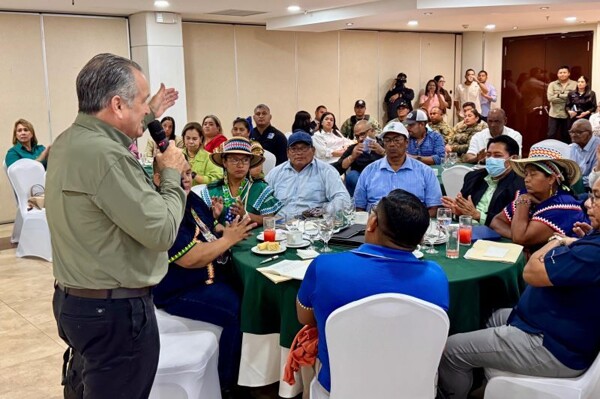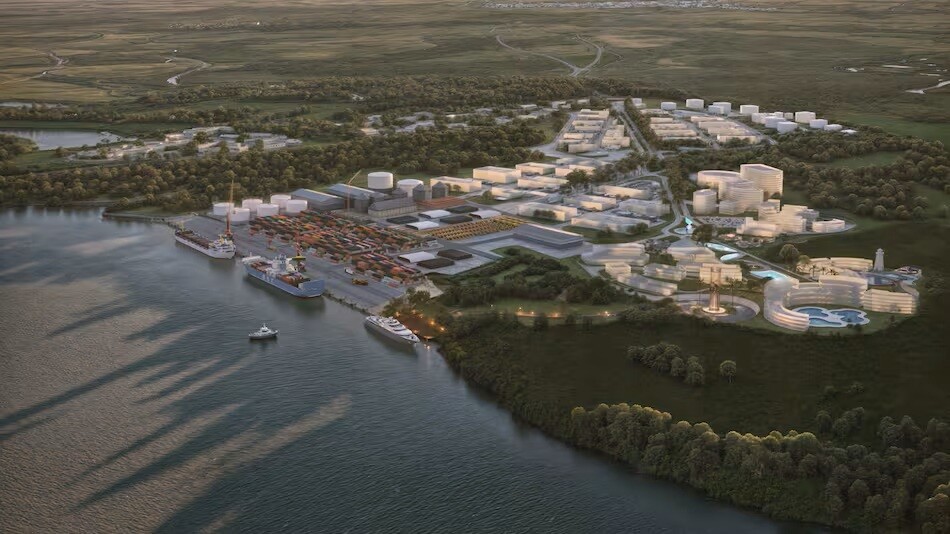
The president of the Trade Association, René Gómez, emphasized that Puerto Barú responds to a comprehensive vision of development, aligned with other structural investments that the country is currently promoting —such as the gas pipeline, the Indio River water project, and the port development in Telfers and Corozal— which demonstrates a planning aimed at modernizing the national logistics infrastructure and strengthening the country’s competitiveness as a maritime-regional hub. "Puerto Barú not only expands the country’s port capacity, but also becomes a strategic solution for logistical resilience, regional competitiveness and the continuity of national trade," Gómez said during his speech. "We urge universities to reach out to these communities and train the human capital that will be the driving force behind this growth." In this regard, the Trade Association reaffirmed that Puerto Barú should not be seen as an isolated project, but as part of a modern port ecosystem that allows for the sustainable development of the provinces, with decent jobs, technical training, attraction of investment and economic dynamism in the region. The Union President René Gómez Meets the Press at Puerto Barú. Gómez also emphasized that the development of logistics infrastructure must be accompanied by strict environmental sustainability standards: "All these investments must comply with local and international environmental protection regulations." During the ordinary session of the Provincial Council of Chiriquí, the Panama Maritime Chamber reaffirmed its support for the Puerto Barú project, noting that this project represents a strategic opportunity to improve national connectivity, decentralize port development, and generate direct and indirect employment in the western region of the country. "We urge the promoters of this and other port projects to comply with the principles governing responsible financing and operation, endorsed by national and international entities." The active participation of the Panama Maritime Chamber in spaces like this reaffirms its role as a key technical actor in the planning of national port development, and consolidates its commitment to accompany the State, local governments and the private sector in building a more connected, competitive and fair country. During the meeting, the Minister of Commerce and Industries, Julio Moltó, reiterated the National Government’s support for the project, highlighting its potential to attract investment, generate employment and consolidate Chiriquí as a logistics hub of the Pacific. Furthermore, representatives from the 105 community boards and the 14 mayors of the province of Chiriquí signed an institutional letter addressed to Judge María Cristina Chen Stanziola of the Third Chamber of Administrative and Labor Litigation of the Supreme Court of Justice, requesting a timely legal ruling to allow progress on the construction of Puerto Barú as a project of national interest. The Maritime Chamber emphasized that multipurpose ports are a key link for effective connectivity between Panama City and the provinces. "We always encourage academies, training centers, and universities to prepare personnel from these communities and provinces at least three years before port development begins. These ports may take two or three years to build, but the human resources must be ready beforehand. These ports will allow the flow of goods in both directions, strengthen operational resilience to contingencies on the Pan-American Highway, and consolidate a more decentralized and robust port network. Our mission, as a non-profit organization, is to support education in the maritime, logistics, and port sectors. We are talking about comprehensive sustainability: economic, social, and environmental." However, for these investments to achieve a true social impact, the Chamber emphasized that human resource development must begin immediately. "We cannot depend on bringing in personnel from other provinces or from abroad."