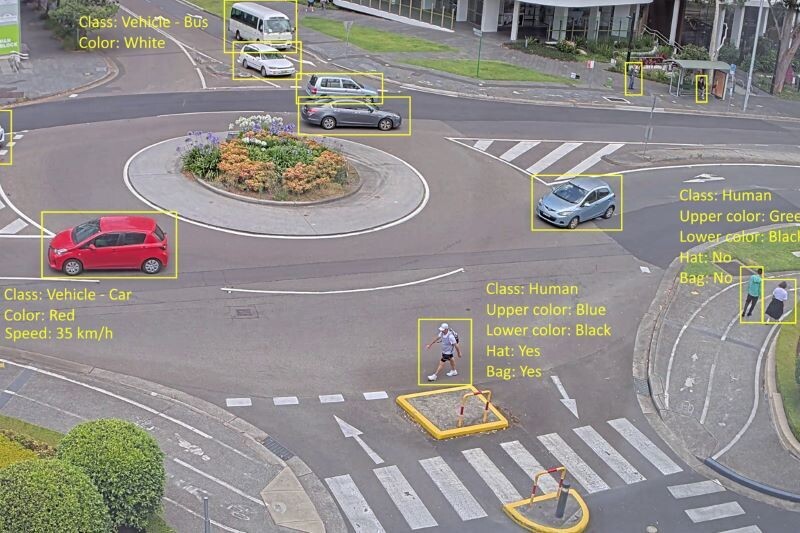
According to Alejandro Aguirre, Sales Manager for Mexico, Central America, and the Caribbean at Axis Communications, by 2026 the security sector will experience a sustained evolution that redefines the design and management of solutions in digital environments, setting the pace for technological security trends.
Convergence with IT and Integrated Platforms Aguirre highlights that a fundamental catalyst for this change is the convergence between physical security and information technology. According to Aguirre, advances in cybersecurity reinforce confidence in these devices as key pieces of digital protection.
Five Security Technology Trends That Will Reshape the Sector in 2026 • Alejandro Aguirre, an executive at Axis Communications, explains how artificial intelligence and data analysis are driving a sustained evolution in the design of security solutions.
Under this premise, the first trend identifies the ecosystem as the axis of decision-making: companies no longer acquire isolated solutions, but prioritize integrated, scalable, and compatible platforms that guarantee long-term software support.
Evolution in Hybrid Architectures As a second trend, an evolution is observed in hybrid architectures, where the combination of edge computing, the cloud, and local systems consolidates as the dominant model. This approach allows more powerful cameras to reduce the load on local servers while the cloud processes large volumes of data.
Local Processing and Mobile Solutions In third place, the prominence of edge computing allows for faster responses and the generation of intelligent metadata. To this is added the expansion of mobile monitoring, where intelligent towers and cameras are gaining ground in temporary spaces such as construction sites and events, thanks to improvements in connectivity and energy efficiency.
Autonomy and Strategic Challenges Finally, the Axis Communications executive poses technological autonomy as a strategic challenge. For the sector, it is a priority to reduce critical dependencies in the supply chain. In this scenario, IT departments play a key role in decision-making, from system architecture to supplier selection.
Aguirre concludes that for manufacturers, integrators, and users, understanding this landscape will be fundamental to innovating and building efficient and sustainable security systems.
The development of proprietary technologies allows for greater control and innovation, preparing the industry for future challenges. These five trends reflect a more integrated and intelligent market.