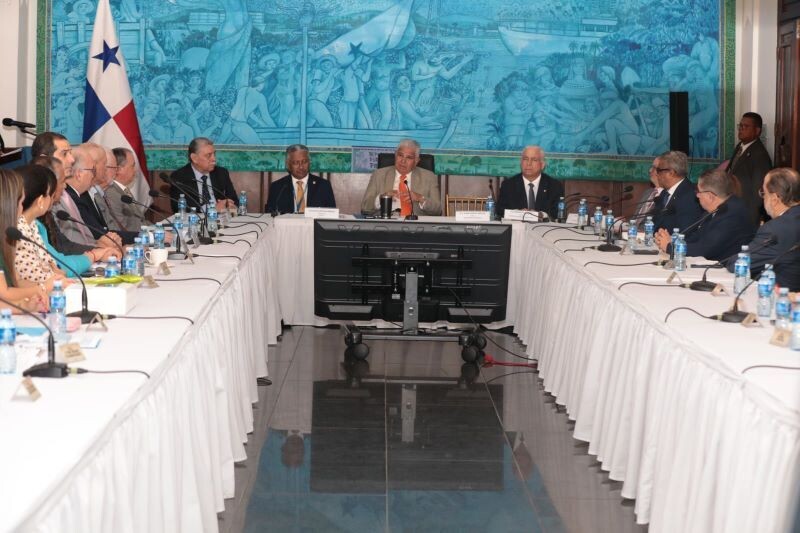
The President of Panama, José Raúl Mulino, led the formal installation ceremony of the Board of Directors of the Center for Agricultural Specialties (CEAGRO-AIP). This event marks a new era for the country's agriculture and is part of the government's commitment to the productive sector. The center aims to facilitate immediate labor insertion in the private sector and boost productivity through strategic alliances. The event featured key figures such as the Minister of Agricultural Development, Roberto Linares; the National Secretary of Senacyt, Eduardo Ortega-Barría; and the manager of the National Bank of Panama, Javier Carrizo Esquivel. President Mulino highlighted that the creation of CEAGRO-AIP addresses the urgent need to provide national producers with advanced technical knowledge to improve crop productivity, drawing on successful regional models. He also emphasized that Panama urgently requires greater diversity in technical careers to avoid falling behind national needs. During the first session, the Board appointed Dr. Inés Sittón Candanedo as the acting director. The selection process already has over 450 pre-registrants from various agricultural schools and science high schools across the country. The two-year academic program will cover critical areas identified through consultations with more than 90 private sector companies. Key specializations include: agriculture and livestock, agribusiness and agricultural mechanization, agribusiness management and logistics, and applied technology (use of drones and sensors). CEAGRO-AIP's educational model will prioritize practical training by 60%, with the remaining 40% being theoretical. The center will initially operate from its headquarters in the City of Knowledge, where the first cohort of 100 scholarship students will begin their studies in April. Future expansion to the provinces of Chiriquí and Darién is also being considered.