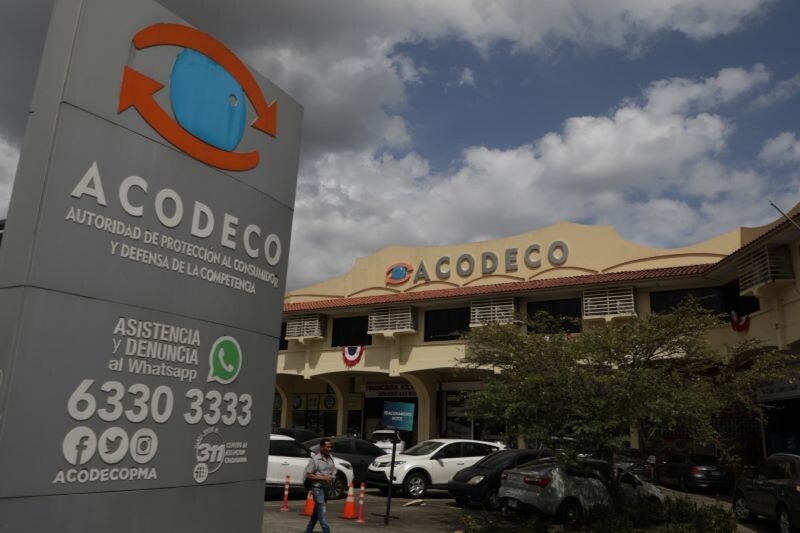
Panamanian authorities have filed 53 lawsuits on behalf of affected consumers, with a total accumulated amount of B/. 2,208,147.26. These legal actions, managed by the institution's Office of the Public Defender, seek to compensate for damages caused by various economic agents in key sectors of the national economy.
According to the report from the Authority for Consumer Protection and Competition (Acodeco), the real estate sector leads the list of legal proceedings with 38 lawsuits, totaling B/. 70,574,144.88. The remaining legal actions are distributed among car dealerships, hotels or vacation plans, and repair shops, with three lawsuits filed in each category. Additionally, individual processes were registered against installation services, private schools, and beauty centers, as well as three executive lawsuits worth B/. 1,399.79.
In a significant advance for financial protection, Acodeco highlighted a recent ruling from the Ninth Civil Circuit Court that orders a banking entity to return B/. 2,932,686.27 to a consumer. The court determined the existence of abusive clauses related to the compensation of savings accounts and imposed an additional penalty of B/. 251,027.
The official recalled that in December 2025, local banks established limits on the compensation clause, which cannot be applied to funds protected by law such as the minimum wage, alimony, or savings accounts of up to B/. 2,500.00, nor can it be executed without prior collection efforts.
Ramón Abadi Balid, administrator of Acodeco, emphasized that consumers are protected against these types of practices. Since 2006 until the end of 2025, Acodeco has filed a historic total of 1,426 lawsuits, representing a cumulative value of B/. 1,426,794,144.88.
The institution reaffirms its support for citizens through the Office of the Public Defender. When a consumer cannot achieve a satisfactory solution through mediation, Acodeco assigns a defense lawyer to assess the viability of the case and file the corresponding lawsuit in specialized courts. These actions consolidate the authority as a fundamental pillar in the search for fair solutions and extrajudicial agreements that benefit the most vulnerable link in the commercial chain.