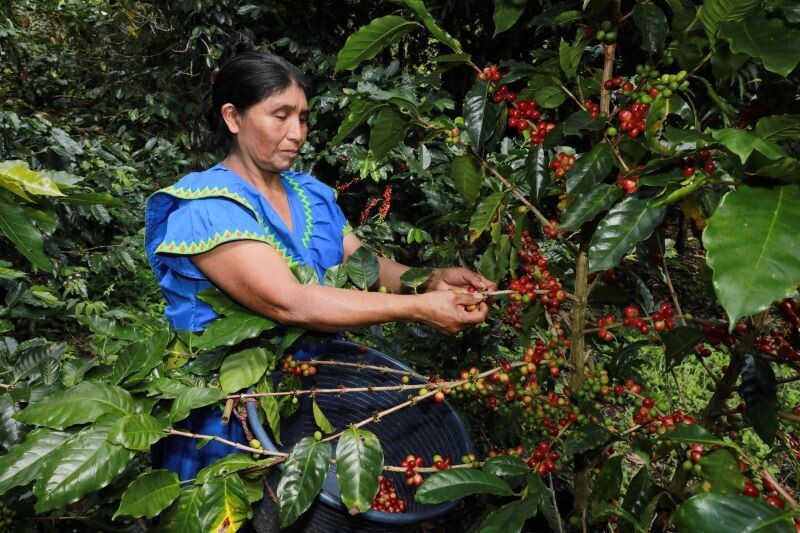
The Opportunities Network promotes sustainable entrepreneurship in rural areas of Panama. Through the MIDES program, more than 42,000 beneficiaries ensure their children's school attendance while developing high-value agricultural and commercial projects. Their goal is to master this export crop to secure their family's livelihood and the completion of their youngest son's high school science studies. Opportunities Network: Engine of Rural Entrepreneurship. The Opportunities Network benefits 42,591 Panamanians nationwide, allocating over 24 million balboas annually in monetary transfers. Ilda Salinas, a 57-year-old woman residing in the Ngäbe-Buglé Comarca, has become a benchmark for overcoming adversity by using the Opportunities Network program from the Ministry of Social Development (MIDES) as a platform to educate her children through organic coffee production. Stories like those of Olivia Montezuma and Mitzila Rodriguez reaffirm that family effort, complemented by MIDES tools, is building a future of achievement and professionalism in the country's rural communities. In addition to financial support, the initiative promotes female empowerment through training in poultry farming, subsistence agriculture, crafts, and jewelry. The results of this institutional accompaniment are reflected in cases of academic excellence in educational centers such as Cerro Otoe and Hato Chamí, where the children of beneficiaries stand out in honor rolls. Salinas is one of 16,307 women in this region who have transformed financial transfers into sustainable businesses, managing to get two of her four children into higher education at the Autonomous University of Chiriquí (Unachi). The artisanal process and the value of Ngäbe coffee. From her plot in the Peña Blanca district, Ilda personally leads every stage of production: harvesting, drying, pounding with a mallet in a wooden mortar, roasting, and grinding. Thanks to the technical training provided by MIDES, Salinas applies organic fertilizers free of chemicals, allowing her to sell her product at three balboas a pound and add value to her harvest. Driven by the desire for her children to become professionals, Ilda has diversified her production by betting on the Geisha variety, world-renowned for its high quality. Currently, she cultivates over 2,000 plants that yield around 600 pounds of coffee annually. Despite geographical difficulties, she has achieved her first harvests of this fine grain, supervising plants located in high-altitude areas two hours from her home. The central objective is to ensure that children and youth in vulnerable areas remain in the education system, covering basic needs such as food and school supplies.