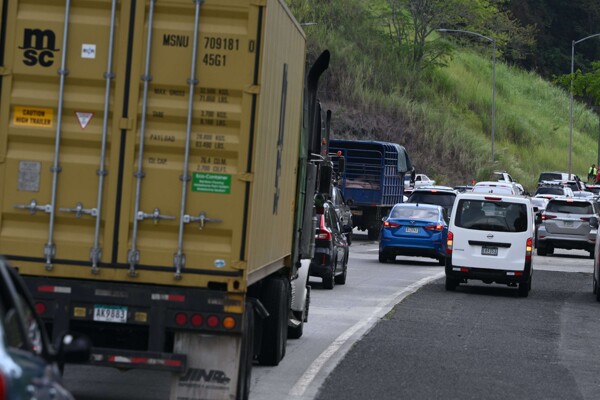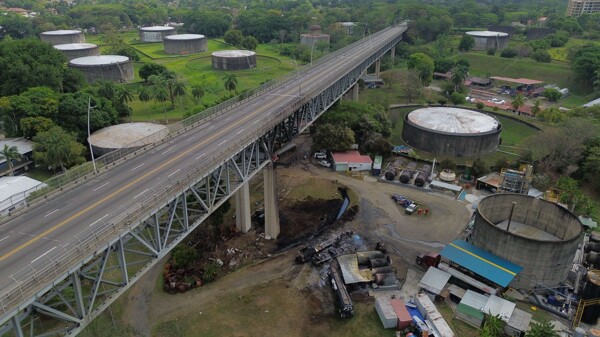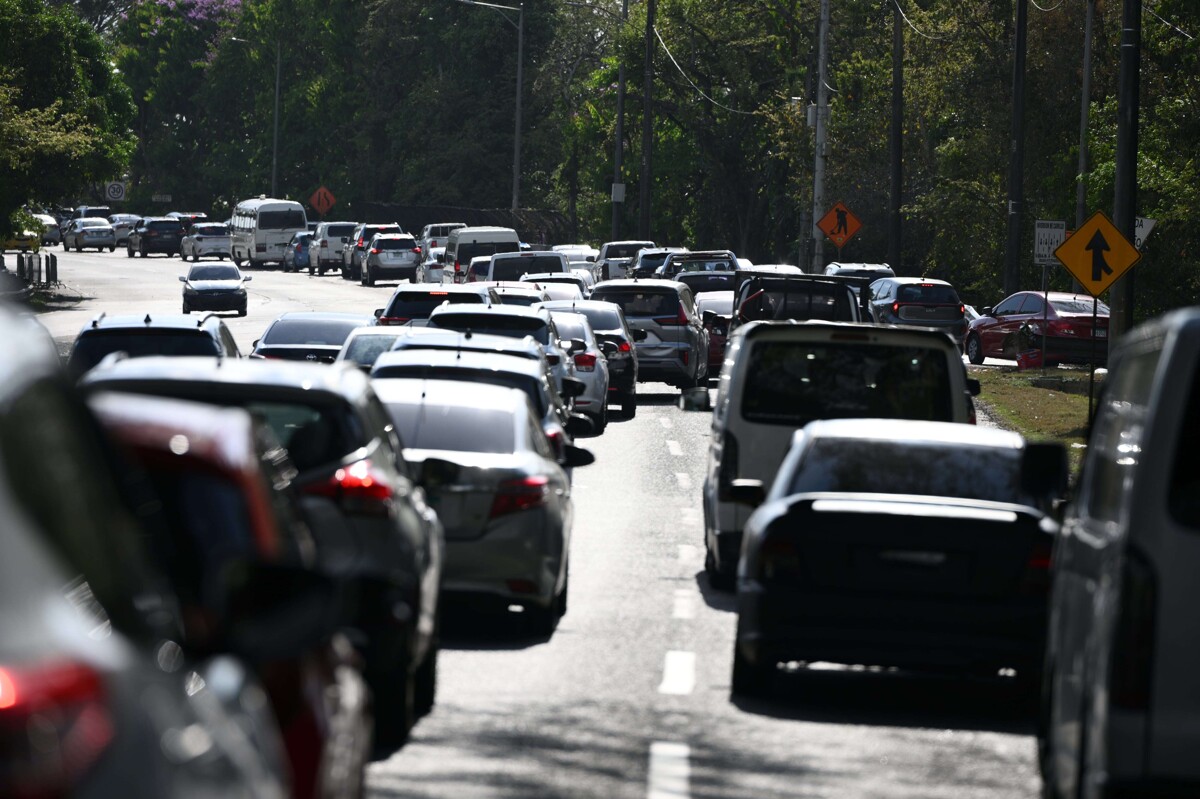
This crisis should lead us to seek structural solutions,” stated the urbanist. For him, an alternative would be to strengthen mass transit. “We are betting on two mobility systems: the bridge and the monorail. Public transport has to improve and must be managed in an integrated manner,” he pointed out. In this context, he gave the example of La Chorrera's growth, which —he indicated— already reaches nearly 200,000 inhabitants without consolidated urban planning. “There is no planning that articulates urban development with mobility. If I had to choose between the two, I would go with the monorail,” he affirmed. In his opinion, this type of system would have a more favorable impact on urban mobility. “It can help reduce the impacts that have already occurred in the transportation system, especially during peak hours,” he maintained. Although the partial opening of the bridge has allowed to resume part of the vehicular flow, authorities maintain restrictions while structural evaluations continue, which continues to cause congestion and delays in daily commutes. For Espitia, this situation must become an opportunity to drive structural changes. The urbanist recalled that there is a metropolitan plan that covered most of La Chorrera, Arraiján, and other areas, where development alternatives were proposed. He added that within those proposals, the reconversion of economic models in these areas was contemplated. “The monorail has less impact on the territory from the perspective of its construction and a greater capacity to mobilize people,” he explained. Furthermore, he highlighted its potential to reduce pressure on existing infrastructure. “What we are experiencing is a consequence of the lack of territorial planning,” he concluded. “Traffic is not reduced, but increases,” warned Espitia. Currently, road projects are being developed such as the Fourth Bridge over the Panama Canal, Line 3 of the Metro, and in the future the railway project, all with a view to alleviating travel to West Panama. Another point that the urbanist analyzed was the lack of economic decentralization that forces the population to travel daily to the city in search of employment, education, and services. “If economic poles had been developed in the west, movement towards the capital could be reduced by up to 80%,” he stated. In this sense, he raised the need to rethink the mobility model, betting on more efficient mass transit systems. “More than half a million people depend on this mobility system to cross from one side to the other,” he indicated. It should be noted that while the Bridge of the Americas remained closed, the Centenario highway towards the Centenario Bridge was enabled in its four lanes to mobilize more than 120,000 vehicles that daily travel between both bridges. In his opinion, the situation also reveals deep-rooted problems in urban development. “One of the alternatives of the metropolitan plan was the reconversion of economic developments, and there the Howard project was mentioned as a key axis,” he explained. Strengthening mass transit Espitia also warned that the current situation is a reflection of a lack of territorial vision. “We must seek the maximum efficiency of the system. These are facts that cannot be controlled” —referring to the fatal victim of the fire—, expressed Espitia, while pointing out that the incident should serve as a reflection point on the country's transportation system. Likewise, he questioned the lack of planning in mobility matters and the role of the Transit and Land Transportation Authority (ATTT), stating that “it has lost the vision for which it was created: to plan the development of mobility.” The specialist emphasized that the crisis generated by the bridge closure, on April 6 and 7, left evident the high dependence of thousands of citizens who travel daily from West Panama to the capital. “Adversities should lead us to seek comprehensive solutions. “The more roads are built, the more vehicles are generated. The Bridge of the Americas was partially reopened by the Ministry of Public Works (MOP), after remaining closed for less than 24 hours, following a fire registered in the lower part of the structure on April 6, when three tank trucks burned in the lots concessioned to Panama Oil Terminals, S.A. (POTSA). The measure has partially alleviated traffic; however, it maintains restrictions and evidences the structural mobility problems between the capital and West Panama; in addition to reactivating questions about the planning of the country's transportation system. Lack of planning in mobility issues Architect and urbanist Gerónimo Espitia warned that, although the reopening represents an important step, the impacts for West Panama residents persist and must be analyzed from a broader perspective. “It's a shame what happened. A human life was lost.