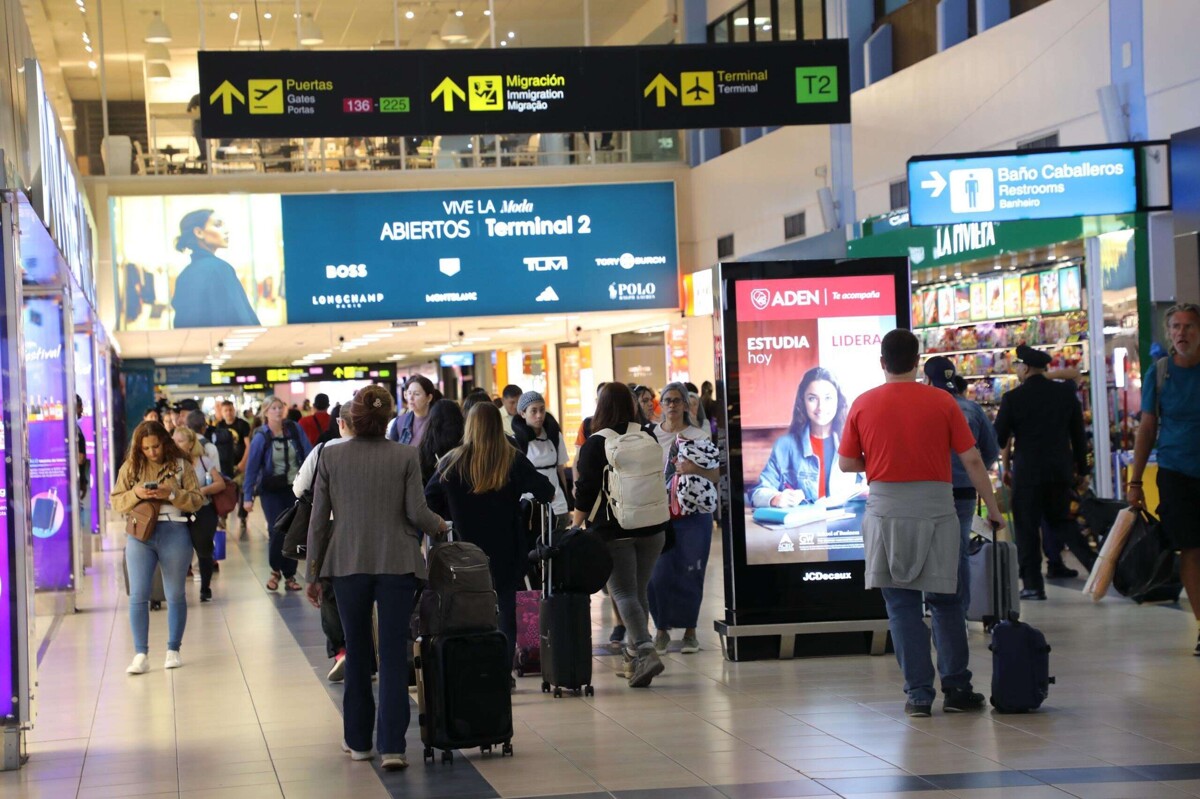
The market always reacts. When that passenger stops transiting through Panama, not only are ten dollars lost, but consumption in stores, the sales commissions charged by the airport, the commercial value of the premises, and jobs are also lost. And that is the most serious error of this proposal: counting what would come in, ignoring everything that will disappear. It is lost. When traffic drops, the system begins to deteriorate, routes are eliminated, frequencies are reduced, connections become more expensive, and relevance is lost. It may sound good on paper. But, in reality, that number is based on a false premise: that the market does not react. Because this is not ignorance: it is knowing that the model works and yet deciding to liquidate it. It is understanding that we compete with other hubs and yet we give them the advantage. When the traffic leaves, because it will leave, there will be no speeches to bring it back. This translates into an increasingly aggressive competition for Panama as a leading connectivity hub, in an environment where other airports are not only growing, but doing so better, with greater efficiency, better incentives, and a clear acquisition strategy. While Panama debates, others execute. The real danger of this tax is not what it collects. And when that happens, there is no turning back. Airlines do not make political decisions; they make mathematical ones. Competition is not waiting for mistakes; it is anticipating them. That is what puts the risk at stake. An air hub exists because it is competitive and efficient, and it is not protected by increasing costs. And today the industry shows a renewed dynamism throughout the region. An additional income, but it is something much more serious: a decision that directly attacks one of the most strategic pillars of the Panamanian economy: its air hub model. The transit passenger has no reason to use our hub if they find a more efficient option. There will be no explanations to justify what was lost. If Panama ceases to be efficient, they will simply stop using it, without raising their voice, without debate, without warning. Does it make sense to weaken one of the few engines that sustain the economy? It is not just about airplanes; it is about employment, technical knowledge, and economic development that depend on an ecosystem that functions with precision, not with uncertainty. Airlines do not improvise: they project and execute with rigor. They decide based on connection time and efficiency. That is the point that is being ignored. Because when a hub is lost, it is not replaced; later comes the lament, but it is too late. Should we continue repeating the same pattern? The same one that appears every time it is too late. Advances in flight efficiency and autonomy are reducing the need for stopovers, progressively weakening the hub model. The initiative to impose a ten-dollar tax on each transit passenger seems like a minor fiscal measure. Only what remains will be the usual: fewer jobs, less activity. And then the silence will come. Panama has been here before. That flow is not guaranteed. It is competed for. Under the logic of the tax, more than a hundred million in non-existent revenue represents a fiscal mirage that becomes a mechanism for economic destruction. Today, Tocumen International Airport mobilizes nearly 16 million passengers a year. Of these, about 70% are in transit. Every minute of indecision becomes an advantage for airports and logistics centers that operate with strategic vision and discipline. Added to this is a structural factor that cannot be denied: new aeronautical technologies. This tax fits perfectly into that pattern. What is at stake is not a tax. The difference is that this time we cannot say we did not see it coming. The author is a certified forensic auditor and fraud examiner; former general manager of Tocumen, S.A.; former Vice Minister of the Presidency and former General Secretary of the Comptroller General's Office. It is the country's ability not to shoot itself in the foot again. Weakened strategic projects, eroded sectors, affected confidence, not by external factors, but by internal decisions. The airline ended 2024 with 102 aircraft, to which this new fleet will be added, consolidating a growth bet that admits no improvisations or signals that leave doubt in its environment. According to revised figures, this investment projects the incorporation of more than 3,545 new qualified collaborators by the year 2029. Through reports in different media, I have been able to learn that COPA Airlines projects and executes an aggressive expansion plan for its fleet with 57 new Boeing 737 MAX aircraft in the coming years, representing an investment of approximately USD$1,700 million.