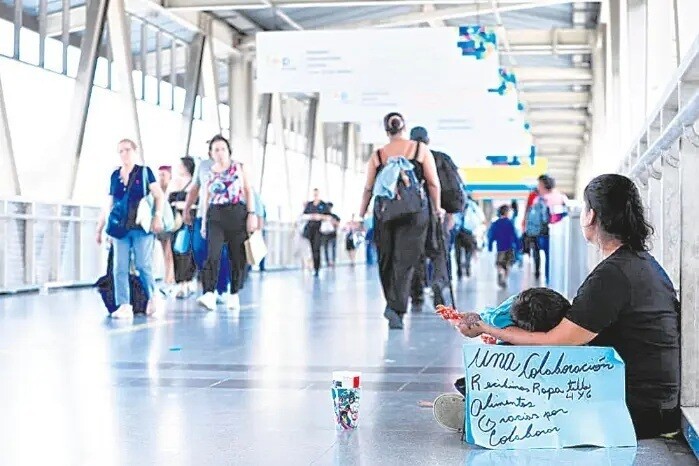
Between the statistics and the human faces, Venezuelan migration has ceased to be merely a transit figure and has become a constant presence in Panama’s urban daily life. She left her country pushed by a combination of factors that, in her words, “made daily life unsustainable to maintain”: an income that was no longer enough, difficulty obtaining food and medicine, unstable services, and the constant feeling that any plan could collapse within weeks. She arrived in Panama two years ago with relatives and acquaintances. He crossed borders, worked temporary jobs, moved between countries searching for stability. He made it to Mexico. Despite the recent political scenario in Venezuela — including the capture of President Nicolas Maduro by United States armed forces in January 2026 — return does not figure among the immediate plans of many migrants consulted. Even with changes in political leadership, nothing has changed for them, and the possibility of returning remains distant. “It’s been the hardest thing we’ve had to do.” Unlike other migrants who chose to remain, the couple acknowledges they are considering the possibility of returning to Venezuela. Families trapped between administrative systems. The Street as Routine. In one of Panama City’s busiest areas, among shop windows, cafés, and hurried footsteps, a Venezuelan family discreetly arranges their merchandise: candy, cookies, and bottles of water. Panama today faces a different migration reality: less irregular transit through the Darién, more precarious urban permanence, more families trying to sustain themselves in the informal sector. “Everything got complicated there.” He describes months marked by a lack of formal job options, difficulties normalizing his migration status, and growing economic pressure. He left Venezuela several years ago. They left Venezuela after months of facing insufficient income, rising prices, and difficulties sustaining their household. Most were Venezuelans. “I’ve looked for work, but without a permit it’s complicated.” She used to work as a secretary in Venezuela. Many were traveling as families. Panama appeared as a nearby alternative, “more stable,” “with more opportunities.” “We thought that coming here, everything would be easier,” Miguel admits. His priority is to remain in Panama, obtain a migration status, and obtain documents and permits that would allow him access to stable employment. “You can have a lot of education, but without documents it’s like you don’t know how to do anything.” Stories linked to return migration repeat patterns. In Panama she tried to find jobs in cleaning, customer service, and domestic work. The majority were still Venezuelan. In the city that for years was a place of passage, many now inhabit a prolonged pause — a pause made of uncertainty, resilience, and silent survival. Today, he says, returning to Venezuela is not part of his plans. They tried to get jobs but ran into the same obstacle: they lacked permits and documents. Interviews conducted by UNHCR in Panama during 2025 show that these movements are increasingly family-based. In December 2025, a voluntary repatriation flight to Caracas, scheduled to transport 70 Venezuelan citizens, had to be rescheduled due to incomplete paperwork, according to Foreign Minister Javier Martínez-Acha. According to the United Nations High Commissioner for Refugees (UNHCR), the term describes the movements of people who, after trying to continue their journey northward across the continent, decide — or are forced — to move back toward Central and South America. It is estimated that more than half a million Venezuelans reside in the country among migrants, refugees, and asylum seekers. The State has adopted administrative measures, including the temporary extension of the validity of expired Venezuelan passports. Even legal departures face delays. His story did not begin in Panama. Ninety-five percent came from Venezuela. The numbers help measure the phenomenon, but they do not fully explain what happens when the day ends — when a family decides where to spend the night, how to divide what little they managed to gather, or what to do with a future that remains suspended. Three different stories, but crossed by the same cracks: forced informality, endless waiting, and uncertainty as routine. Housing became another challenge. The reasons for leaving repeat themselves. Most of the people consulted by UNHCR cited the search for employment, insecurity, family reunification, and the need for better living conditions. “It wasn’t easy to accept that we had to turn around.” He tries to find work in construction, cleaning, or services. Throughout 2025, a phenomenon that international organizations are already monitoring in the region began to become visible: “reverse flow,” or return migration. She is Venezuelan, originally from the coastal region. Like them, many other families share similar silences, days sustained by minimal calculations, and nights marked by the question that never disappears: how much longer can we endure? In 2024, although the flow decreased, 300,000 migrants crossed the same route. He arrived in Panama in January 2025. “There came a point when continuing was no longer viable for us.” He decided to go back. Formal return is not without obstacles either. Before setting foot in the city, she crossed the Darien jungle, a journey she describes as exhausting, uncertain, and marked by fear. The jungle ceased to be the human highway it once was. The journey itself was not neutral. Forced adaptation. Start over.” The reality was different. The daily search for minimal income. Records also warn of less visible situations: births that occurred along the route that had not been registered with any national authority. Of that total, 328,667 were Venezuelan and nearly 120,000 were minors. “Rent was out of our budget.” Since then, they have combined temporary stays with acquaintances, nights in low-cost boarding houses, and long days on the street. A significant portion were children and adolescents. Children without documentation. Nor housing. The Darién jungle became a human corridor crossed by thousands of stories marked by urgency. In 2023, 520,085 people crossed the jungle, according to the Ministry of Public Security. She came with a clear idea: “Work. He tried to continue north but couldn’t. She doesn’t block the flow of people. Seven out of ten migrants interviewed reported having suffered mistreatment or abuse during the trip, including episodes of extortion, threats, or violence. Panama began recording it. By December 2025, the country had counted 22,325 entries linked to these movements during the year. Stations, avenues, and traffic lights began telling another part of the story. Living Day to Day. Maria does not speak about routes or state decisions. In many cases, it is a return burdened with economic losses, emotional exhaustion, and new vulnerabilities. The noise of the city moves on without pause, doors opening, hurried footsteps, loud conversations, engines, announcements. Not only nationality. They don’t beg. She remains. She speaks about the present. Between stations, buses, and avenues, the stories gathered share common points. Inside a city bus, Ricardo — a fictitious name to protect his identity — boards with a backpack slung over his shoulder, filled with candy he hopes to sell that day. Here they will be Carolina and Miguel. Panama City: Outside a Panama Metro station, a woman holds a small box of mints. She discreetly extends her hand while watching her two children, a four-year-old boy and a six-year-old girl. She doesn’t insist. “We have to sell candy… whatever comes up for the day.” She speaks without dramatizing, like someone describing an accepted routine. “Here you live day to day.” She counts coins. Gives thanks even when no one responds. In the last quarter of the year, 385 people interviewed allowed the situation of 671 family members to be assessed. In this chronicle we will call her María. He greets people politely. He nods. Offers sweets. “They always ask for papers.” She adjusts the box of mints and looks at her children. Their son stays close, giving away smiles with the innocence of someone who still does not understand reality. “Sometimes we do well. Sometimes we don’t.” For years, Panama was a transit territory within one of the continent’s most intense migration routes. Arrival in Panama was not the end of the journey. He tried to continue north but couldn’t. His priority is to remain in Panama, obtain a migration status, and documents and permits that would allow him access to stable employment. “You can have a lot of education, but without documents it’s like you don’t know how to do anything.” Stories linked to return migration repeat patterns. In Panama she tried to find jobs in cleaning, customer service, and domestic work. The majority were still Venezuelan. In the city that for years was a place of passage, many now inhabit a prolonged pause — a pause made of uncertainty, resilience, and silent survival. Today, he says, returning to Venezuela is not part of his plans. They tried to get jobs but ran into the same obstacle: they lacked permits and documents. Interviews conducted by UNHCR in Panama during 2025 show that these movements are increasingly family-based. In December 2025, a voluntary repatriation flight to Caracas, scheduled to transport 70 Venezuelan citizens, had to be rescheduled due to incomplete paperwork, according to Foreign Minister Javier Martínez-Acha. According to the United Nations High Commissioner for Refugees (UNHCR), the term describes the movements of people who, after trying to continue their journey northward across the continent, decide — or are forced — to move back toward Central and South America. It is estimated that more than half a million Venezuelans reside in the country among migrants, refugees, and asylum seekers. The State has adopted administrative measures, including the temporary extension of the validity of expired Venezuelan passports. Even legal departures face delays. His story did not begin in Panama. Ninety-five percent came from Venezuela. The numbers help measure the phenomenon, but they do not fully explain what happens when the day ends — when a family decides where to spend the night, how to divide what little they managed to gather, or what to do with a future that remains suspended. Three different stories, but crossed by the same cracks: forced informality, endless waiting, and uncertainty as routine. Housing became another challenge. The reasons for leaving repeat themselves. Most of the people consulted by UNHCR cited the search for employment, insecurity, family reunification, and the need for better living conditions. “It wasn’t easy to accept that we had to turn around.” He tries to find work in construction, cleaning, or services. Throughout 2025, a phenomenon that international organizations are already monitoring in the region began to become visible: “reverse flow,” or return migration. She is Venezuelan, originally from the coastal region. Like them, many other families share similar silences, days sustained by minimal calculations, and nights marked by the question that never disappears: how much longer can we endure? In 2024, although the flow decreased, 300,000 migrants crossed the same route. He arrived in Panama in January 2025. “There came a point when continuing was no longer viable for us.” He decided to go back. Formal return is not without obstacles either. Before setting foot in the city, she crossed the Darien jungle, a journey she describes as exhausting, uncertain, and marked by fear. The jungle ceased to be the human highway it once was. The journey itself was not neutral. Forced adaptation. Start over.” The reality was different. The daily search for minimal income. Records also warn of less visible situations: births that occurred along the route that had not been registered with any national authority. Of that total, 328,667 were Venezuelan and nearly 120,000 were minors. “Rent was out of our budget.” Since then, they have combined temporary stays with acquaintances, nights in low-cost boarding houses, and long days on the street. A significant portion were children and adolescents. Children without documentation. Nor housing. The Darién jungle became a human corridor crossed by thousands of stories marked by urgency. In 2023, 520,085 people crossed the jungle, according to the Ministry of Public Security. She came with a clear idea: “Work. He tried to continue north but couldn’t. She doesn’t block the flow of people. Seven out of ten migrants interviewed reported having suffered mistreatment or abuse during the trip, including episodes of extortion, threats, or violence. Panama began recording it. By December 2025, the country had counted 22,325 entries linked to these movements during the year. Stations, avenues, and traffic lights began telling another part of the story. Living Day to Day. Maria does not speak about routes or state decisions. In many cases, it is a return burdened with economic losses, emotional exhaustion, and new vulnerabilities. The noise of the city moves on without pause, doors opening, hurried footsteps, loud conversations, engines, announcements. Not only nationality. They don’t beg. She remains. She speaks about the present. Between stations, buses, and avenues, the stories gathered share common points.