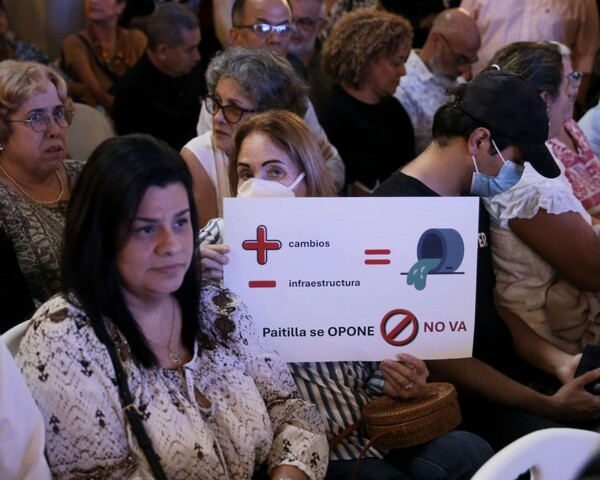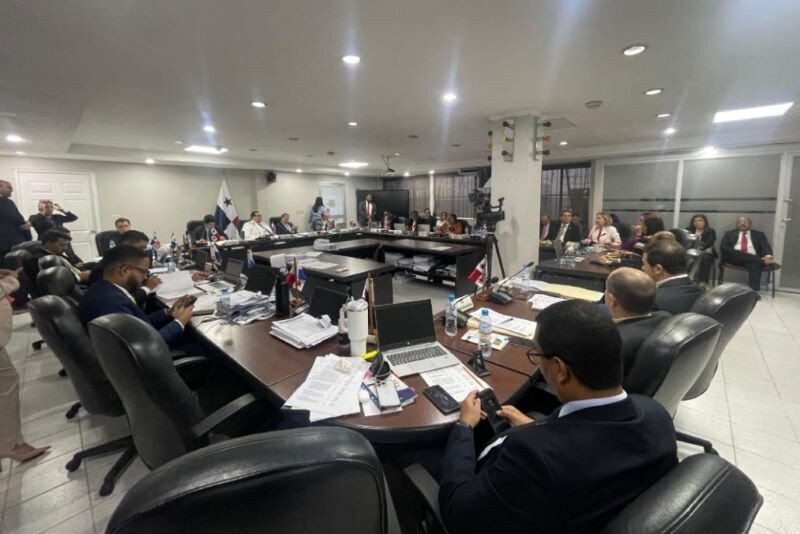
The National Assembly of Panama is holding an extensive legislative session this Monday, March 23, including various committee meetings and a regular plenary session, with the aim of advancing the discussion of socially and legally significant bills. The day began at 9:00 a.m. with the Women's, Children's, Youth, and Family Committee meeting in the Manuel A. Leneé Hall. The committee held a technical roundtable to discuss Law 82 of October 24, 2013. This law is fundamental in Panama's legal framework, as it adopts measures to prevent violence against women and amends the Penal Code to classify femicide and punish acts of gender-based violence. At 10:00 a.m., the Subcommission on Government, Justice, and Constitutional Affairs met in Hall B-1 of the New Building. The purpose of the meeting was to analyze and evaluate Bill 276, which proposes adding provisions to the Penal Code regarding the paralysis and deterioration of public works in the national territory. In the afternoon, the Labor, Health, and Social Development Committee has scheduled the discussion of two initiatives relevant to public health. The first is Bill 549, concerning the establishment of an area office for the International Telecommunication Union in Panama. Additionally, Bill 347 will be analyzed, which amends Law 13 of 2008 to include the prohibition of these devices in specific spaces. The Foreign Relations Committee will meet at 2:00 p.m. to hold its first debate on two international agreements. The second is Bill 550, which seeks to approve the air services agreement between the Government of the Republic of Panama and the Kingdom of Saudi Arabia, signed in December 2025. The day will conclude with the Ordinary Plenary Session, scheduled for 3:30 p.m., where the participation of deputies is expected to continue the legislative agenda for the day.