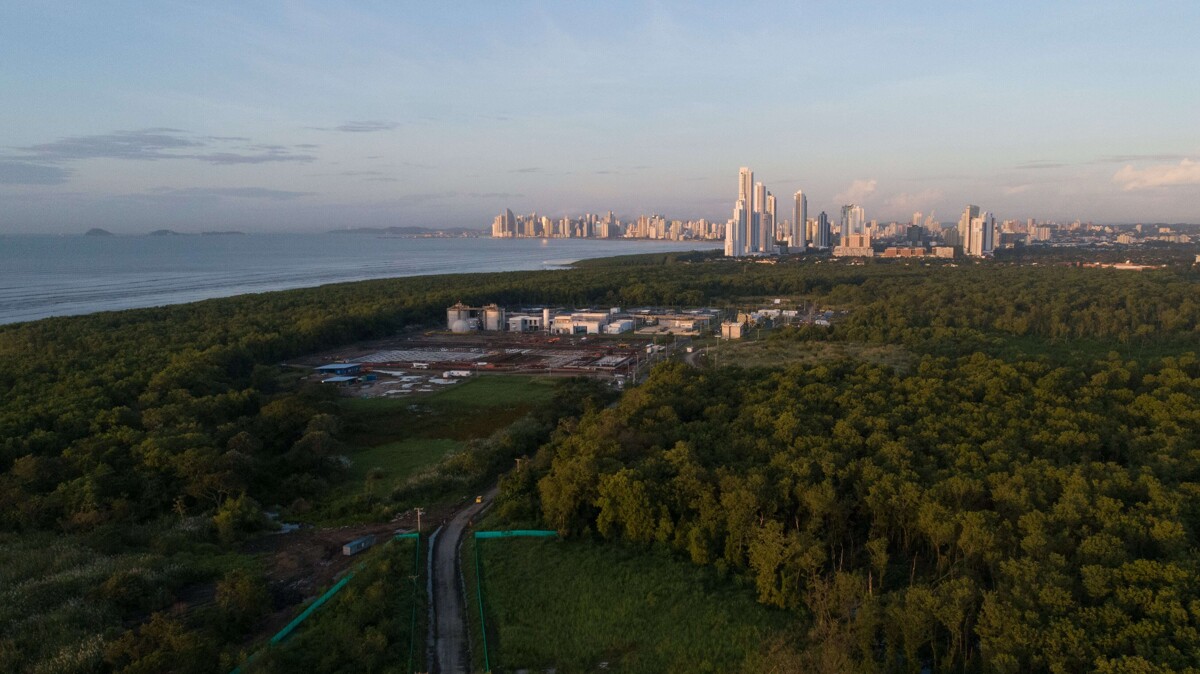
Panama City has always been a city of water. The author is an architect and a student in the Master's in Landscape and Environmental Management at the University of Panama. What was once a continuous network is now a broken fabric. And where is all the water in this city? Perhaps then the city will recover its natural logic and its deepest identity. Because, in essence, Panama City is not just a city with water. Before the concrete and walls that today define urban life, there were networks of living water, free from anthropogenic intervention, shaped only by the flow of water, time, and the dynamics of nature itself. Its threads—rivers, streams, lagoons, wetlands, and coastal landscapes—have been disconnected, sometimes occupied and forgotten. How do we access them? Let us remember that the loose threads of the water fabric are still there. These water fabrics still exist, but they are no longer perceived. The Panama City we know today was not always like this. These threads are also in the fragments of vegetation that survive on the edges and in the memory of the communities, for whom water was a part of their lives, their activities, and their identity. Recognizing all these water threads and their value is the first step to reweaving the fabric and getting closer to them. However, instead of weaving our city with this water network, it has today been absent from its role and is increasingly distant from people. Then inevitable questions arise: where are all those water landscapes of the city? They run hidden and, even fragmented, the water claims its place and returns to the floodable areas, forcing us to remember its presence. It is understanding that the city is not on top of the territory, but is part of it. Perhaps then the loose threads will cease to be isolated fragments and begin to intertwine again. It implies understanding that it is the water that shapes and defines where it flows. Today, the metropolitan territory has more than 50 rivers, which run from north to south, crossing the city. This implies getting to the root of what is happening, listening closely to the feelings of the people, raising voices that have been silenced, and rethinking territorial and environmental planning. It is about learning to live with water again. They run hidden and fragmented. Thus, from this reading, lines of work can be established for plans, policies, and programs that define clear rules, with strategies that transform the water fabrics into living, accessible, and habitable corridors, always in hand with the collective identity and care. Re-weaving the water fabric is not just an environmental action; it is a cultural and even spiritual act. Water, lots of water. To this is added the isthmian condition of the country and the adjacency to the coastal landscape of the Pacific Ocean, as well as the rainfall—among the highest in the region—that averages over 2,500 mm annually.