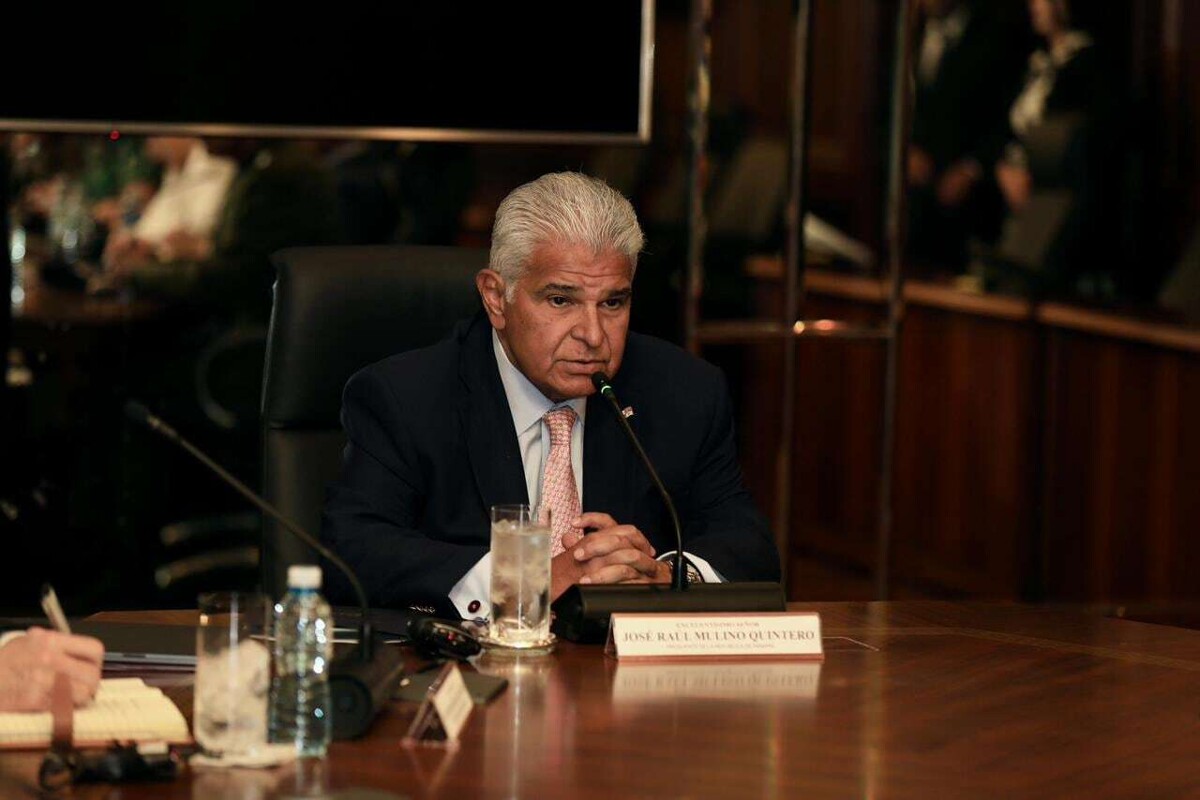
Panamanian President José Raúl Mulino met on Tuesday at the Palace of the Garzas with the head of the U.S. Southern Command, General Francis L. Donovan. During the meeting, they discussed regional security issues and cooperation against drug trafficking, terrorism, and organized crime. The president also spoke about reviving the coastal surveillance program using radar, which he described as “a great success.” President Mulino proposed returning to the coastal surveillance system using radar. In this context, upcoming Panamax exercises, involving about twenty countries, were mentioned as a platform to enhance coordination between governments in the fight against cartels and criminal organizations. Internally, Mulino stressed the need to strengthen the judicial system to facilitate the work of the Public Ministry and ensure that cases against drug traffickers and criminal structures can go to trial. He also emphasized the urgency of creating laws to prevent criminal organizations from using cryptocurrencies to hide or move illicit money. Present at the meeting were Chancellor Javier Martínez Acha; Minister for Canal Affairs, José Ramón Icaza; Minister of Public Security, Frank Ábrego; director of Senafront, Larry Solís; and director of Senan, Luis De Gracia. Mulino was previously involved in a scandal related to the radar purchase, but the case against him was annulled. The president reiterated his promise to purchase these radars, again calling the project “successful.” Both sides agreed that the fight against criminal networks should not be limited to “bilateral efforts” but requires a joint strategy with other countries on the continent due to the transnational reach of cartels and human trafficking organizations. The conversation also covered port security, supply chain protection, and the U.S. interest in strengthening the exchange of strategic information on maritime security and detection of illegal operations. Donovan expressed interest in strengthening the multilateral “Shield of the Americas” strategy, promoted as a mechanism for regional cooperation on security. However, contrary to his praise for the radar program, the project was a failure. In 2014, then-director of the National Aeronaval Service (Senan), Belsio González, revealed that the radars being purchased from Selex were not functional for detecting the fast boats used by drug traffickers and could only locate larger vessels. According to Mulino, the project, which was partially operational until mid-2014, was abandoned during the administration of Juan Carlos Varela (2014-2019), although the contract for $125 million was actually suspended by the Third Chamber of Administrative Litigation of the Supreme Court of Justice. Subsequently, the Panamanian state and Selex reached an agreement allowing the manufacturer to remove the radars installed in Panama. Mulino, as Minister of Security during Ricardo Martinelli's administration (2009-2014), led the project to purchase 19 radars after being authorized by the Council of Ministers in 2010.